
How to: Create Custom Soaps From A Single Recipe
This is a follow-up to the post, Soap Making 101. Today, I’d like to show you how I took one simple, plain recipe and doctored it up to create a variety of custom soaps.

The point I’d like for you to take away from this, is not that you have to follow my recipes exactly (though you’re certainly free to do so!), but to use the idea as a jumping off point to create your own unique products from your own favorite recipe.
Don’t be afraid to get creative and change things around!
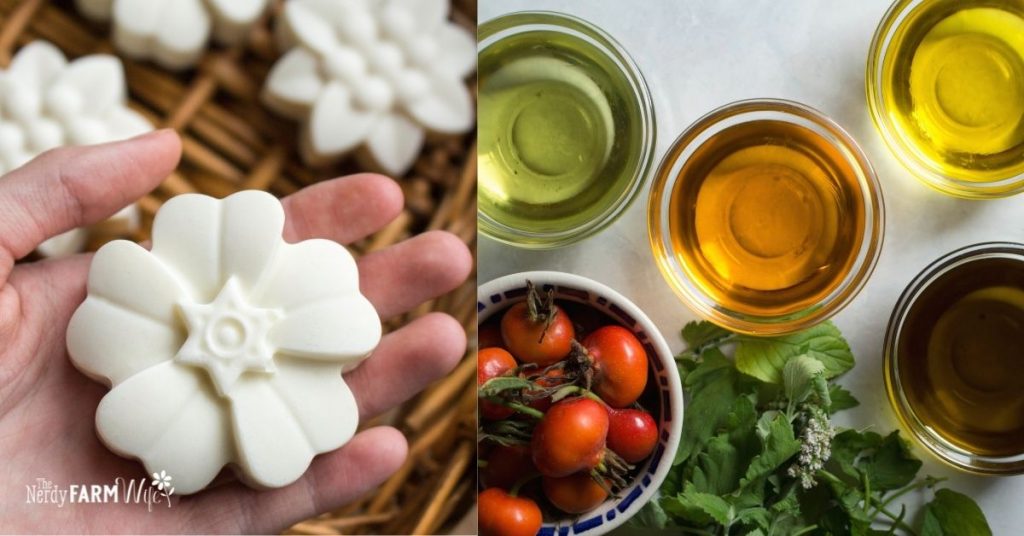
My foray into making homemade soap started several years ago when my son was little and had a ton of allergies. Trying to find products that were gluten free, dairy free, corn free, soy free AND unscented was impossible.
For a time, he took baths with plain water since I couldn’t find anything suitable to wash him with. After a lot of research, I finally took the plunge into making my own soap and haven’t stopped since!
(For more information on making natural soap for your family, be sure to check out my Natural Soap Making Package, filled with helpful resources I wish I’d had available when I first started out.)
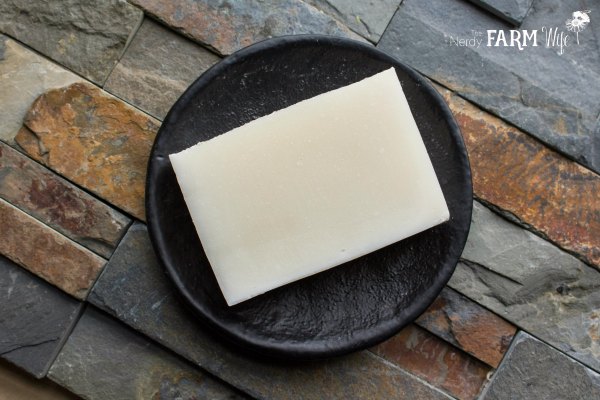
Basic Soap Recipe
This recipe is very plain and simple. It’s a good one to start with if you’re just learning how to make soap or have super sensitive skin prone to allergic reactions.
- 12.5 oz (354 g) olive oil (44.64%)
- 3.5 oz (99 g) sunflower or sweet almond oil (12.5%)
- 8 oz (227 g) coconut oil (28.57%)
- 4 oz (113 g) kokum or cocoa butter (14.29%) (OR use tallow or lard)
- 3.95 oz (112 g) lye (sodium hydroxide)
- 8.5 oz (241 g) distilled water
Make soap according to the directions in Soap Making 101. This makes a simple unscented plain off-white bar. The recipe is 2.5 pounds and will fit THIS MOLD.
I most often buy lye from Amazon or my local hardware store. (Comstar is a brand that always works well for me, and I also like Essential Depot Food Grade Lye.)
I liked the plain soap because it didn’t break out my son. However, his eczema and dry skin were still a problem, so I set out to tackle that by creating a “Healing Skin Bar.”
I went through my cabinets and gathered up every anti-inflammatory, good-for-the-skin herb I could find and threw it all in this recipe. I also super-fatted the soap by adding some extra oil at trace, right before pouring into the mold. (You can also add this amount with the other oils when making the soap; back when I learned to make soap we added extra oils at trace, but it’s since been shown it doesn’t matter when you add the extra oil.)
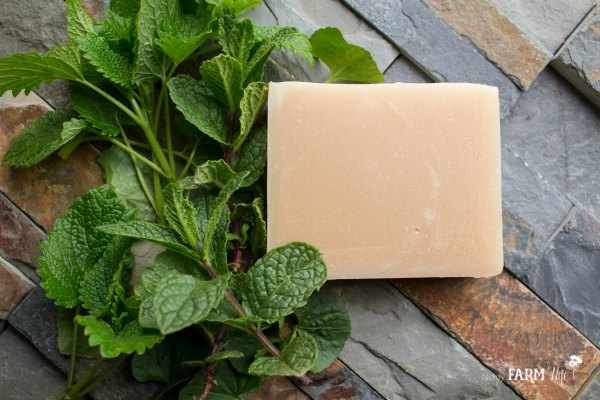
Healing Skin Bar
For this bar, I substitute herbal tea for the water using some or all of the following herbs that I keep on hand: calendula, lavender, comfrey leaf, comfrey root, plantain leaf, chamomile, elder flowers, lemon balm/melissa, boswellia, echinacea flowers/leaves, rose petals &/or leaves, violet flowers &/or leaves, and olive leaf powder. You can buy most of these herbs from Mountain Rose Herbs.
Place several tablespoons of dried and/or fresh herbs and flowers in a jar and pour simmering hot water over them. Let this steep overnight, strain and use just as you would water in your recipe. It might smell a little funny and turn a weird color when mixed with the lye, but that’s perfectly normal and will disappear by the time you have a finished bar. Strong herbal teas will give your soap a tan or brownish color.

- 12.5 oz (354 g) infused olive oil (44.64%) (see *Note)
- 3.5 oz (99 g) sunflower or sweet almond oil (12.5%)
- 8 oz (227 g) coconut oil (28.57%)
- 4 oz (113 g) kokum or cocoa butter (14.29%) (OR use tallow or lard)
- 3.95 oz (112 g) lye (sodium hydroxide)
- 8.5 oz (241 g) cooled herbal tea
- at trace, stir in 1 tablespoon tamanu or rosehip seed oil
- optional, at trace, stir in 20 g lavender essential oil + 10 g tea tree essential oil
Make soap according to the directions in Soap Making 101. The recipe is sized to be 2.5 pounds and will fit THIS MOLD.
I most often buy lye from Amazon or my local hardware store. (Comstar is a brand that always works well for me, and I also like Essential Depot Food Grade Lye.)
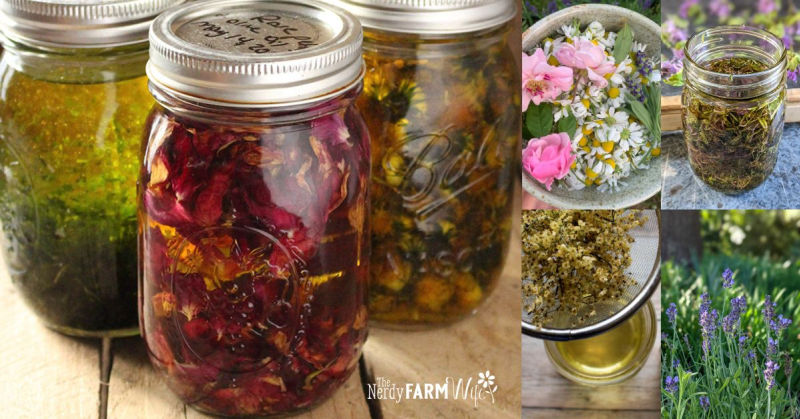
*Note: I usually keep a variety of olive oils on hand infused with calendula, comfrey, plantain and violet leaf. Any or all of these can be substituted for plain olive oil for even more skin benefits. See my article: How to Make Herb Infused Oils (FAQS & Tips), for how to make your own infused oils.
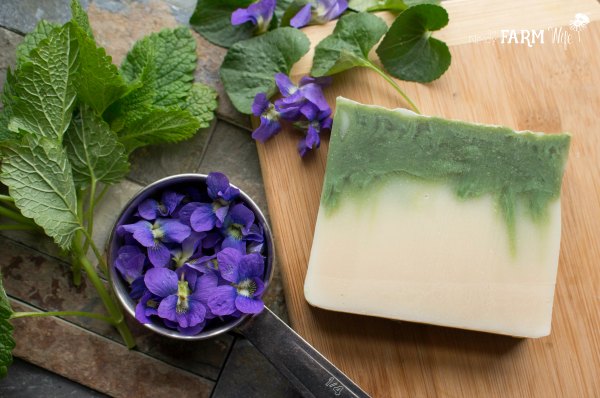
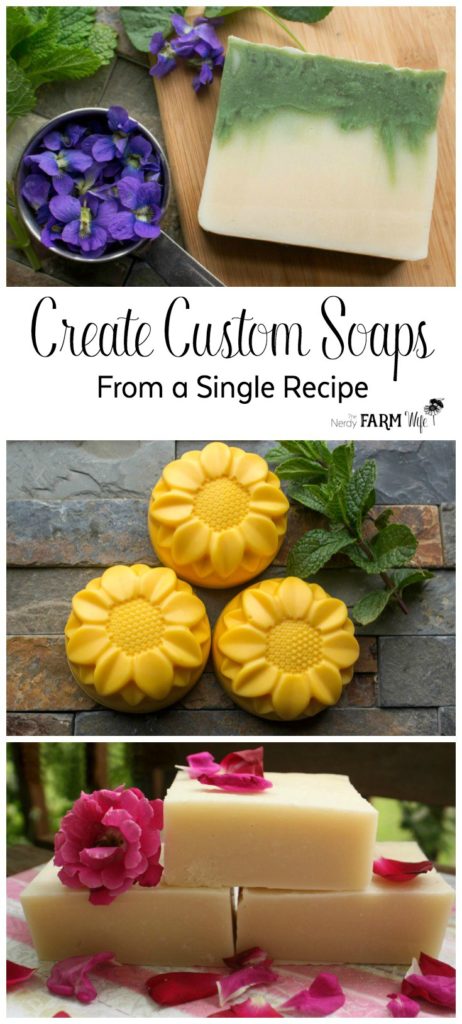
Springtime Violet Soap
This is one of my all-time favorite soaps! Every spring, we have loads of violets blooming around here and I love to create different things with them.
Even after the blooms are gone, the leaves hang around and are most useful. (See my Violet Leaf Salve, Violet Leaf Honey Cough Syrup & Sweet Springtime Violet Jelly recipes for more ideas of ways to use fresh violets.)
Violets are excellent for skin problems (especially eczema), have been used in the treatment of fibrocystic breast disease and are purported to have anti-cancer benefits. I try to incorporate them in my products whenever possible!

To make the violet blossom infusion, collect a jar full of violet flowers and pour hot water over them. Cover with a saucer and let steep a few hours. Strain before using in your recipe.
- 12.5 oz (354 g) infused olive oil (44.64%) (see *Note)
- 3.5 oz (99 g) sunflower or sweet almond oil (12.5%)
- 8 oz (227 g) coconut oil (28.57%)
- 4 oz (113 g) kokum or cocoa butter (14.29%) (OR use tallow or lard)
- 3.95 oz (112 g) lye (sodium hydroxide)
- 8.5 oz (241 g) cooled violet flower infusion/tea
- at trace, stir in 1 tablespoon tamanu, jojoba or rosehip seed oil
- optional, at trace, stir in 20 g lavender essential oil + 6 g ylang ylang essential oil
- optional for green swirl, 1 tsp chlorella mixed with 2 tsp warm water
Make soap according to the directions in Soap Making 101. The recipe is sized to be 2.5 pounds and will fit THIS MOLD.
I most often buy lye from Amazon or my local hardware store. (Comstar is a brand that always works well for me, and I also like Essential Depot Food Grade Lye.)
*Note – infuse the olive oil with violet leaves. See my article about How to Make Violet Leaf Salve for directions on making violet leaf infused oil.
To get the green swirl, pour most of the soap mixture into the molds, reserving around around 1/2 to 1 cup or so. Working quickly, add the chlorella and water mixture to the reserved soap batter until you get the shade of green you like. (It will fade over time, so go a little darker than you think you’d want.) Pour this over the top of your plain soap, then use a chopstick to give it a little swirl or two, similar to when making a marble cake.
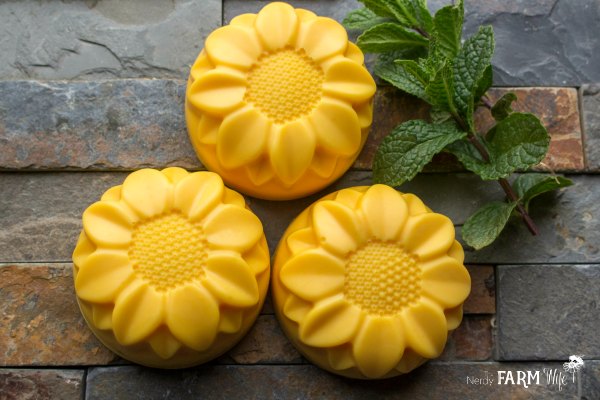
Sunflower Soap
The color for this soap comes from substituting a small amount of sea buckthorn oil for olive oil. Sea buckthorn oil is a very strong natural colorant that’s fantastic for many skin conditions; a little bit goes a long way!
- 11.5 oz (326 g) olive oil
- 1 oz (28 g) sea buckthorn oil
- 3.5 oz (99 g) sunflower or sweet almond oil
- 8 oz (227 g) coconut oil
- 4 oz (113 g) kokum or cocoa butter (OR use tallow or lard)
- 3.95 oz (112 g) lye (sodium hydroxide)
- 8.5 oz (241 g) distilled water
- optional, at trace, stir in 20 g lemongrass essential oil
Make soap according to the directions in Soap Making 101. The recipe is sized to be 2.5 pounds and will fit THIS MOLD, but I used THESE pretty sunflower molds for this batch.
A Few More Customization Ideas:
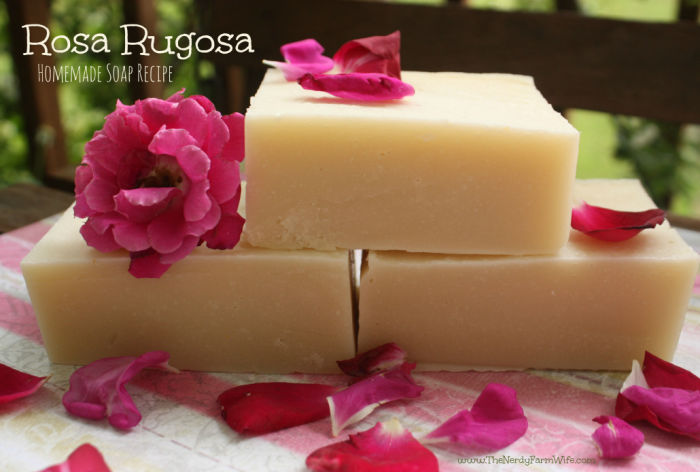
- For a Rosy Soap, stir up to 25 grams of geranium rose essential oil into the basic soap at trace. (Geranium smells like rose, but is less costly.)
- For an Oatmeal & Honey Soap, stir in 1 teaspoon of honey mixed with 1 teaspoon of warm water, along with 1 tablespoon of ground oats at trace.
- For a Lemon Poppy Seed Soap, stir in 20 grams lemongrass essential oil and 1 teaspoon poppy seeds at trace.
For many more natural soap recipes, tutorials and inspiration, be sure to check out my Handmade Natural Soaps Ebook Collection:

Wonderful page, very detailed and simple way to produce home made soaps, thanks for sharing the info.
Thanks Herbcyclopedia! :)
I have a question about seizing. I was making a hemp oil herb CP soap. I used 454 g of coconut oil, 227 g of sage infused olive oil, 227 g rosemary infused olive oil, 227 g hemp oil, 167 g lye, 56 g aloe vera, and 318 g water. Everything looked fine, I mixed when both were around 120 degrees. At trace I made the mistake of adding my essential oils (26 g white thyme and 26 g rosemary mixed with 2 t Vit E) at the same time I added 1/2 t green chrome HYDROXIDE mixed in 1T olive oil, so I don’t know which was the culprit. It immediately started to seize. I threw it away and want to try again. Do you think it was the green chrome hydroxide? Is that the same as hydrated green chrome oxide? I got a sampler on Amazon, and I thought it said it was for soap. I probably should have known better. Or do you think it could have been the essential oils? Or could it possibly have been the infused oils? I’m trying to make a light green soap that has parsley (I was going to add 1T dried), sage, rosemary and thyme with hemp oil for my friends who are coming to visit here in Colorado (if you know what I mean). Any suggestions? I would so appreciate your help, I can’t find any answers just by googling. Thank you!
Hi Peech! If I did my math right, you have:
40% coconut oil (454 g)
40% olive oil (454 g total)
20% hemp oil (227 g)
when I run it through a lye calculator,
It looks like 167 g of lye is right on target for 5% superfat and the liquid looks good too.
Now, going through the steps of my investigation – I just looked up those essential oils you used and this is what I found for white thyme oil:
“This oil can cause some extreme acceleration. Try a very small amount in a blend, it is a good strong scent that should still shine through.”
So I suspect this oil may be your culprit! Check the comments on that link to Bramble Berry as they share a trick to keep it from seizing.
I hope that helps and that your next batch is a success for you! :)
Could you possibly add baking soda at the end to add skin calming and exfoliation? Or will that cause a strange chemical reaction that will make the soap not work?
Hi Holly! The soap ends up very alkaline – too alkaline to use until it has cured around 4 weeks and even then it’s on the alkaline side. I think the baking soda would tilt the balance back too far and it would end up being too caustic. For a different skin calming and exfoliating action, you could try pulverizing some oats and adding those right at the end. I do this with an oatmeal and honey soap (which I can hopefully post the recipe for soon) – but I just add a tablespoonful of honey and 2 or 3 of ground oatmeal at trace. :)
HI. Question? Can I buy lye at home depot or Dixieland or Lowe’s? What does it look like. Also I only have olive and coconut oil can I just use these in the recipe. Why are so many people talking about harmful effects of lye? You use it even with your sons concerns? Please advise.
Hi Lory, in order to make soap – any soap, even store bought ones – an alkali has to be mixed with a fat. Most soap makers use sodium hydroxide (Lye) as the alkali to mix with their fat/oils. (or potassium hydroxide for liquid soaps)
All by itself, lye is super alkaline which can be caustic to your skin – just as harmful as a strong acid. However, when the lye solution mixes with the oils, the lye molecules break apart into sodium (which combines with the oil to make soap) and hydroxide (which becomes part of the glycerine – the moisturizing part of soap that major producers usually remove so they can sell it separately.)
So, while lye is used to MAKE the soap, by the time you are done & your bars are ready for use, there is absolutely no lye left in your soap – it’s all been saponified (or turned into soap.) The bonus with homemade soaps is that the moisturizing glycerine hasn’t been removed, so they are extra soothing to your skin.
If you look at a bar of storebought soap – you might see the ingredients “sodium cocoate” or sodium palm kernalate” – those just mean that lye has been added to coconut oil and lye has been added to palm kernel oil. All soap must have lye or the chemical equivalent or it’s not really soap.
Our Lowes doesn’t carry lye – it took a while to find it around here. I finally found some in the local Tractor Supply and later in a small mom and pop type farmer seed/hardware store – both times it was in a white plastic canister and found in the plumbing area. (It’s used as a drain cleaner.) You can order it online from places like Amazon, etc.
Yes, you can use olive and coconut oil – but you would want to use a recipe like:
https://thenerdyfarmwife.com/rosa-rugosa-soap-recipe-palm-free/
or
https://thenerdyfarmwife.com/oatmeal-honey-soap-recipe-palm-free-gluten-free/
and just use whatever infusion you want plus you can change around the things you add at trace using the instructions above.
I hope that helped answer your questions! :)
Lori you need to buy lye online at a soap supply company or Amazon.
I’ve been looking all around for cold process soap, because I have eczema and all I can find is just plain cold process soap. No website or video that I’ve found tells you how to add different ingredients from your garden or from plants. When I found your website, you explained everything so well and I now feel confident to make my own handmade soaps. Thanks so much.
Hi Niall! I’m happy to hear that you’ve found the information helpful. Best of luck making your soaps! :)
Hi, My stepfather just made a few molds for me that are 15x17x4″ (bars will only be 2″ not 4″) but I can’t figure out how big of a batch to make. Could you help me? The first soap I want to make is a creamy castile, so just olive oil, water, goat’s milk, and lye. Can I measure the mold using water somehow? Is there an easy way to figure out the volume?
Thank you for your time! Your site is awesome, and very informative!
Hi Kat! Thankfully, there is a formula to use! :)
The formula is L x W x H = Volume
then take
Volume x .40
to figure out how much oil the recipe should have.
So L x W x H = 15 x 17 x 4 (but you only want 2″ tall not 4″ tall, you’ll use 2) SO
15 x 17 x 2 = 510
510 x .40 = 204
So, 204 ounces of olive oil is what you’ll need to plug into the lye calculator. That’s a big batch of soap!! :) My batches tend to be around 82 or 84 ounces of oil and I get about 18 bars from that.
Be sure to double check my math, because I’m no numbers whiz and good luck with your soap! :)
Does it matter what kind of oatmeal I use?
Hi Michiele! I use gluten free rolled oats, but you can use regular or quick – most any type should work. I use a mini coffee grinder to turn them into a coarse powder for the soap.
Hi,
First, I love your website!!
Do you have any experience making shaving soap? I’d like to try some for my husband.
Thanks!
Hi KimC and thanks! :) My hubby has used some of my regular soaps in the past for shaving, but way HIGH on my to-do list is to try and make some type of shaving soap for Father’s Day. So, if I come up with something good – I’ll be sure to post it soon!
Great web site. Do you have a recipe for pine tar soap? Tried to make and could not get recipe mixed before it set up. Now have a bag of crumbled soap!
Oh no! I bet that was quite the mess! I’ve heard of pine tar soap, but haven’t tried making any so unfortunately, don’t have a good recipe to share with you. I hope your next version is more cooperative though!
What kind of oil can I use instead of palm oil?
Hi Anita, There are a few possible ways you can take to make soap without palm oil. First, you can find a recipe that is already palm free. A few palm free recipes are on my Soap Making Page, I really like the Rosa Rugosa one:
https://thenerdyfarmwife.com/rosa-rugosa-soap-recipe-palm-free/
You can adapt it just like I did in this post by changing the infusion and the ingredients you add at trace & not have to deal with the palm oil & recalculations OR you can try taking out the palm oil from the recipe above completely and substituting more coconut oil for part of it and adding something like sunflower oil & maybe even a little shea or mango butter to make up the difference in total ounces of oils used. If you do that, you’ll have to run it through a lye calculator (I like Soapee.)
The rosa rugosa soap was based on this recipe above that uses palm oil so you can kind of see how far you can change things and still get good results. (As long as you use the lye calculator to refigure lye amount.)
I understand about calculating the oils but you also add the lye water so how does that work? wouldn’t there be too much to fit into the mold?
Hi Allison! After you calculate the total volume that a mold will hold, you multiply it by .40 (or 40%) to get your oil amount. So you’re not taking up the entire volume of the mold with just oil.
Are the ounces of oil in weight or volume?
Hi Peech! All measurements for my soap recipes are by weight.
Well that makes sense! Thank you!
You’re welcome! :) You brought up a great point that I had never thought of. I had to think about it a while too!
Could Neem oil be substituted for Palm Kernal oil?
Hi Angela! You could substitute Neem oil if you run it through a lye calculator first:
https://www.thesage.com/calcs/lyecalc2.php
However, that’s a pretty good amount of neem, just be aware that the bar will probably carry the smell.
You might want to substitute more coconut oil for some of the palm oil then add neem oil to make up the difference in weight. Whatever changes you experiment with, just be sure to use the calculator to get the correct amount of lye & it will (usually) turn out great!
Hi, I love your website! I just finished making my first ever batch of soap! I have so many questions, but first on my mind is this: I used goat’s milk and a wooden spoon and a recipe that calls for coconut oil, shortening, and olive oil for the fats. Instantly when I poured the lye into the milk and began stirring, my soap turned brown. Is this because the lye leached out color from the wooden spoon or is the coloration due to the use of goat’s milk? I don’t even know if it is a success yet, but will let you know later after it (hopefully) sets up, thanks!
Hi Julie! I’ve not used goat’s milk in my soaps, but my mother-in-law has. All of her milk soaps are cream to slightly tannish. I think a lot of it has to do with the temperature of the milk. She adds the lye directly to partially frozen goats milk. If it gets too hot, the sugars in the milk scorch, causing it to turn brown. A good thing about cold process soap is that as it cures, it usually gets a lot lighter. I’ve had a few soaps turn out differently than I wanted, but by the time the 4 weeks passed, I was much more satisfied with the color.
I would love to know how it turns out – I’m hoping for a big success!! :)
Yes! I do believe the milk was scorched. The good news is…the soap set-up and it is a beautiful golden color! I didn’t use any fragrance, however I did chop up some fresh rosemary from my garden, but apparently not enough to make a scent impact. That’s okay though, because I think I will try my hand at re-milling the soap and add fragrance during that process. I’m so excited! I have to thank you for giving me the courage to move through the ‘lye’ step as I too was very uncertain about that step of the process, actually quite scared. I found your site and began reading and was able to ‘get on with it’ so to say. Thank you so much!
1
Your soap sounds like it’s going to be wonderful! :) After you handle the lye once, you’re over the hardest part. Happy soapmaking!! :)
My dad is really allergic to coconut anything (avocado too, now that I think about it), but every recipe I find always says to use coconut oil. I’ve read some on babasu oil, palm oil and pko, but they all have very similar chemical make-ups to CO, is there anything else I could use? And just so you know how allergic my dad is to things, he’s also allergic to Aloe Vera, I kid you not.
Hi Sarah!
I can believe it, I have a nephew highly allergic to aloe vera as well and a niece who seems to react to anything made with olive oil! Allergies are crazy things!
You can try substituting other oils for the coconut oil/palm oil, though they are two that make your bar hard and lathery, so just keep in mind your final bar *might* be on the soft side without as much suds.
If you go to the lye calculator here:
https://www.thesage.com/calcs/lyecalc2.php
you will see that they have most of the oils/butters clickable. You can click on each oil type and see what they say about it. For example, under sunflower oil, they say: “For soaps use up to 25% sunflower oil.” So, you could go through the different oils you’re interested in and add that to your recipe to make up for taking out coconut & palm, keeping their guidelines in mind. It would take a little time to tinker with the amounts, but I think you could end up with a nice bar that way!
For another alternative, you can use lard. It supposedly makes an exceptional soap, but I haven’t tried it. I know you can buy high quality lard now, so it’s always a possibility!
If I can think of any other ideas or run across a recipe like that – I will let you know. Several people have written me with an allergy to coconut and don’t want to use palm, so I would love to sit down and work out a recipe one day that doesn’t use either, as well. On my never-ending to-do list! :)
Hi Jen, love your site! Thank you for all you do and for helping so many Newbies like me.
I am trying to find the courage and understanding to start my first batch. So I plugged in the Oil amounts into the lye calculator. Not because I don’t trust your info, but because I want to understand how it works. (A little OCD, I need to do it right the first time)
Why does it give such a wide range of amounts for both the water and the Lye? And how do you choose the final amounts?
Another odd question: why not use grams when weighing to be more accurate? (Again the OCD bites me).
Thanks in advance
Hi Bluenoser!
That is great to plug in the oil amounts for any recipe you find – even in a published book or from a reputable source. Typos happen all the time! :)
The range of water: less water makes your soap more likely to set up faster; more water will give you a little more time until it reaches trace. More time is especially helpful if you’re adding things like honey or certain fragrances, because then your soap could possibly seize, or set up too fast on you. I always do a middle range of water and that seems to work each time for me.
As far as lye: The numbers are percentages. A certain amount of lye is needed to completely saponify a certain amount of oil with no extra lye and no extra oil left over. The problem with this, is that the soap won’t be moisturizing so could dry out the skin/be too harsh to use. You want to have some oils left over, to make a nice, gentle bar of soap that’s easy on the skin. Around 6% is a good happy medium that I like. If you have TOO much oil left over though (9 or 10%) then your bar will tend to be too soft and could possibly go rancid on you much sooner. (It will still work okay & will probably be super moisturizing, just be aware of the shorter life span.) If you use this calculator here, they have the recommended range of lye color coded for you: https://www.thesage.com/calcs/lyecalc2.php
You can definitely weigh in grams. I just use ounces since my scale will break down accurately that way. I believe the lye calculator will let you convert between ounces and grams.
Good luck with your first batch!! :)
Thank you Jan.
Your site is so informative and shared. I feel so positive because when you read your recepies they feel good. I am hoping to start making soap to help some people and have done a lot of research and was confused with all the processes. I really want a organic, natural product with good smells that heal the senses. No one gave the recepie to match the process. Adding some ingredients at trace must be important. Can I ask is it better to mix oils at room temperature to match the lye or at heated temp. Thank you once again.
Hi Dale, I’m glad you like the site! :) Adding ingredients at trace will definitely help make the soap have a certain smell or color, so that’s the best place to start with personalizing your soap to be just how you want it.
You want the oils and lye mixture to be roughly in the same range. Here’s a bit on temperatures – this is step 8 in my Soapmaking 101 post:
https://thenerdyfarmwife.com/soap-making-101-making-cold-process-soap/
“Before mixing, make sure your lye and oils are roughly the same temperature in the range of 90 – 125 degrees F. I sometimes add an ice cube or two to my lye solution to cool it faster (remember the water amount can be adjusted by this small amount) or set my pan of oil down into a sink filled with a few inches of water and ice cubes if it needs cooling. Temperature is a subjective, personal preference that varies between soap-makers. Some will only mix at higher temperatures than I list while others let everything sit overnight and mix the next morning at room temperature. The main thing is that your lye solution and oils are about the same temperature when you mix them. Once the desired temps are reached, slowly drizzle your lye solution into your pot containing oils and butters.”
(I will add though, that lower/room temperature mixing just doesn’t work as well for me as the 90 to 125ish range, so I don’t suggest starting with lower temps for your first batches.)
Hi Jan, firstly, thank you for sharing some wonderful info on your site. I am enjoying it immensely.
I am an old soapmaker of many years, i think that tallow (beef fat) makes a harder bar of soap than lard (pig fat). Both can be mixed of course. I was making soap before all the oils now available were even thought of and it was all we had but it still best for allergy free soap.imho
Anyone allergic to nuts will find tallow soap will be the way to go. A lot of vegans will not use tallow of course but actually it is good recycling practice to use these fats that would otherwise be discarded into the environment.
Also the melt @ pour soap bases are not at all chemical free and contain harnful petro chemicals as do many commercial soap brands. Which of course is why we all make lovely natural product soaps isn’t it?
Thanks for sharing, Sue
Hi Sue Bee, Thanks for sharing your wisdom and experience with us! I’ve heard that bars made with tallow are exceptional; I just haven’t had a chance to try working with it yet. I like that perspective of recycling those fats into useful products. :)
What kind of olive oil do you use? extra virgin or regular?
Thanks!
Hi Ibis! I use regular or light olive oil, but the types are interchangeable in a recipe – so any kind will do! (One thing to keep in mind though: extra virgin olive oil might lend a slight green tint to your finished soap.)
hello Jan, i love your site too. it’s very helpful for a newbie like me. i have a question about your healing skin bar made with herbal tea. can i use herbal tea teabags? thanks!
Hi MB, Thanks – I’m glad it’s helpful for you! Herbal tea bags will work just fine. :)
I think that you are so wonderful to share your knowledge with everyone and I love everything that you have shared about herbs and making soaps with herbal ingredients. I have just begun my soap making and love the process and the satisfaction it gives me to make and give away my creations. My question is when you mix the lye with herbal teas or aloe, does the lye reaction affect the goodness of the herbs or aloe? Thank You so much. :o)
Hi! I’m so happy that you enjoy the blog and recipes! There is some debate about whether the benefits of herbs and aloe make it through the soap making process. Some say yes, some say no. Personally, I feel that some benefits must remain because I can tell differences between bars using the same recipe, but difference additives. Mainly though, I enjoy the creative aspect of using plants from my garden, more than anything. Having said all that, I have gotten to where I like adding an ounce or so of aloe (and other goodies like witch hazel) in at trace, instead of at the beginning of a recipe. (Just in case!) :)
I was wondering what you would recommend to replace tamanu oil with. I have a few people that have nut allergies so I can not use it.
Thanks
Hi Robin! Tamanu oil has a ton of skin benefits that would be hard to replace. I can definitely understand needing to avoid it for nut allergies though.
Here are a few that might offer up some similar qualities: Rosehip seed oil, argan oil, jojoba oil, hemp seed oil, and pomegranate seed oil (which is REALLY nice, but also pretty expensive to use a lot of.)
Jan,
I was wondering if you use dried rosemary in your soaps or rosemary oil? Or if you have experience with both? I can’t decide if I should do oil, a tea, or ground up fresh rosemary.
Hi Sarah! You can use a rosemary tea for the water portion and a rosemary infused oil for the oil portion. If you add ground up rosemary, you want to use dried (fresh will spoil in the soap) and also grind it up very fine, so it’s not scratchy. (Also keep in mind that it will turn brownish/black as time goes on too.) Good luck with your soap! :)
Do you make your own rosemary oil and if so how?
Thank you so much for the information. I just picked up 2 gallons of fresh goat milk yesterday and I am I the process of freezing it so I can get started on my first batch of goat milk soap!
Hoping to incorporate Rosemary.
Hi Sarah, You can make your own rosemary oil by infusing dried rosemary in oil. You can use the same technique as this post (just use rosemary instead of calendula) https://thenerdyfarmwife.com/calendula-oil-salve/ Good luck with your soap! :)
Hi, Do you have to use distilled water for the basic soap recipe?
Hi Geri! It’s recommended to use distilled water, since tap water can sometimes contain impurities or water treatment ingredients. However, if I don’t have any on hand, I just use my tap water (which is well water.) You could also use bottled water if yours is chlorinated.
Jan,
Do you ever make soap using marigolds? I have plenty of those!!
Just love your website and enthusiasm you have to share.
Thanks so much for supporting everyone at all levels of soaping!
Roberta
Hi Roberta, I’m happy you like the site! :) Marigold soap…. that is an interesting idea! I did a quick peek at google, but it seems when people say “marigold soap”, they mean calendula. I have to zip out for animal feed this morning, but will look more at the idea this afternoon. I too have a bunch of marigolds & keep meaning to find a use for them! :)
Just ran across your website and I found it very helpful. Looking to make a carrot soap with carrot root oil and wasn’t sure on the proportions to oil. Does carrot seed oil impart scent or do you use it for other reasons?
I’ve been experimenting with rendered lard to make my soaps and I love it plain, but my husband says he can smell the bacon. I think it’s all in his head.
Hi Therese! I’ve used carrot seed essential oil in a few recipes, but it smells strong (not in a good way) so I mask it with other essential oils. (This could just be a personal preference thing though; some people might like the smell!) I don’t think I’ve put it in soap, mainly because I’m not sure how it would hold up and I don’t have a ton of it. It might be very nice in a carrot soap though. Its main purpose is for skin healing & possibly some anti-aging benefits. A little bit goes a long way; here are two recipes I’ve used it in and you can see I just use a small amount: https://thenerdyfarmwife.com/blue-chamomile-cream-updated-version/ and https://thenerdyfarmwife.com/aches-pains-balm-recipe/ I don’t think I ever found an official usage guide for it; I just picked those amounts based a lot on smelling my product and seeing how much I could get away with adding for the benefits, without it overwhelming the other scents.
I’ve been thinking about making my own soap and shampoo bars because I am allergic to or sensitive to so many things coconut, olive and palm oils just to name a few. These things seem to be in every natural bar soap and shampoo bars. You said your son is allergic to a lot of things how did you figure out what you could put in the soaps that would not bother him. Did you do patch test or did you just put in and try it. Also do you have any ideas to replace these oils?
Hi Lisa! I did have to do a lot of testing at first, and even though at one point he couldn’t eat coconut – he could still use it in soap, so that sure helped. (In his case, it wasn’t because of an actual coconut allergy, but because of malabsorption issues with it.) I know it’s very hard and especially for you it must be – since olive oil is in every soap that I know of. What kind of oils are safe for you to use? (i.e. Castor, avocado, almond, peach kernel, babassu, sunflower, lard, tallow, cocoa butter, shea butter, mango butter, hemp, canola, and so forth…) If you let me know those, then I will see if we can work up a recipe for you!
I’m not sure I just started looking into this I just finally got tired of doctors not being able to help me. The dermatologist told me I would have to patch test each ingredient I have a lot of food sensitivities my dietician said they could also be sensitive on my skin I am kinda overwhelmed. I started researching because I can not use any kind of store bought shampoo because besides coconut I am allergic to fragrance and the alcohol they use in essential oils. So I was hoping that I could make a shampoo bar or a soap that I could use for both that was just very basic. What I was hoping is I could get maybe small amounts of different ingredients so I could test them but I don’t think any company is going to be able just to sell me samples so I can do that and it can get expensive trying to buy the big sizes and just ending up not being able to use them. So if you have any suggestions that would be great but if not thanks for your reply.
Hi Lisa! I’m going to think a little bit on some options for you and get back with you in the next day or two. I’m sure we can find a soap that you can use! :)
Thankyou
I see your ebook for using milk products with soaping. My question is I would like to use dry powdered goats milk. Will my soap be just as creamy? Also how do I fugure out how much to use. Thanks!
Hi Colleen! You sure can use powdered goat’s milk in soap! :)
Did you ever come up with a soap that you think I could use?
Hi Lisa! I sent you an email – did you get it?
I did not see an email from you can you send it again please?
Okay, just sent it again. You might need to check your spam folder in case it got filtered there. It’s titled: “Oils for Soap” and it’s from my honeybeehillfarm (at) gmail.com address. The gist though is I was wondering what foods do you KNOW you can have? We can start with those. i.e. if you can eat beef then perhaps you can use tallow in the soap. If you do well with pork, then lard. Peaches, then perhaps peach kernel oil. What oils do you use for cooking now? Canola? Sunflower? Grapeseed? I’m hoping we can piece together enough oils that you can have (even if it’s an unlikely combination for soap) and see what we can come up with!
Thanks so much for this . it is so informative. Your recipe states to add three tablesppons of different oils to superfat the soap. Is this 3 tablesppons each or a total of 3 tablesppons ? thanks for the clarification.
Hi Lulu! You can use up to three tablespoons total in the recipe. (Not 3 tablespoons of each type.)
Hi Jan,
First of all, I love your website! Wonderful recipes and details.
I would like to ask about using herbal tea or flora tea in the recipe. I am thinking of making a batch of Earl Grey tea for my hubby but in the country I stay I just can’t find the FO/EO of Earl Grey :(
I am just wondering if I were to use tea to replace with water like some of your recipe above, will the scent stay in the soap? Let’s say I make a really strong brew of Earl Grey, will it lost it scent when it added into the lye?
Thanks,
Zoe
Hi Zoe, Thanks for the kind words; I’m happy you like the site! :) I do make an Earl Grey tea soap by using tea in the water and also by grinding up the tea to a powder and stirring a little bit in at the end for texture. Sadly, the scent doesn’t make it through the soap making process though, so I usually scent the soap with bergamot essential oil.
Can I use another oil as a substitute for the palm kernel oil? Maybe avocado or sunflower oil or grape seed oil?
Hi Joni! Hopefully soon, I’ll be remaking the last few recipes on my site that contain palm oil, so that they’re palm-free as well. Until then though – palm oil has many different properties than avocado, sunflower or grapeseed, so they wouldn’t be ideal direct substitutes. (You could use lard or tallow as a direct substitute for palm oil though.) If you don’t want to use animal oils, I would just take a basic soap recipe, maybe like this one: https://thenerdyfarmwife.com/calendula-soap/ and then tinker with it, similar to the ideas in this post. I have a write-up too on how to convert soap recipes to be palm free, you might find helpful: https://thenerdyfarmwife.com/how-to-make-any-soap-recipe-palm-free/
Can you briefly explain why palm oil is bad? I just don’t know. thank you. when I was a kid in the 60’s we used soap my grandmother made. It was yellow if I remember. She cured it in the cellar. I made my first batch about 1995. I haven’t done much since. I’ve been buying it lately and now I want to get back making my own. I want to pass it on to my daughter who is having her first baby.
Hi Eddie! Palm oil is controversial because large cooperations are destroying animal habitats and dislocating indigenous peoples, because consumer demand for it is so high. While you can find oil that’s labeled “sustainable”, from what I understand, anyone with enough money can buy into the label, plus its not really enforced, making the descriptor fairly meaningless. Here’s a good link: https://www.rainforest-rescue.org/topics/palm-oil Sometimes, with things like this, it’s hard to know what’s what, since I can’t see it all first-hand. It just seems simpler to play it safe and avoid palm as much as possible, since there’s plenty of good soap to be made without it. :) Congratulations on your upcoming grandchild! Handmade soap would be a wonderful gift for your daughter! :)
Hi. I enjoyed your article. The recipe for your sunflower soap used palm fruit oil. I did the same thing and accidentally ordered a gallon of palm fruit oil.
However, I’ve looked everywhere and could not find a sap value for palm fruit oil. Does it share the same sap value as palm oil? Thanks.
Hi Connie! I believe it’s the same, or if not, it should be fairly close. When making recipes to use up my gallon, I calculated it as palm oil and it seemed to work out!
Can i use old lotion in place of part of the oils to make soap??
Hi Susan! I’m afraid I don’t see any way of that working out well. There wouldn’t be any easy way to tell how much lye would be needed to break down the particular oils in the lotion.
You’d also have a lot of additives in the lotion that might react in a weird way with the lye.
Also, you don’t want to use any old ingredients in soap since that will make the finished bars prone to developing DOS (dreaded orange spots – which means the soap has gone rancid.)
I like your train of thought though and have wondered in the past if it’s possible to add a bit of someone’s favorite lotion to enrich a soap (maybe as an add-in after cooking hot process) but have never researched or tried the idea to see if it can be done or not.