
How to Make Herb Infused Oils (+FAQS & Tips)
Learn how to make your own herb infused oils in this step by step guide. You can then use your finished oil to make lotion bars, creams, body butters, salves, lip balms, and natural soaps!
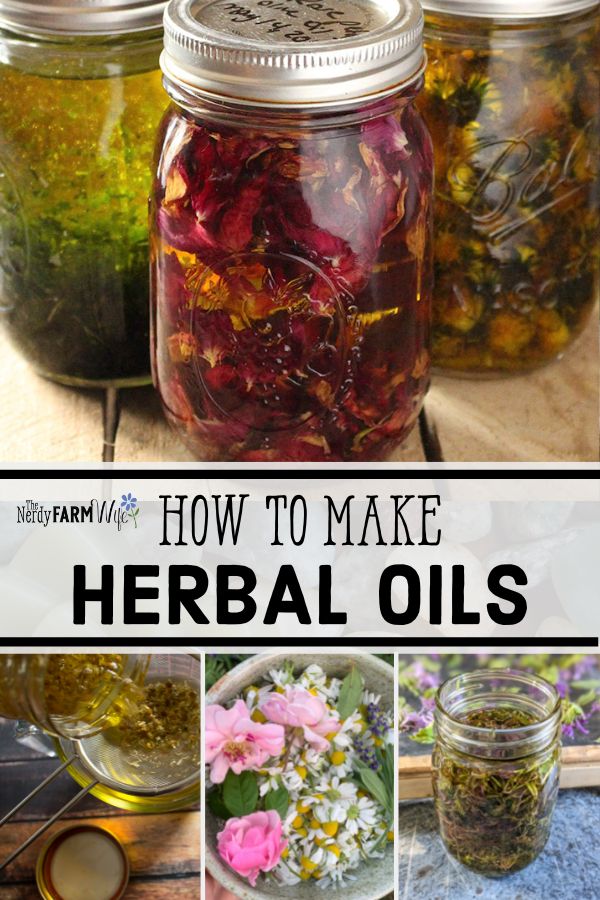
Flowers and herbs are filled with healthy components, but to harness those benefits for skincare products such as salves, lotion bars, serums, etc., we need to first infuse them into oil.
For most herbal oil infusions, it’s recommended to use dried herbs and flowers, to avoid introducing moisture into the oil which creates cozy spots for mold and bacteria. (There are a few exceptions where it’s best to use fresh herbs, more on that below.)
RELATED ARTICLE: How to Harvest and Dry Flowers & Herbs From Your Garden
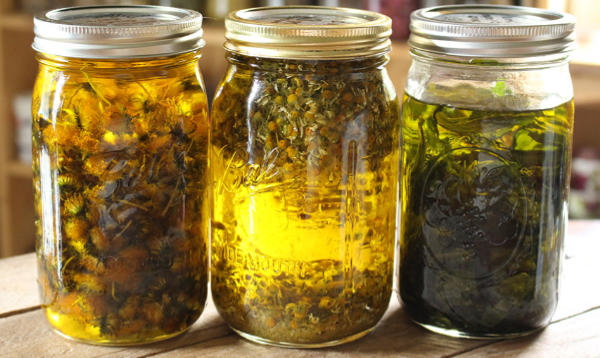
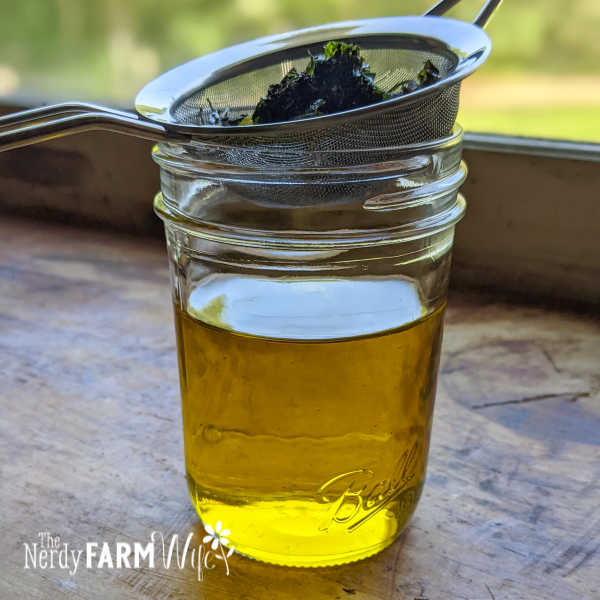
How to Make a Basic Infused Oil
I like making my infused oils using the folk method – which is a rather imprecise way that relies on natural intuition and eyeballing ingredients. This suits my style of herbalism and personality.
However, some herbalists prefer using a specific math formula, so that their infused oils stay consistent and can be easily replicated.
Both the folk method and the math formula way are explained below!
Ingredients Needed for Herb-Infused Oils:
- dried flowers and/or herbs of your choice
- half-pint or pint canning jar (mason jar), depending on how much oil you want to infuse
- carrier oil(s) of your choice (see below for a few basic oil choices)
Instructions for Folk Method:
- Measure out the herbs and oils and place inside the canning jar, or other heat safe container.
- If a recipe doesn’t specify how much herbs and oils to use for an infusion, fill the jar halfway with dried herbs, then add enough oil so the jar is almost filled to the top, leaving a little headroom for expansion.
- At this point, you can choose to infuse your oil using the quick heat method (2 to 3 hours), sunny window method (2 weeks), or slower traditional method (4+ weeks)
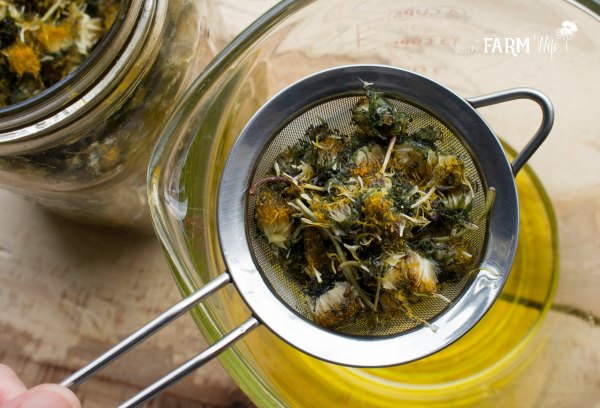
Or, The Math Formula Way
A basic ratio is 1:5 which means 1 part dried herb by weight in grams to 5 parts oil by volume in milliliters.
An example would be:
- 100 grams of dried ground lemon balm (or calendula, nettle, etc.)
- 500 milliliters oil
- Make sure your herbs are dried and crushed into small pieces.
- Weigh the herb and put it in a canning jar.
- Add the oil to the jar, stir well, and cover with a lid.
- Infuse the jar using your desired method, shaking or stirring the contents daily.
- Strain through a fine mesh sieve and store in a labeled jar.
Three Infusing Techniques
Once you’ve sorted out the amount of herbs/flowers and oils needed, there are three main ways of infusing them together.

1. Quick Heat Method:
This technique is good if you’re in a hurry for your infused oil. However, it tends not to be as strong as a traditionally infused oil. The quick method is also used for infusing solid oils – like coconut oil (see this Whipped Dandelion & Coconut Oil Moisturizer recipe) or entire body butters (see my FREE Guide to Making All Natural Body Butters).
To infuse oil the quick way:
- Place the uncovered jar in a small saucepan containing several inches of water, forming a makeshift double boiler.
- Heat the pan over low heat for 2 to 3 hours.
- Strain out the amount of oil needed for your recipe.
- To extend the usefulness and potency of the leftover oil & herbs for future projects – top off the jar with fresh oil, cover with a lid, and infuse longer, using the sunny window method or slow traditional method.
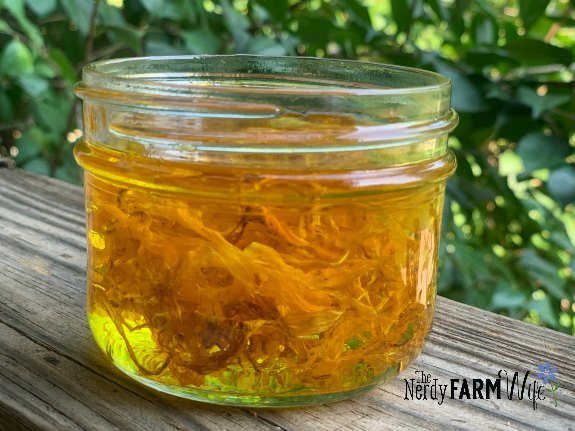
2. Sunny Window Method:
This method takes advantage of the natural heat provided by sunshine. It works nicely for a few weeks of infusing time, but you don’t want to leave it in direct sunlight long term.
Some herbalists prefer to stick the jar of herbs and oil down into a paper lunch bag, so the infusion can benefit from the natural warmth of the sun, but won’t be exposed to direct UV rays.
To infuse oil in a sunny window:
- Cover the jar of herbs and oil with a lid (or breathable top like cheesecloth if you’re using fresh or wilted herbs) and place it in a sunny windowsill, leaving it there for two weeks. The natural heat from the sun will help infuse the oil.
- Shake the infusion once per day, or as often as you remember to.
- After two weeks, strain and use the oil, or you can move it to a darker spot and finish infusing for a few extra weeks, for a stronger oil.
- Don’t infuse for too long in the sunlight or your herbs could begin to fade and lose potency over time.
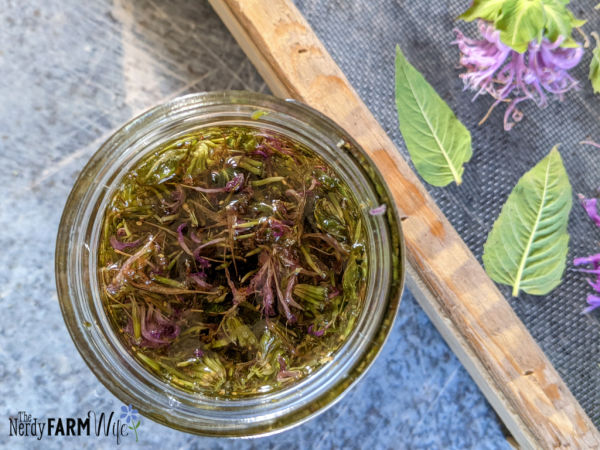
3. Slower Traditional Method:
This method takes time and patience, but it usually results in the strongest, most effective oils.
To infuse herbal oil the slower way:
- For this method, cover the jar of herbs and oils with a lid, and tuck away in a cabinet or pantry at room temperature.
- Shake the infusion once per day, or as often as you remember to.
- After 4 to 6+ weeks, strain the oil and store in a labeled jar.
How to Make Double or Triple Infusions
For a stronger product, you can infuse one batch of oil and strain. Take the strained infused oil and pour it over a second new batch of herbs in a new jar, then infuse the quick way, sunny window way, or slow way.
The herbal components from the newer herbs will be extracted into the infused oil, forming a double infusion.
If you strain that oil and do the process all over again for a third time, you create a triple infusion.
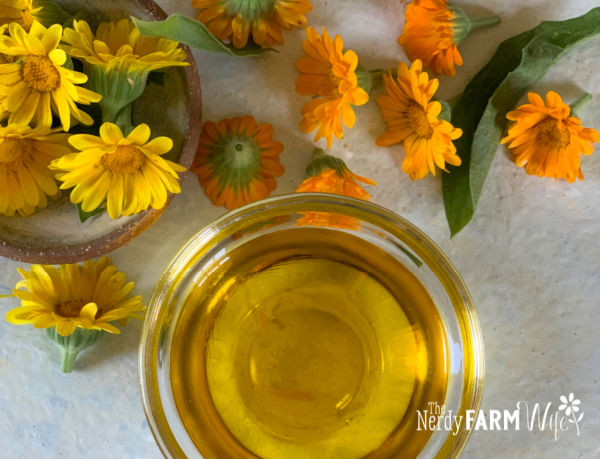
Oil Suggestions
The kind of carrier oil you use is completely up to you, however, keep in mind that different oils have differing benefits and rates of absorption.
Here are a few oil choices to consider. (I have much more detail on 45+ oils and butters, absorbency rates, benefits, and more in my Handmade Lotions & Creams eBook collection.)
Olive Oil (Olea europaea)
Extra virgin olive oil is a popular choice for infusing, since it can be used in soapmaking and all kinds of skin care products. Keep in mind though that it does have a heavy feel on your skin, so skincare products made with it will feel more oily or “greasy” than lighter oils. This might be a great thing for you if you have dry skin!
Sunflower Oil (Helianthus annuus)
Exceptional for those with sensitive or damaged skin, or those with eczema. It’s a nice neutral oil, though it is on the heavier side as far as absorbency.
Sweet Almond Oil (Prunus amygdalus dulcis)
This oil is wonderful for many skin types and has a medium absorbency rate, making it a great all purpose oil.
Coconut Oil (Cocos nucifera)
This oil gets solid when it drops below 76 degrees F, so is normally infused using the heated quick method. It also picks up the color of many yellow flowers nicely – so you can expect your dandelion infused coconut oil to have a pretty yellow color!
Video: Infusing Oils
Here’s a video of me infusing some herbal oils. You can see just how easy it is to do! (Sometimes an ad plays first, but the video will start right after. The video player won’t show up if you have an adblocker.)

FAQS About Infusing Oils
Can I re-use the herbs and flowers after using them in an oil infusion?
If you use only part of the infused oil before straining it, you can top off the infusing jar with more oil & allow it to infuse again in a dark cabinet for several weeks. Don’t do this repeatedly though or you’ll end up with a weaker oil.
I forgot to strain my oil for months, is it still good?
Yes! As long as your dried herbs and flowers stayed covered by the oil, and the oil still smells good, it will be perfectly fine to strain and use. I have forgot to strain oil for almost a year before (several times in fact!) and it is always in great shape. If you used fresh herbs for the infusion though, there’s a higher chance of spoilage inside the oil.
Can I use infused oils for cooking or eating?
It’s not recommended to use these herbal infused oils for internal use. Infused oils should be applied only to your skin, and not used for food purposes.
There are instructions for safely making infused culinary herbal oil found over at the Penn State Extension Agency. These oils must be treated in special ways if you plan on ingesting them, since botulism can be a risk.

What’s the difference between infused oils and essential oils?
Essential oils are aromatic essences extracted from herbs and flowers through distillation. They have a strong aroma and are very powerful. You should always dilute essential oils and use very small amounts. A single drop can go a long way!
RELATED ARTICLE: Essential Oil Dilution Chart + Amounts to Use in Skin Care
Herb-infused oils are far less concentrated than essential oils, but they contain more whole plant extracts, not just the aromatic parts, and are safe to use in larger amounts.
Why doesn’t my oil smell like the herb or flower I used?
Many people are surprised at the lack of scent the first time they make an infused oil. If you put wonderfully scented lavender flowers into a jar to infuse, then close it up, it seems logical that the scent would transfer to the oil. However, this isn’t the case!
Most aromatic vapors are lost during the infusing process. Some, such as pine resin oil, will retain the scent, but many will not.
Don’t be alarmed, this is perfectly normal. If you’d really like to highlight the plant’s scent in your final salve, lotion, etc, you’ll have to add that plant’s essential oil.
Should I store infused oils in the fridge?
That’s up to you. Some herbalists like to do that, but most just keep them on shelves in a cabinet or apothecary area. If you have an oil made with fresh or wilted herbs, it’s probably a good idea to store in the fridge to help the shelf life a bit.
What’s the shelf life of infused oils?
Infused oils are normally given about a one year shelf life, but this depends on what type of oil you used and whether you used dried or fresh herbs. Dried herb infusions will last longer than fresh herb infusions.
An infusion made with jojoba oil, which has a several year shelf life, should last for several years. On the other hand, an oil like grapeseed oil, which has a shorter shelf life of 6 to 9 months, may go rancid well before you expect.
As long as your oil smells good, it’s usually okay to use. If it smells like old oil or rancid though, it’s time to discard.

How can I infuse fresh herbs, like St. John’s Wort?
I have an entire article written about making St. John’s Wort oil over at my family’s site, Unruly Gardening.
Some herbalists prefer working with fresh or wilted herbs, since they feel dried herbs are less potent. In some cases, you really do need to use fresh (such as St John’s wort) since the oil is pretty useless with the dried herb.
To infuse fresh/wilted herbs:
- Pick the flowers/herbs you want to use and either infuse them right away, or spread them on a screen or paper towel for a few hours to slightly wilt them.
- Next, place them in a glass mason jar and fill the jar about 3/4 way with herb. Use a half pint jar if you only have a small amount of herbs. Use larger jars for larger batches.
- Mash, chop, or bruise the flowers or herbs to expose more surface area to the oil. I use a pair of scissors to snip directly in the jar.
- Pour your favorite oil into the jar, almost to the top. Cover the top of the jar with a piece of cheesecloth or a coffee filter secured with a rubber band – this lets extra water and moisture escape.
- Infuse for two weeks. Some herbalists like to infuse in the sunlight, while others prefer to use a heated source. Experiment with the way you like best.
- Strain and let the oil settle for a day or two. There’s often a layer of sediment that settles at the bottom of the jar.
- Carefully pour the oil into a fresh clean jar, but leave behind that sludgy residue at the bottom of the infusing jar. This will help extend shelf life.
- Store the finished oil in a cool place. Some herbalists like to store the oil in the refrigerator. Shelf life should be about 6 to 9 months, or longer. Discard right away if signs of mold, spoilage, or a bad smell develop.
Can I infuse oil with herbal powders?
Yes, just be aware that powders tend to settle at the bottom of the infusing jar and you’ll have to stir and shake them quite often. Otherwise, infuse as you normally would and strain the finished oil using a cheesecloth lined sieve to avoid gritty specks.
How do I infuse oil with resins?
Resins should be crushed and infused using a heated method to make sure they melt into the oils. I have an entire article about pine resin in which I detail how to infuse it. You would normally use these same instructions for other resins.

Can you infuse multiple herbs in the same jar?
Yes, you sure can. In fact, I like to put together unique combination infusions for many of my creations.
Here are some examples of products made with combination infusions:
- Turmeric Menthol Pain Salve – contains a combination infusion of mullein, arnica, ginger, and turmeric
- Gardener’s Herbal Hand Cream – the infusion contains spring weeds from your garden beds. You can mix and match chickweed, purple dead nettle, dandelions, violets, and more!
- Honeysuckle Rose Salve – two skin soothing flowers are combined together

Just curious…can you infuse multiple dried herbs into one jar of oil? Thanks! :)
Hi Ashley, Yes, you sure can! I love to create unique herb combos for some products, especially for pain salves, etc. (Example: Infuse an oil with ginger and cayenne and arnica flowers all together to use in a salve for aches & pains.) I’m so glad you asked that, because that definitely needs to go into the FAQS section. I will add that in this morning. Thank you!! :)
Thanks for this great article. I’m really enjoying infusing my herbs in oil for skincare but I’ve been learning recently about the constituents of plants and how some are more soluble in water or alcohol etc and from what I can see, a lot (apart from
Aromatic herbs) are fair to poor at oil extractions. Do you happen to know of ANY list detailing which herbs are best suited for oil extraction? Or is it a case of looking at the specific herbs constituents and then referring to an extraction chart to
See what method is suitable? OR would you consider all herbs suitable for oil extraction but just knowing that some of the benefits may not be extracted as prominently as they would with other methods?
Many thanks!
Hi Beth! Those are excellent questions! On my to-do list is to write up an accompanying article about which herbs do best infused in oils and for which situation you would use them.
For example, the beneficial compounds of rosehips extract mainly in water. But, you’ll often see recipes for rosehip infused oil. There’s nothing wrong at all with making rosehip infused oil, but it’s not going to be anywhere near as powerful as rosehip tea, or rosehip seed oil that’s made from a special pressing (not infusion) of rosehips. Sometimes though I use an herb or flower more for the creative aspect, so even though an oil infusion is less than ideal for it, it’s still fun to include in a themed blend. (Especially for soaps.) Plus there’s a lot that hasn’t been studied about herbs, some of the more niche ones just haven’t been completely analyzed and we’re not exactly sure they don’t have oil soluble compounds in them, so I like your thought that it doesn’t hurt to try them in an oil infusion, knowing that they may not be as effective. It’s very fun to experiment with those ideas! :)
Hopefully I can get that article written up sometime this spring, so stay tuned!
Hi,
What about infusing roots in oil? I’d like to make something with some echinacea root for my face, but I’m wondering if it will extract well in oil. Does it help if it’s heated, or maybe extract it in alcohol first?
I’d love to hear any thoughts you may have about this.
Hi Kristen, That’s a great question! For roots, I would chop or grind them up rather finely.
I think you have an excellent idea about using the alcohol intermediary method & heat for an echinacea root oil infusion.
Here’s a good article on that method:
https://theherbalacademy.com/alcohol-intermediary-herb-infused-oils/
Thanks so much. I wasn’t exactly sure how to do that, but I’m going to check out that article now.
I just strained my oil and I’m not sure what the small is supposed to be. It’s a very strong scent. That I’m not particularly font of. I didn’t expect it to be a nice scent I’m just unsure. I used extra virgin olive oil and rosemary in my mason jar and let it infuse in the window sill for a month shaking it once a day. I’m just worried that it might have gone bad. How do you know if it has? The color is dark and gold.
Hi Michaela, Sorry to hear your oil is smelling strange! Did you happen to use fresh rosemary, or was it completely dried?
If you used fresh herb, it may have spoiled and you could be smelling bacterial contamination. Did the herb turn black and slimy down in the oil? Do you see any bubbling? (Those would be bad signs.)
In the case of fresh herbs + strong unpleasant smell, I would be likely to toss the contents and start over with dried herb.
However, if you did use dried rosemary then spoilage is pretty unlikely.
Another thought – One month in sunlight is kind of long, unless it was a shady north-facing window.
Too much heat and light could degrade components and possibly hasten oil rancidity.
One thing to try next time, is to maybe place the jar in the window for a few days to jump start it, then tuck the jar in a brown paper bag if you want to leave it in the window.
If you used dried herbs and your oil doesn’t smell rancid or rotten, just strong, then you may have just created an ultra strong and concentrated oil. You could try diluting a small amount into some plain oil and see if that improves the smell. It may still be able to be used in small amounts in projects. :)
Hoping for the best. I attempted to infuse olive oil with plantain, self heal, and calendula in my crockpot with the warm setting. I meant to check the temp to see how warm it was getting and make sure it wasn’t going over 100. However, I got distracted and completely forgot about it. when I woke up this morning and remembered, the oil and herbs were 169 farenheit. I’m worried I destroyed the herbal properties I was trying to infuse. Is it a total loss? Could I strain and reuse the oil in a second infusion?
Hi Amy! Some beneficial components of herbs are heat tolerant, so it’s not a complete loss!
I would probably make a fresh batch, and use your possibly-overheated batch of oil either:
(a.) in small amounts combined with the fresh oil in things like lotion bars, etc (maybe 1/4 part this oil plus 3/4 part the new oil, until you use it all up)
or (b.) if you make soap, it could 100% be used for that no problem (the soapmaking process heats the oils anyway)
Hello! I just wanted to asked, in your own opinion, would it be better to add essential oils to carrier oils before infusing it with herbs or after?
Thanks for the great article btw!
Hi Destiny! I would add the essential oils after infusing, that way they stay nice and secure in their packaging where they’ll have the best chance at a long shelf life.
Then only add them when I’m ready to make a product with the infused oil. :)
This article is good
Hi!
Can herbs be infused into a combination of fixed oils (two, three, maybe more)? For example, infusing calendula in a jar with almond and jojoba oil… Or should I infuse each oil separately and then combine afterwards?
Hi Ana, Yes! You sure can do that.
Sweet almond oil and jojoba oil is a good combination!
The almond oil is so nourishing, while the fast-absorbing jojoba oil will help lighten the oily feeling on your skin.
My daughter loves to create elaborate salves and she will sometimes use a dozen herbs and a dozen oil types, all in the same jar infusing together.
Feel free to get creative with your infusions! :)
Hi I heated my fresh lavender,cold pressed olive oil and sweet almond oil in a cast iron pan on top of a wood stove. It doesn’t smell rotten just different than expected. I’d hate to waste all this oil. Is there a way I can preserve it? Also, I feel like possibly there may be water in it how would I extract the water if that was the case.
Hi Melissa! To rescue this oil, I would keep the jar uncovered other than a thin layer of cheesecloth or scrap of thin t-shirt secured with a rubber band.
This will allow some of that moisture content from the fresh herb to escape from the jar, if needed.
Let the jar of infused oil settle, completely undisturbed, for a few days.
Carefully check the bottom of the jar, without tilting it, and see if any water or sludge has settled on the bottom surface.
If you see some water/sludge, carefully pour the oil out of the jar, into a new clean jar, but leave behind the whole bottom portion of oil, the water, and the sludge. Throw that bit of oil/sludge out.
Then let the new jar of oil settle for a few more days and repeat the process again if needed.
This will work the water out of the oil.
Keep the jar covered with a breathable top and you may want to keep it in the fridge for extra assurance, but it should still be fine to use! :)
wouldn’t there be a botulism concern with the water in the oil? How can you check for this?
thanks
Hi Lisa! That’s why I prefer to use dried herbs. There’s no water content in dried herbs, so no moisture pockets for bacteria and mold to grow upon.
Unfortunately, you can’t visually detect botulism, but if you use completely dried herbs it should be fine.
Also, I recommend that no one ingest home infused herbal oils; they’re for external use only.
Here’s some more info from the extension agency at the University of Maine:
https://extension.umaine.edu/publications/4385e/
“1. Best Home Method: Flavored or Infused Oils from Dried Spices
Using dried garlic and/or herbs is the safest way to make infused oils without acidifying the product. Fresh herbs introduce water into the oil, and dangerous bacteria need water to grow. Dried herbs and garlic add no water to the oil, so bacteria can’t grow.”
They suggest heating your oil first and discarding after 3 months, though in traditional herbalism, oils are usually kept longer (around or up to a year).
Oops – I just realized that you were referring to the fresh lavender infused oil from above.
Sorry about that; my previous answer was off-target to your question! :)
Yes, there is always a small risk if you use fresh herbs, but in the directions I gave, the water amount should be minimized.
Keeping the top covered with something breathable like cheesecloth will help any remaining water evaporate out more easily.
I would never use this oil internally, but for external use it should still be fine.
Many well respected herbalists will only use fresh herbs and the decant method, and I have yet to hear of a case of botulism, but again, they’re being used externally where the risk should be pretty close to zero unless you’re pouring contaminated oil into an open wound.
Hi, just wondering if you could possibly advise me!
I just made infused oil for the first time; fennel and chilli for drizzling over salads etc; then calendula which I have made into a salve using beeswax.
On both occasions, due to my stress as I have a lot to do in the lead up to Christmas – I completely forgot to strain the dried herbs out the oils, I used a slow cooker on low for both oils.
I can decant the one with fennel and chilli then strain it and put them back in the bottles, as giving as gifts.
However the calendula oil has all been used to add to beeswax and has now set in tins to give as a moisturiser. Do I need to remake both or either of them?
I have tried to find out but there’s no definitive answer online, I used dried herbs as I read they are the safest to use, but am worried about making people unwell as I didn’t strain.
Thank you!
Hi Lizzy! I would definitely use the calendula oil and salves – they will be just fine!
I’m too cautious to use infused oils for culinary use, so don’t have a helpful answer for you there.
I hope you had a wonderful Christmas! <3
Hi, thank you for this article. I would like to add menthol crystals and was wondering how I would add them to the recipe. Thank you!
Hi Pat! Menthol crystals dissolve in oil (or alcohol) so all you have to do is pull aside a small amount of oil, stir the crystals in until they’re completely dissolved, then mix the menthol oil with the rest of the oil.
They also dissolve in essential oil if you’re planning on adding any to the same project.
Usage rate is said to be 1 to 2%, but my family has sensitive skin and that’s a little high for us, so I use more like 0.25 to 0.5% (which is about 1/8 to 1/4 tsp menthol crystals for about 1 cup of oil).
Happy crafting! :)
Hi Jan
When making infused dandelion oil can you combine oils like sunflower and olive oil together or is better for projects to keep the oils that you use seperate for later uses.
Thank you
Hi Sherry! I do both. I like to combine different types of oils in my infusions when I have them handy and nearby.
Or, sometimes I make a quick olive oil infusion just because it’s convenient, then I can adjust the oil types later in my project. :)
Hi, Jan,
Your article is so inspiring and I got to work right away. I would like to make infusions in a combination of different plants in jojoba oil. Could you please advise what is the minimum quantity from one plant. If making a combination of several herbs and following the ratio of 100 grams of herb to 500 milliliters of oil that you recommend, what is the minimum amount of a herb so that it conveys its beneficial properties. Are the seeds and roots in small quantities put into the combinations? I have decided to use fennel seeds and dandelion root and some kinds of dry herbs – chamomile, lavender, lemon balm, hibiscus, tulsi…
Many thanks for the article. Comprehensive and so inspiring! :)
Hi Nessie! I’m not sure of any set minimum amounts to use.
I do tend to use smaller amounts of roots and resins than leaves and flowers, but otherwise, am the type of herbalist who likes to use “a pinch of this, and a pinch of that!”
I think you’re onto the right idea though that it’s probably similar to skincare formulations in that you get diminishing returns if you put in little bits of TOO many things – so if you really want a set number to work from, maybe use at least 5 to 10% of each herb? At 10%, you can still use 10 different herbs in an oil infusion which should be plenty of variety in most cases.
(That’s just my best guess though!) :)
Thanks for the great instructions on this post! I wonder if using the ratio 1:5 method, would you recommend using the infused oil at full strength, or can it be diluted? I would like to get the benefits of the herbs, but I’m realizing that the cost (my time) can add up if I use the the infused oil at full strength. Thank you very much!
Hi Che! Infused oils usually are used at full strength, or combine with waxes/butters to make things like salves and body butters.
You could dilute with a specialty oil that offers nice skin benefits (like blueberry seed, marula oil, etc), but I would personally try to not dilute more than 1 part infused oil to 1 part non-infused oil so you can keep those wonderful herbal benefits. :)
Hi, With respect to the oil infusions, is there anyway to tell what the final concentration of the herbal infusion would be. I assume a chemical analysis would need to be done and I assume some herbs infuse at different concentrations? Specifically I use arnica and calendula herbs to make carrier oils for different products.
Thanks in advance.
Hi Robin! That’s a really great question!
If you follow the 1:5 ratio you can create a standardized oil that should be fairly consistent from batch to batch.
With that formula, you’d know that for every 5 ml of oil, you have 1 gram of calendula infused into it. (1/5, or 20%)
However, knowing the exact strength of various constituents present would be tricky without analysis, since harvests, etc can vary.
However, that’s much more granular data than most homemade or small businesses get into. :)