
How to Make Pine Resin Soap {2 recipes}
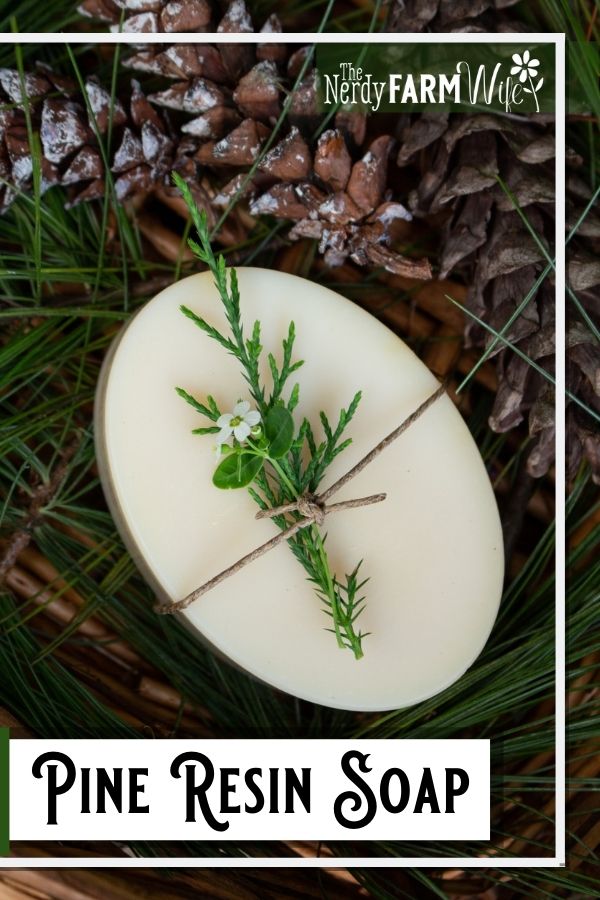
Pine resin brings mildly stimulating and potentially antimicrobial properties to soap, making it a popular choice for troubled skin. While it does speed up trace, infusing it into oil first makes it much easier to work with.
Related Pine Resin Tutorials
Pine resin works best when infused into oil before using. These guides show the full process.
- Foraging Pine Resin – harvest resin from pine trees sustainably
- Pine Resin Infused Oil – how to infuse resin into oil for salves and soapmaking
- Pine Resin Salve Recipe – a simple way to use pine resin oil, for splinters & cracked skin
- Pine Resin Soap – (You’re here!)
Pine resin is traditionally used in first aid salves and balms for achy muscles, or damaged and chapped skin. It’s added to soap for its antimicrobial properties and time-proven use in caring for troubled skin conditions. It also adds a wonderful woodsy label appeal!
I’ve received a fair amount of emails from soapmakers asking for troubleshooting help over the years, and when it comes to pine resin, a pretty common problem occurs when someone tries to directly add a significant amount of melted resin to soap. This makes it more likely to seize up.
So, how do you make pine resin soap instead? I have the best results by first infusing one of the oils with pine resin (just like you do when making a salve), and then including that infused oil in the soap recipe.
Pine resin infused oil still speeds up trace (thickens the soap faster), but it’s a lot more manageable to handle.
How to Find Pine Resin
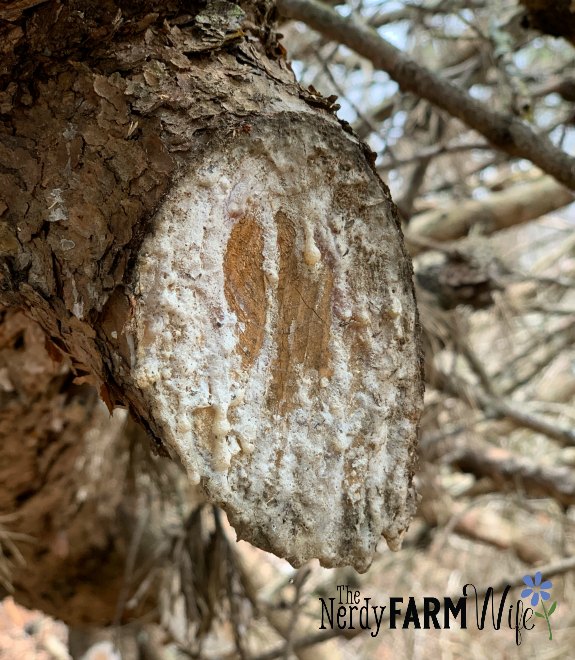
For these soaps, I used resin collected from a pine tree that blew down and landed on a couple of our plum trees during a windstorm two years ago. My husband cut some of the branches to relieve the weight from the plum trees until the pine could be safely removed and that’s where the pine exuded resin that I could gather.
We later cut up the rest of the pine tree and started a hugelkultur bed with the pieces. (Waste not, want not!)
If you don’t have access to pine trees or pine tree resin, you can buy some sustainably harvested resin from Etsy.
What’s the difference between pine resin and pine tar in soap?
Don’t confuse pine resin with pine tar.
Pine tar is a thick black substance created by exposing pine wood to high heat. It can also be used to make soap and skin care products, especially for psoriasis – see my Pine Tar Soap Recipe and Pine Tar Salve Recipe, Pine tar has a very strong smoky smell.
Pine resin is a sticky fluid (but not sap) that oozes from a damaged tree. It’s lighter colored than pine tar and has a piney scent that’s generally pleasant.
How to Infuse Pine Resin Oil
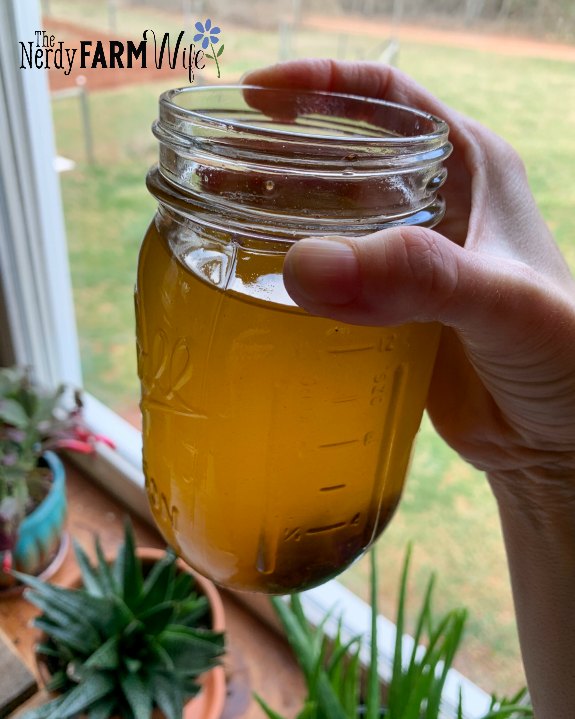
Before making pine resin soap, you must first make a pine resin infused oil.
You’ll need the following ingredients to make the infused oil:
- pine resin chunks or powder
- olive oil (or oil of your choice from your recipe)
- a glass canning jar that you’ll save just for resin infusing
- a stainless steel strainer
For full, step-by-step instructions and cleanup tips, please refer to my related information about How to Make Pine Resin Oil.
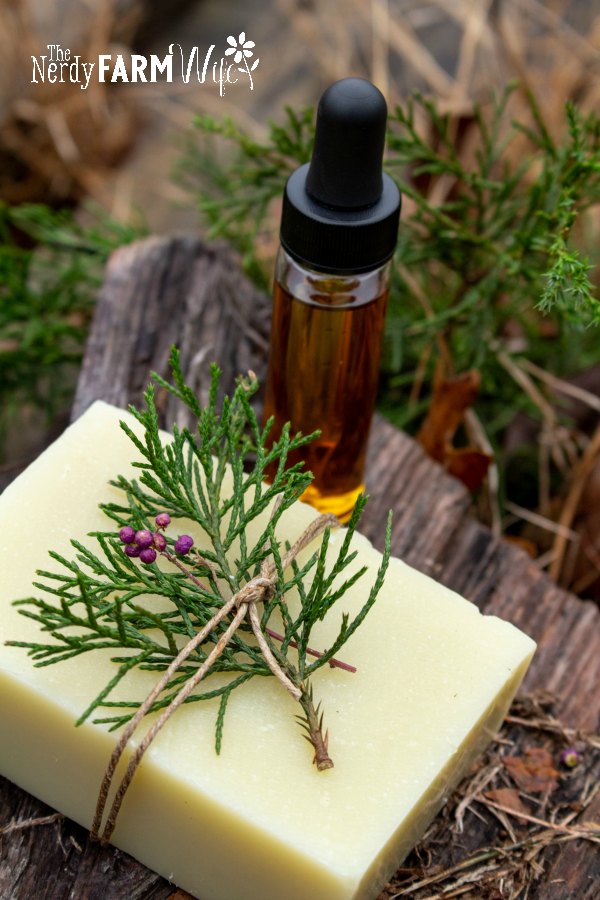
Pine Resin Soap #1 (Tallow Version)
All measurements are given in weight. You must use a scale to make soap; do not use measuring cups.
Yield: abt 22 ounces (624 grams)
Ingredients for the soap:
- 5 oz (142 g) pine resin infused olive oil (36%)
- 3.5 oz (99 g) coconut oil (25%)
- 3.5 oz (99 g) tallow (25%)
- 2 oz (57 g) sweet almond or sunflower oil (14%)
- 1.99 oz (56 g) sodium hydroxide (5% superfat) (I use ComStar lye or Essential Depot Brand lye on Amazon)
- 5.32 oz (151 g) distilled water (full water amount; 38% water as % of oils)
- optional – 8 drops rosemary extract (ROE/rosemary oleoresin extract)
- optional – essential oils (see suggestions below)
If you don’t have enough pine resin infused olive oil, just use more plain olive oil to make up the difference. (For example, you could use 4 ounces of infused olive oil + 1 ounce of plain olive oil.)
Pine Resin Soap #2 (Vegan Version):
If you don’t wish to use tallow, you can use a combination of cocoa or kokum butter plus more olive and some added castor oil (for better lather) instead.
- 6 oz (170 g) pine resin infused olive oil (43%)
- 3.5 oz (99 g) coconut oil (25%)
- 2 oz (57 g) cocoa butter (14%)
- 2 oz (57 g) sweet almond or sunflower oil (14%)
- 0.5 oz (14 g) castor oil (4%)
- 1.97 oz (56 g) sodium hydroxide (5% superfat) (I use ComStar lye or Essential Depot Brand lye on Amazon)
- 5.32 oz (151 g) distilled water (full water amount; 38% water as % of oils)
- optional – 8 drops rosemary antioxidants (ROE/rosemary oleoresin extract)
- optional – essential oils (see suggestions below)
Alternatively, you could just incorporate the infused oil into your favorite soap recipe.
Optional Essential Oil Ideas for Your Soap:
Blend Idea #1 – Walk in the Woods
This blend is from my Simple & Natural Soapmaking print book and a favorite of most who try it! The rate given is a bit over 2%. Double check rates for your recipe size at EO Calc.
- 6 g cedarwood (Himalayan or Atlas) essential oil
- 1 g clove essential oil
- 1 g vetiver essential oil
Blend Idea #2 – Forest Mint
Also a blend from my Simple & Natural Soapmaking print book – it’s a wonderfully cool herbaceous woodsy scent. The rate given is a bit over 2%. Double check rates for your recipe size at EO Calc.
- 4 g peppermint essential oil
- 2.5 g cedarwood (Himalayan or Atlas) essential oil
- 1 g rosemary essential oil
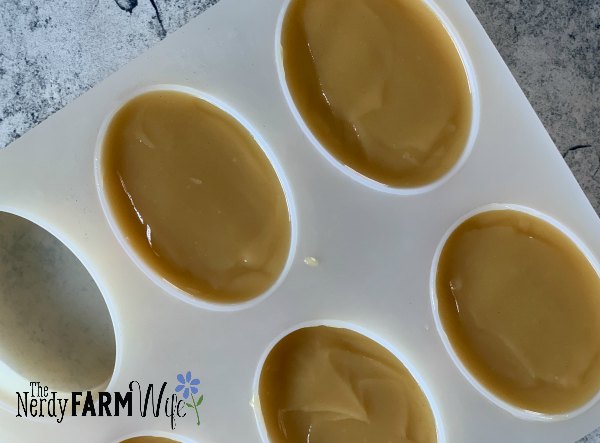
Directions to make:
If you’ve never made soap before, read through my Soapmaking 101 article and be sure you fully understand the soapmaking process before proceeding.
- Put on goggles and gloves.
- Weigh the water into a stainless steel or heavy duty plastic container.
- Weigh the lye into a small cup.
- Sprinkle the lye into the water and stir until dissolved. (Don’t breathe in the temporary, but strong fumes.)
- Cool the lye solution in a safe spot for 30 – 40 minutes, or until about 100 to 115 degrees F.
- Melt the coconut oil and tallow or cocoa butter (I heat in a small saucepan), then combine with the remaining oils.
- Add the rosemary antioxidants (rosemary oleoresin extract/ROE) to the oils, if using.
- Pour the cooled lye solution into the warm oils.
- Start by hand stirring the soap.
- Because of the pine resin, you may find that it thickens to trace with just hand stirring. If not, use brief short pulses of the immersion blender sparingly until soap reaches light trace.
- Add essential oil, if using.
- Stir until blended.
- Pour soap into molds.
- Cover lightly with a sheet of wax paper, then something light, like a pillowcase or towel to insulate.
- Uncover after 24 hours.
- Keep the soaps in their mold for 1 to 2 days or until easy to remove.
- Cure the soaps on sheets of wax paper in the open air, turning occasionally, for 4+ weeks before using.
References & Further Reading
De la Foret, Rosalee & Emily Han. Wild Remedies – How to Forage Healing Foods and Craft Your Own Herbal Medicine. 2020. Hay House.
Park JY, et al. Abietic acid isolated from pine resin (Resina Pini) enhances angiogenesis in HUVECs and accelerates cutaneous wound healing in mice. J Ethnopharmacol. 2017 May 5;203:279-287. doi: 10.1016/j.jep.2017.03.055. Epub 2017 Apr 4. PMID: 28389357.
Rose, Kiva. The Forest in Winter; Mountain Rose Herbs Blog. Retrieved December, 2025.
Wood, Matthew. (2009). The Earthwise Herbal: A Complete Guide to New World Medicinal Plants. Berkeley, CA: North Atlantic Books.

Hi Jan,
I am in awe of your creative recipes. I have been trying for over a year to use pine pitch in beauty products and it always seems to separate. I use only butters and oils but there’s the telltale sign that it’s separating – almost water/oil things going on even though I haven’t used water. I cannot wait to try to infuse the oil. You are inspirational. Truly in a league of your own. Thank you. I’m so inspired. Thank you, Barb.
Hi Barb, Thanks for the kind words! ❤ I hope that the infusing method helps! I’d love to hear how it goes! :)
use pine resin use extraction on you tube same as making spruce gum u can make pine gum if u make hot process soap wait till degrees at under even the pot at 171 or 160 before addin em then u mix the crap outa it i infuse this with only fir sap resin from blisters on fir trees but im goin to attempt all 3 TREE SOAP all 3 micro things i need
so thats how u do it its easier to infuse 6 hr on low heat on doubble boiler pot or pot and a mason jar and rocks from fish tank
infuse like 120 or 100 for 6 hr lol
thats all so cold process soap i did waiting on results nothin seperated i used only extra virgin olive oil not any other oils and i use beeswax and honey all natural and the trace comes fast
due to tree saps
anyways thats all i have to offer
Jan I need to thank you whole heartedly. You saved my very bad skin condition(golden staf) I have battled this complaint for 3years, I have had about 50 visits to my doctor, cost a fortune and no results.I found you on pinterest I made your “Old Fashioned Pine Tar Soap” and within a week my skin was 70% improved and the relief was awesome. I use this soap every night in the shower and it is now only a small breakout now and then.
Jan THANK YOU
Cheers Kay
Queensland Australia
Hooray! Thank you for letting me know that wonderful news – I’m so happy to hear that the pine tar soap has been helpful! ❤
My son is severely allergic to animal byproducts and coconut oil. I would like to make him a bar of soap he can use and not break out. Do you have any recipes that I can use. I would be ever so grateful.
Hi Jill! I have a Creamy Shea Butter Unscented Bastille Soap (coconut free) in this article:
https://thenerdyfarmwife.com/mild-unscented-soap-recipes/
and
“Almost” Castille Soap is one of my favorites! You don’t have to use chamomile – you could leave it out, or use a different herb such as calendula, etc.
https://thenerdyfarmwife.com/chamomile-almost-castile-soap-recipe/
I hope to get more coconut-free recipes on the site too – it’s been on my to-do list for a while. I know how hard it is to work around allergies!! <3
Hi Jan, is it possible to add the pine resin, dried, ground down to a powder, after the cook for an exfoliant in HP soap? I am a big fan of yours, I have a book of yours and another one on order, so excited! Thanks
Hi Laura! Thanks for the kind words and for ordering the books! ❤
You could try dividing off a small amount of your soap and mixing a tiny amount of resin powder into that to see how it feels, but resin tends to feel pretty scratchy on your skin.
I like it best as an infusion, but you could definitely give it a try and see what you like best! If you try it out, we’d love to hear how it goes!
Can’t wait to try this recipe! What ratio of oil to resin do you use for the infusion?
Hi Casey! I don’t have a set amount, but I usually use about 2 or maybe 3 tablespoons of the crushed resin in a pint jar, which is then filled with oil.
It all depends on how much resin I have available. :)
Hey Jan, this looks like a wonderful recipe and I cannot wait to try it. ☺️
Does the finished result smell like pine resin does? Or is the fragrance eliminated through the saponification process?
Hi Mary, That’s such a great question! I’m trying to remember & I think I’ve only every made pine resin soap with added essential oils – always with cedarwood in the mix.
I know in the case of pine resin salve, the oil adds a light pleasing scent, but I’m just not sure if it sticks around in soap.
I will have to make an unscented batch next time and see! :)
Thank you for all this information, very helpful. I was wondering if I can use Bay leaves powder and how to safely incorporate them in my soap. I am looking for a revisited Aleppo soap, with the leaves and not the Laurel berry oil. Is it possible? what about using olives, eucalyptus, and lavender leaves powder as well?
Hi Lily! Did you see my answers to these questions you also asked in December? It’s on this article page, in the comments section:
https://thenerdyfarmwife.com/12-herbal-powders-for-soap/
Here are the replies I wrote then, I’ll copy them here too.
Hi Lily, That’s a great question! I haven’t used bay leaf powder in my soaps before to know how it’d do, but it’s definitely worth a try!
If it’s a spice, such as bay leaves, that can be used in daily cooking, then I usually figure it will be safe for skin care products and soap as well.
I would use a test batch to try the idea out. Here’s how I make and plan small test batches for new ideas like this:
https://thenerdyfarmwife.com/test-batches-of-soap/
It could be a good idea to test the powder in the lye solution, and then a second small test batch with the powder mixed into the oils.
Then you could compare and see which way you like best. (Or you might decide to make a soap with the powder in both the lye solution AND oils!) :)
Hi Lily! You could definitely experiment with those too!
I’ve tried olive leaf powder before, but it’s been many years. I believe it turned an earthy shade of green, but like all natural green colorants, it will easily fade when cured or stored in light.
I suspect the eucalyptus and lavender leaf powders may turn more tan-toned, but I’m not sure.
The only thing to keep in mind is that they won’t keep any scent they might have once they go through the soapmaking process, but they’re fun to add for label appeal and sometimes natural color.
Happy experimenting! :)
Hi Jan,
Thank you for your reply ! :)
How did you figure the saponification value of the resin? Or did you just use the total weight of the oil you infused it in?
Hi Jarrett! Yes, I just calculate using the weight of the oil I infuse the resin into, just like I would with an herbal-infused oil.
I don’t calculate the resin itself.
It’s an interesting thought though – to find the SAP value of pine resin and see how it compares with the olive oil I’m infusing it into.
But, not something I’ve done yet! :)
Is it okay to use the resin infused oil without heating it first?I kept it in a dark cupboard for about 6 weeks.
Hi Rose! How does the oil look and smell? If the oil is richly scented by the resin, then it should be fine to use.
If the oil doesn’t have much scent, then I would heat it to help extract all of that resin-y goodness. :)