
Rose Clay Info + Printable (Ingredient Spotlight)
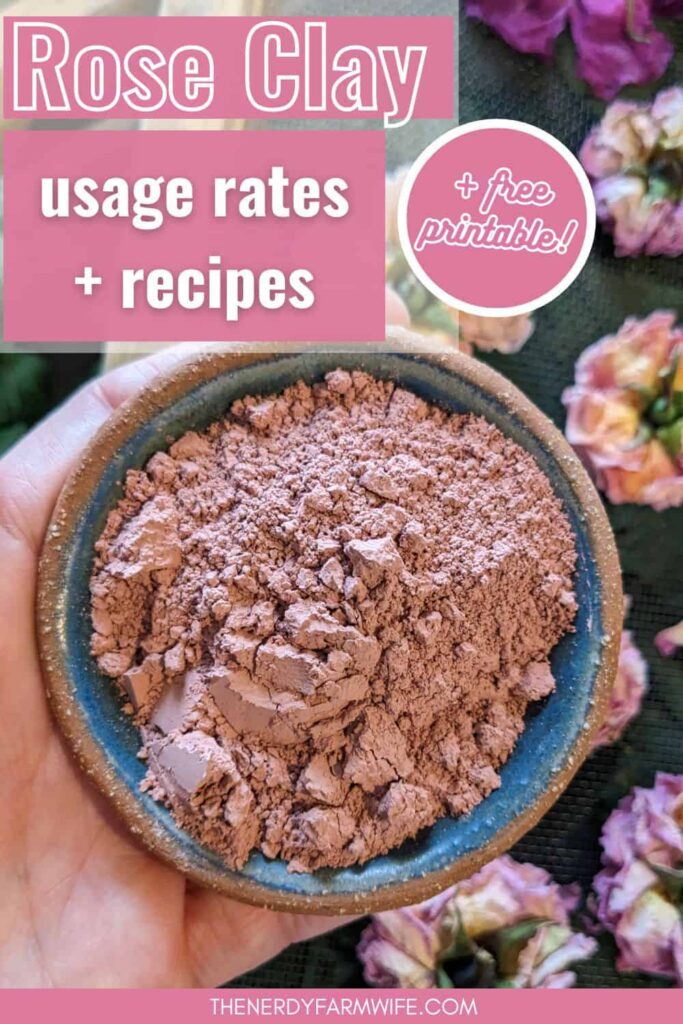
Learn all about using rose kaolin clay for natural skin care, remedies, and soapmaking!
Plus, you can grab a free printable Rose Clay “Cheat Sheet” for easy reference.
Today, I’m trying out a new idea.
My Plant Spotlight Printables (here’s an example Calendula Printable, if you haven’t seen one yet) are super popular, so I thought I’d use the same concept to make some Ingredient Spotlight Printables for you as well!
Want to see more of these? Let me know! If I hear crickets, I’ll know this wasn’t a good thought after all and will move on to other ideas. :)
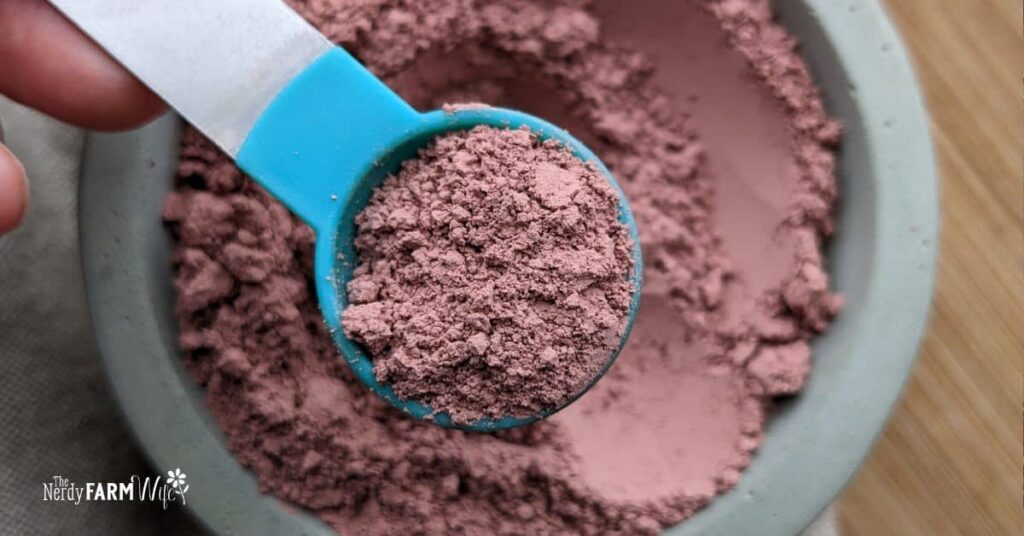
The focus for today is Rose Kaolin Clay – a cosmetic clay that’s rich in iron oxide, which gives it a beautiful pink color.
First, I’ll cover the benefits of rose clay, plus share some general usage rates to keep in mind, along with some recipes that feature this ingredient.
The free printable “cheat sheet” can be found further below!
Sometimes, you’ll see rose kaolin clay listed online as rose clay – usually they’re referencing the same thing. As you can see in this article, I interchange those names myself!
I’ve also seen it called “pink clay“, though that name could also describe French pink clay or Egyptian pink clay, etc.
Benefits of Rose Clay
Rose kaolin clay is known to be very gentle, making it potentially suitable even for sensitive or aged skin.
Those with normal, oily, or combination skin types often do well using rose clay. If you have extremely dry skin, you may not be able to tolerate any clays (because they may leave your skin parched), but rose kaolin clay is one of the most gentle to try.
Like other clays, rose clay works by absorbing excess oil, sebum and dead skin buildup, and other impurities from your skin, leaving it soft, cleansed, and brightened.
Clay is sometimes used as a very mild exfoliator, making it a good addition to natural cleansing grains and scrubs.
It’s also a beautiful color addition to soap and gives finished bars a nice silky feel.

Rose Clay Usage Rates Reference Table
Here are some general guidelines I follow when using rose clay. Because it’s a naturally sourced product, there will be some color variations between vendors and suppliers.
Most of the time though, rose clay should be a somewhat medium pink color. With clays, it’s usually a matter of what-you-see is what-you-get. If your clay is a brownish-pink, it will look brownish-pink when used in soaps, lotion bars, etc.
Look for clays that are a pretty true pink in the package; however, beware of fake clays, which are unfortunately rampant on Amazon and Etsy. These are really just white kaolin clay with colored mica added to them.
One way to spot a fake clay is to scroll to the negative reviews and look for people mentioning that it didn’t hold its color in soap. True clay will keep its color when used in soap. Fake clays that are colored with mica will often morph color to a shade of tan or brown, or the color will completely disappear.
Reliable vendors for true rose clay (rose kaolin clay) include: Bramble Berry, From Nature with Love, Lotion Crafter, Nurture Soap, and Wholesale Supplies Plus.
These are just some general guidelines to help you get started using rose kaolin clay. You may find that you prefer to use more or less than what I list here – and that’s completely okay! Definitely get creative and don’t think of these as set-in-stone rules. :)
| Product | Amount of Clay | Notes |
| Bath Bombs | 3/4 to 1 teaspoon | for approximately every 3 cups dry ingredients; whisk together with the dry ingredients |
| Body Butter | 1/4 to 1/2 teaspoon | for approximately every 6 to 8 oz of ingredients; sprinkle into the body butter soon after you start mixing/whipping |
| Cold Process Soap | 1/2 to 2 teaspoons per pound of oil (PPO) | gives a silky feel and beautiful color; add to lye solution, or dilute with 2 to 3 times as much water before adding to soap batter |
| Face Masks & Cleansing Grains | use 100%, or mix 10 to 35% with white kaolin clay | you can stretch your rose clay stash by mixing it with white kaolin clay, color will be softer |
| Melt & Pour Soap | soft color: 1 to 2 tsp per 1 lb white soap base; strong color: 3/4 to 1 tsp per 1 lb clear base | dilute with 2 to 3 times as much rubbing alcohol before adding to melted soap base |
| Lip Balms | n/a | not often recommended; may dry out your lips |
| Lotion Bars | 1/4 to 1/2 teaspoon | for every 3/4 cup (abt 125 grams) of ingredients; stir into mixture after melting |
| Lotions & Creams | 1/8 to 1/4 tsp per 100 grams lotion/cream | add to water portion of recipe; too much will be drying on your skin; makes lotion more difficult to preserve |
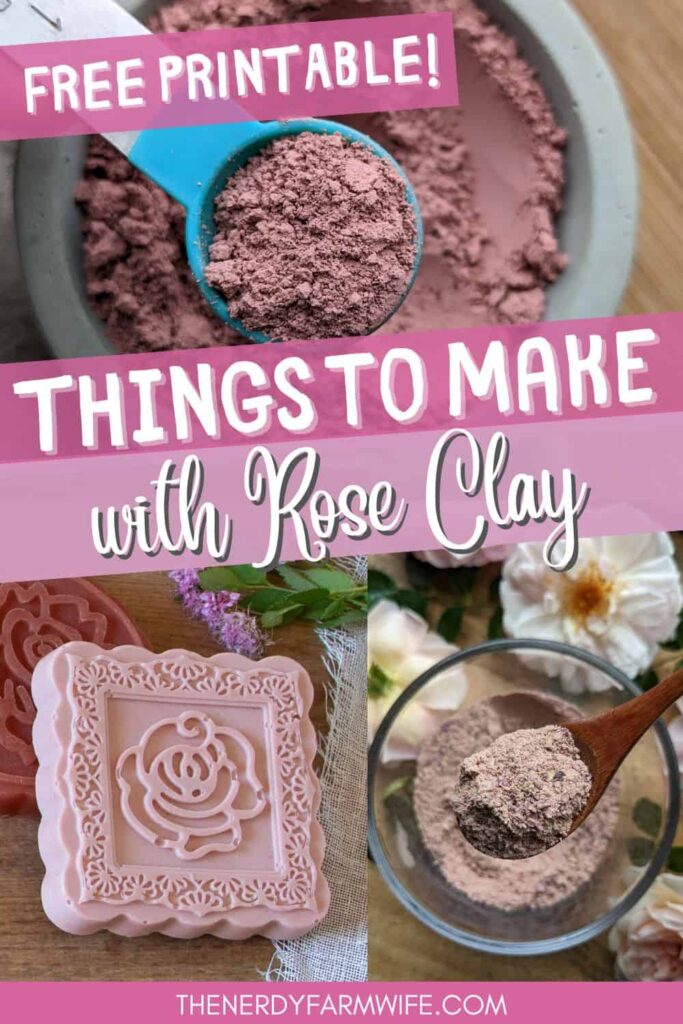
Uses & Recipes
Here are some of my recipes that feature rose clay!

Rose Petal Lotion Bars
These lotion bars are so easy to make. You just need: rose petals, your favorite oil (like sunflower or sweet almond), shea butter (or another cosmetic butter), and beeswax.
The rose clay comes into play if you want your lotion bars to have a soft natural pink color.
Find the full recipe at:
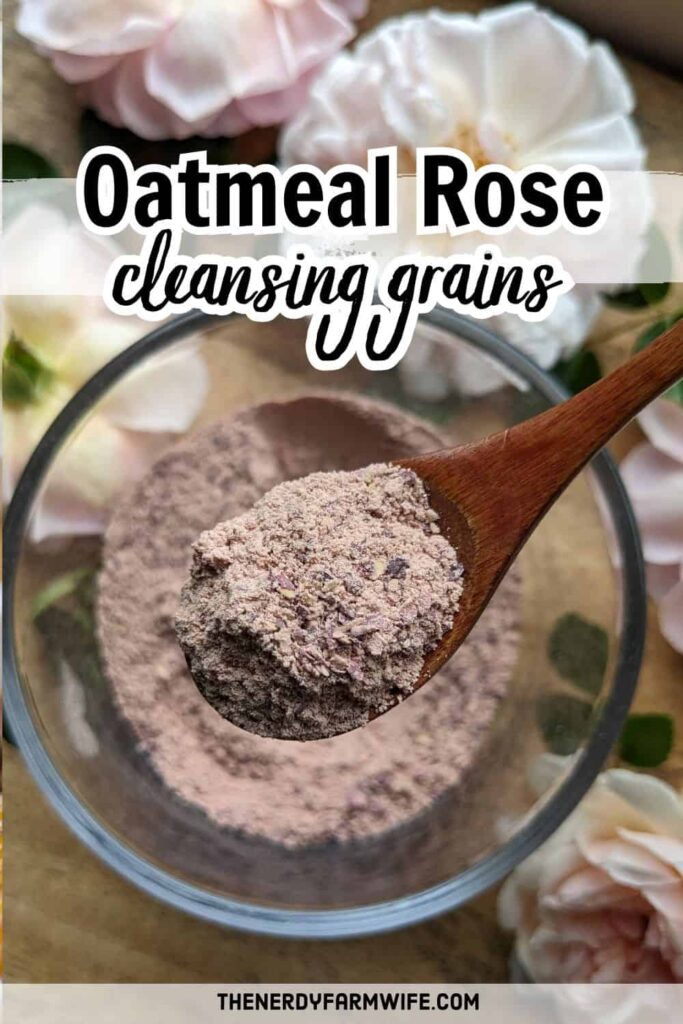
Oatmeal Rose Cleansing Grains & Mask
This recipe combines pink clay with ground oats and dried rose petals to create a gently exfoliating cleanser.
You can either apply as a cleanser, gently rub into your skin, then rinse off right away, or you can turn it into a mask by leaving it on 5 to 10 minutes before rinsing.
Here’s how to make this recipe:
Combine 2 tablespoons of rolled oats (we use gluten free) and 1 tablespoon of dried rose petals in a coffee grinder until very finely ground.
Mix together with 1/2 tablespoon of dried milk powder (any kind will do) and 1/2 teaspoon of rose kaolin clay.
Stir well until everything is combined. Keep in a sealed container in a dry, cool area.
To use: Mix 1 to 2 teaspoons with a splash of water, aloe, witch hazel, yogurt, or honey until a paste is formed. Gently rub over your face then either wash off right away as a cleanser, or leave on for 5 to 10 minutes as a mask, and then rinse your face. Use once per week.
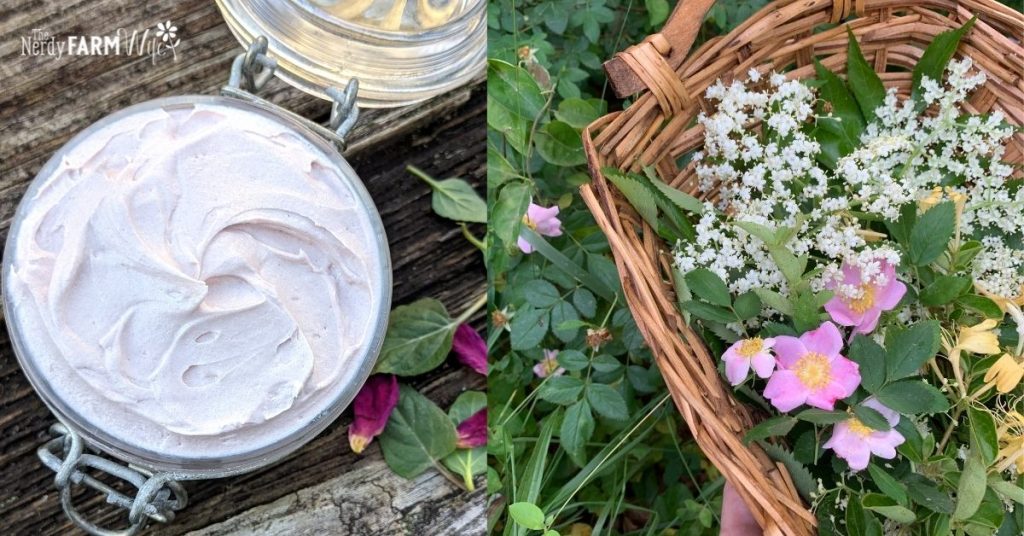
Rose Body Butter
This homemade body butter is loaded with skin nourishing oils and butter, and naturally tinted soft pink with rose clay.
I love that it’s so easy to whip up – no melting involved!
Full instructions are in my post: Homemade Rose Body Butter
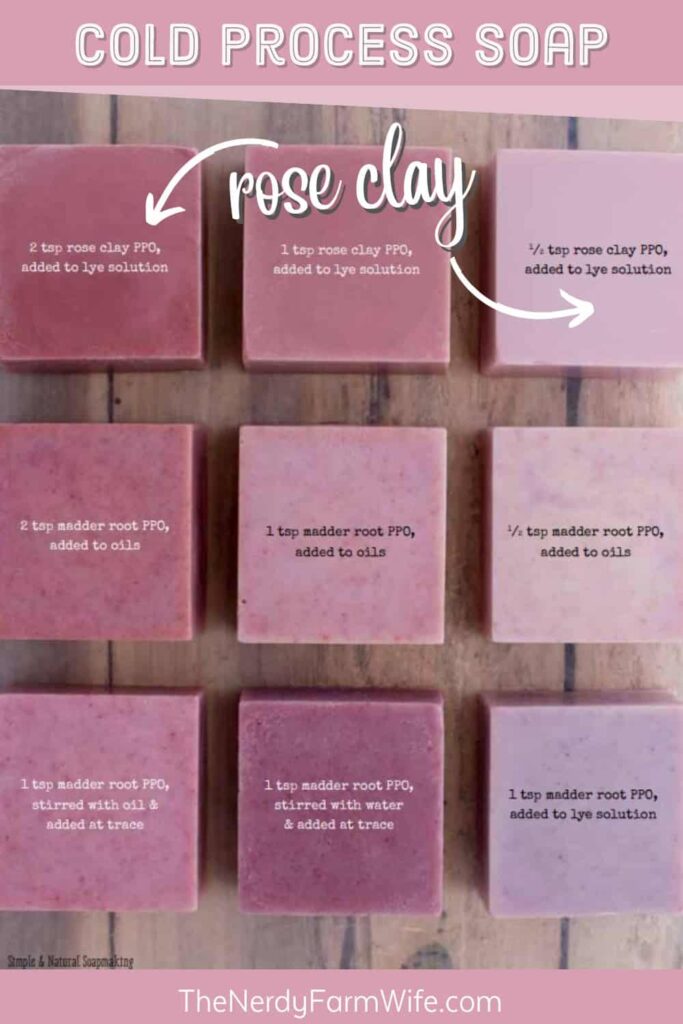
Cold Process Soap Examples & Details
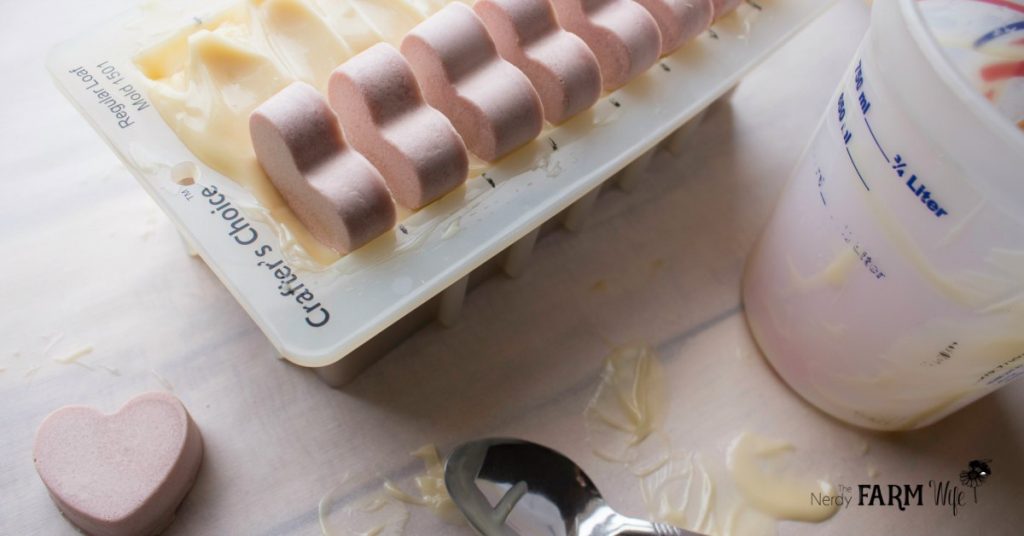
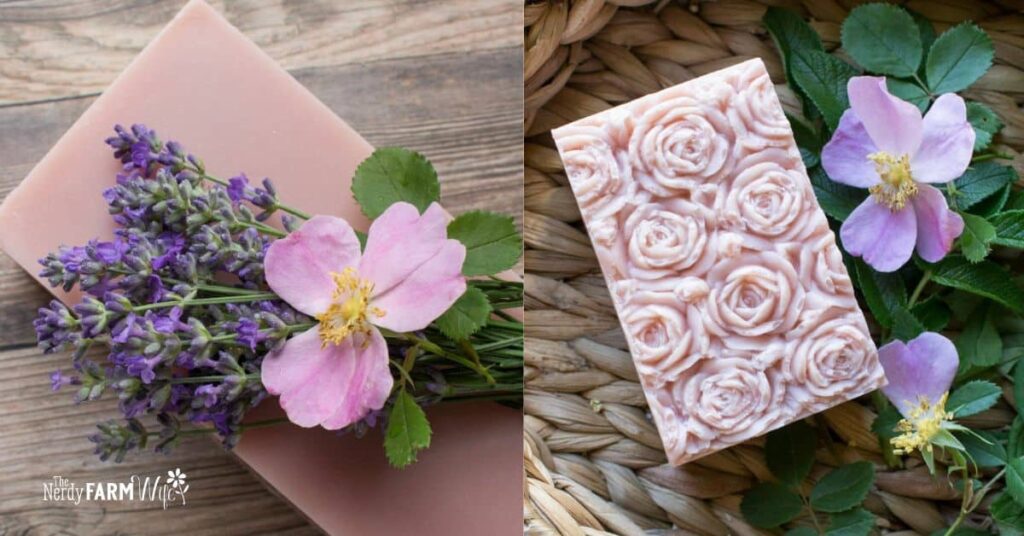
Rose clay is a top choice for naturally coloring your homemade soaps. The color is long lasting and you can adjust from light pink to darker pink by adjusting the amount you use.
Above and directly below are photos of a Valentine Soap with Hearts, in which I used pink clay to color both the small heart toppers (3/4 tsp clay for 10 oz of oils) and one of the soap layers.
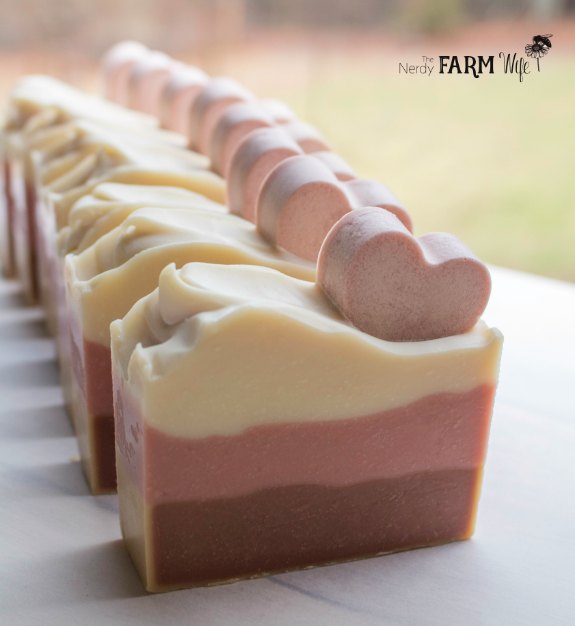
The soap layer contains 1 teaspoon of pink clay in 1/3 of a batch containing 30 ounces of oils, but also has white kaolin clay mixed in, to give an overall lighter and more pastel look to the entire soap.

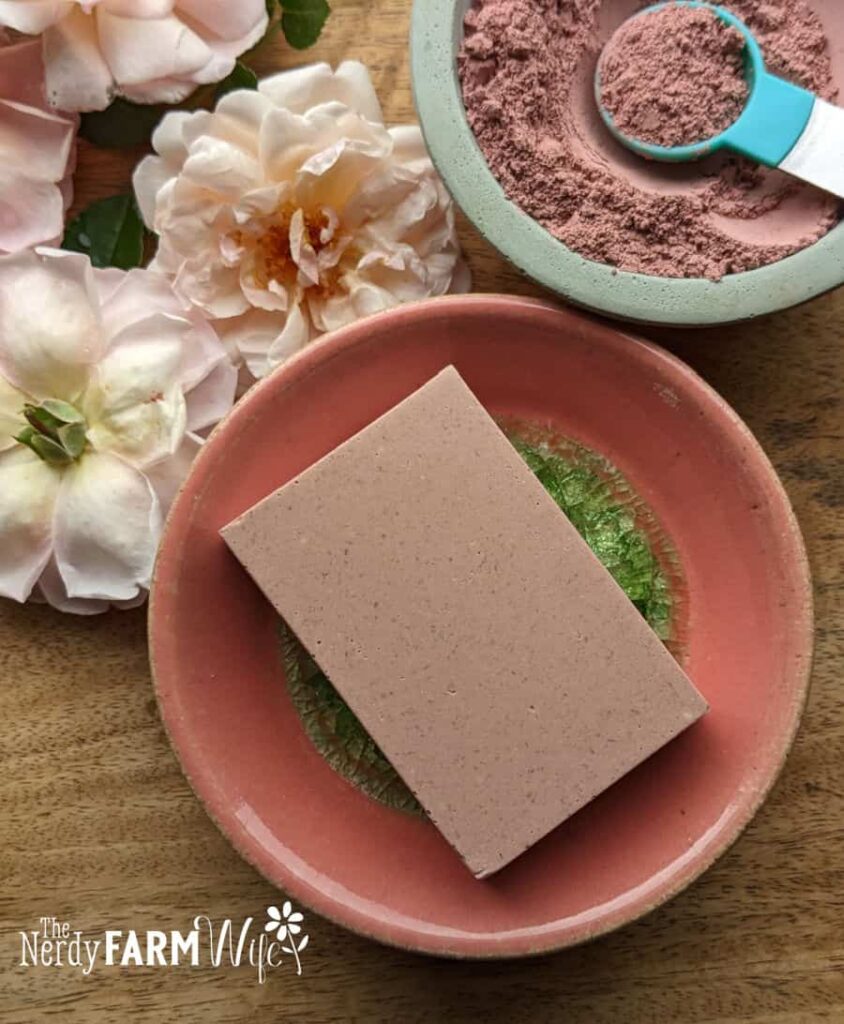
And, the photo directly above is a basic Rose Clay Soap with 3/4 teaspoon clay for a recipe containing 28 ounces of oil.

Melt & Pour Soap Examples & Details
This pretty clay is also a lovely choice for melt and pour soap.
Above is a photograph from my print book, Easy Homemade Melt & Pour Soaps, that shows what rose clay looks like in both white and clear soap bases.
For a soft color, use around 1 to 2 tsp for every 1 lb (one pound) of white soap base. For a stronger, darker color, use 3/4 to 1 teaspoon for every 1 lb of clear base.
When adding clay to melted soap base, first dilute it in 2 to 3 times as much rubbing alcohol and mix until it’s completely dissolved. If you notice lumps that won’t dissolve, strain it through a fine mesh sieve before stirring into your hot soap.
Unless your recipe says differently, let the soap base cool to under 135°F (57°C) before pouring. This cooler temperature will keep most of your clay suspended, so it won’t settle to the bottom of the soap mold.
Here’s another melt and pour project that uses rose clay:
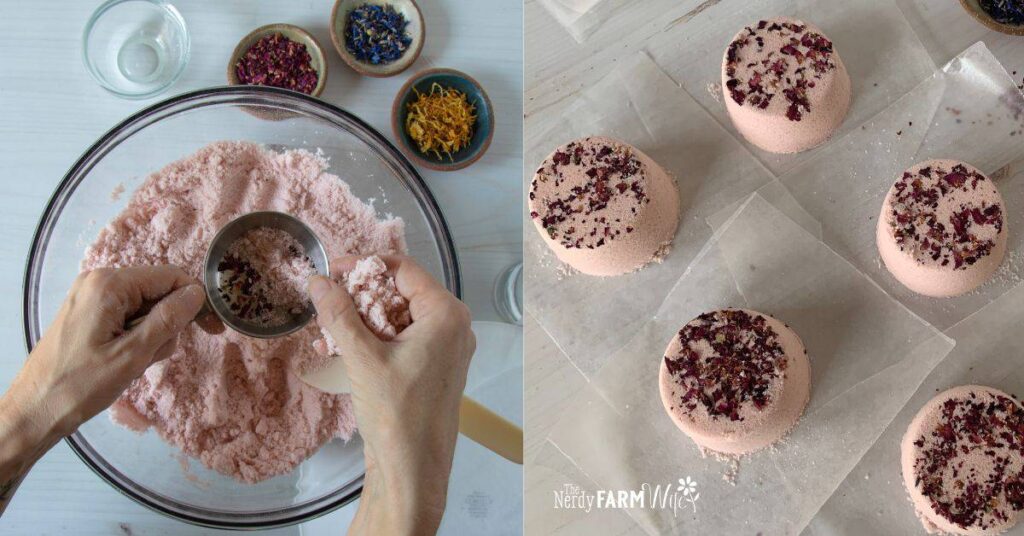
Bath Bomb Recipe
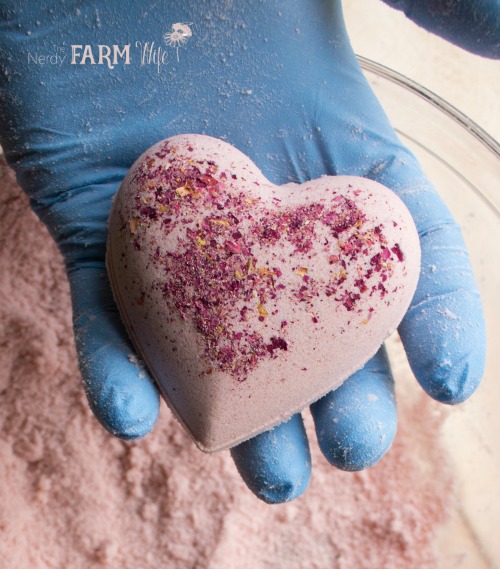
Rose clay is also a gorgeous natural colorant for bath bombs. Clay has the added bonus of adding structure to your bath bombs, helping them be more sturdy.
There’s 1 teaspoon of clay mixed with a little over 3 cups of dry ingredients in the Rose Milk Bath Bomb shown in the photo above.
A Few Natural Remedy Ideas
Rose clay can also be used for home remedies.
It can be applied to your skin directly as a dry “bug bite powder”, or mixed into a paste by adding a little water or witch hazel to help ease itching and discomfort caused by insect bites.
You can take this idea further by making a mock calamine lotion by combining 1/2 tbsp rose clay, 2 tbsp white kaolin clay, 2 tbsp baking soda, and abt 1/2 cup witch hazel. First, mix together the clays & baking soda, then stir in witch hazel to make a thick, chalky liquid. Seal tightly and stir well before use. Keeps 1 to 2 weeks in fridge. Dab on bug bites, rashes with a cotton ball.
You could also use it for the clay portion of my Charcoal Drawing Salve recipe – which is used for splinters, boils, and mild spider/bug bites.
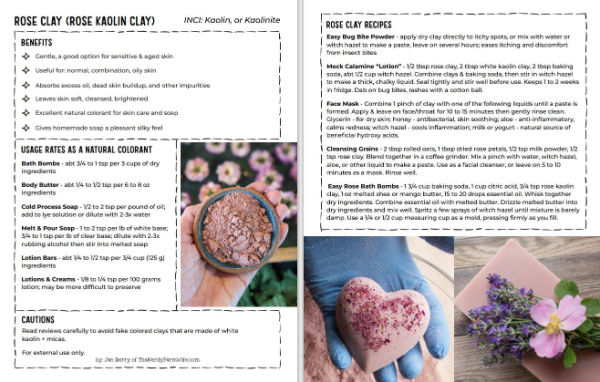
Free Rose Clay “Cheat Sheet” Printable
Now that you’ve seen many of the ways you can use rose clay, here’s a reference sheet that you can save or print out, to refer to when you’re making your handmade creations!
Just click on the thumbnail above and it will open up the PDF. (No extra signup required.) If your device won’t let you open or save it, try using a different device and/or browser.
(Also, here’s a higher resolution, but larger version of the same printable.)
Happy crafting!

I love the cheat sheet. Great idea.
Will any type of rose petals work?
Hi Mary, I’m so happy you like the cheat sheet! :)
Yes, any type of rose petals will work, just make sure they haven’t been sprayed before collecting & drying them.
Fantastic idea and really fun recipes! Thank you 🌹💜
Hi Jen, Yay! I’m so happy to hear you like the idea & recipes! :)
As usual, awesome idea. Already sent to the printer. Thank you for all the wisdom you share.
Hi Roxanne, I’m so happy you like the printable! Thanks for letting me know! :)
Thank you for sharing your recipes and ideas. I really enjoyed your soap making course. I’ve made many of your soaps and I just love them all! Today I’m going to try one of your recipes with the pink clay.
Hi Julie, Hooray! I’m so happy to hear you’ve enjoyed the soap making course, and the recipes & ideas! <3
What a great reference. Thank you for sharing!
Hi Lori, So glad you like the information on rose clay! :)