
Pine Needle Chest Rub Salve Recipe
Pine is a traditional herbal known to be warming and helpful for respiratory congestion.
Today, we’re going to turn your locally gathered pine needles into a chest rub salve using pine-infused oil and (optional) essential oils.
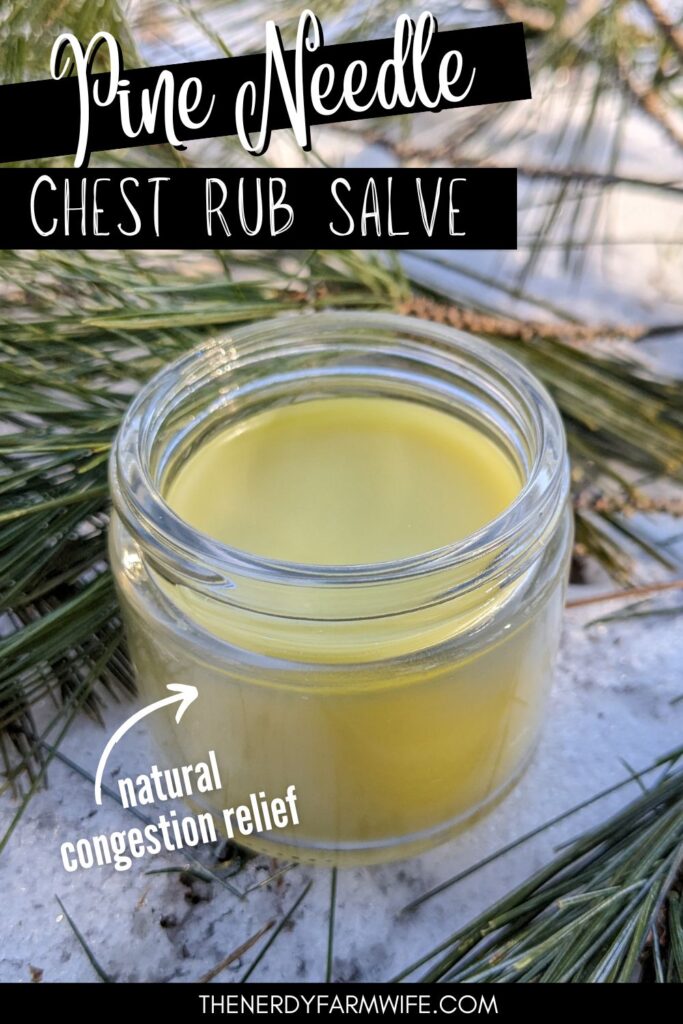
Pine needle infused oil has traditionally been used to help with congestion, and when optionally combined with essential oils, it makes an even more powerful chest rub for those pesky winter coughs!
Some links on this site are affiliate links. If you click and make a purchase, I may earn a commission for sending a customer their way. I only recommend products I’ve personally used and had success with!
About the Ingredients
Pine (Pinus spp.) – is a warming herb that’s often used for respiratory support. You can gather pine needles year-round, though you’ll want to make sure you’re harvesting from an actual pine tree. (Check out my article on foraging pine needles for detailed identification tips!)
Carrier Oil – This refers to liquid oils that can be used on your skin – such as olive or sunflower oil. Sweet almond or rice bran oil are also nice in salves. (It’s fine to use oils from your local grocery store for this project.)
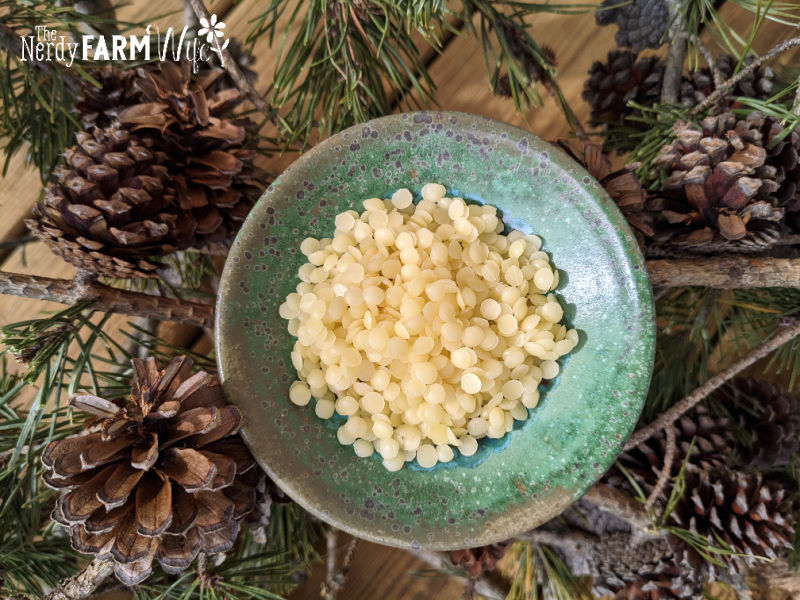
Beeswax – While you could use pine needle infused oil alone for a gentle chest rub that’s suitable for all ages, we’ll be adding beeswax to turn it into a salve, which is less messy and easier to apply. (If you’re vegan, try using half as much candelilla wax instead.)
You could stop right here and just use pine infused oil and beeswax to make a milder chest rub, or you can choose to add essential oils to boost its effectiveness.
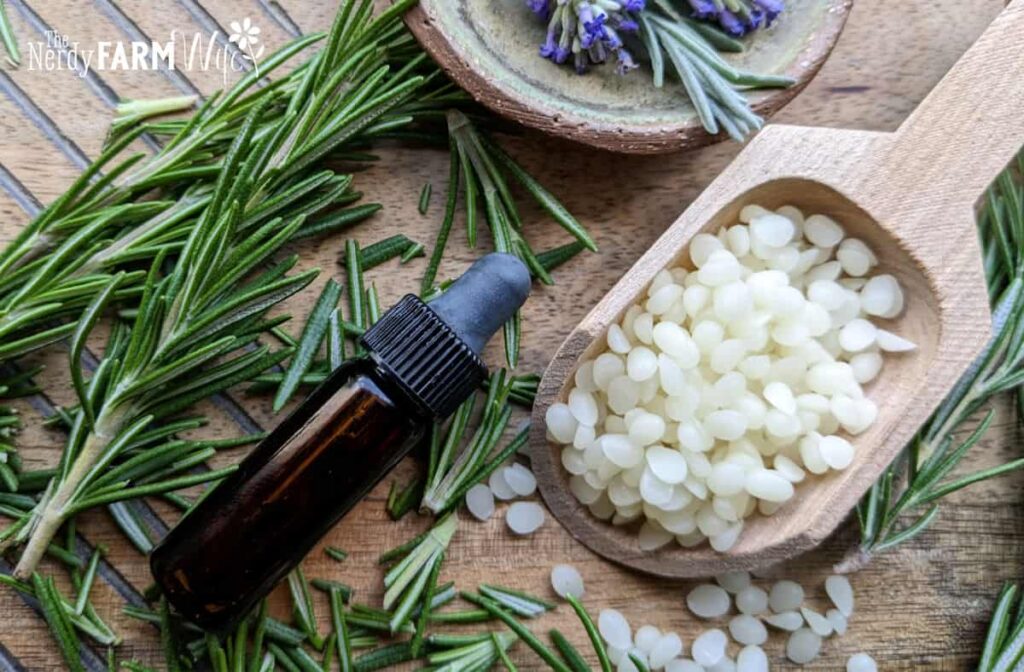
Essential Oil Choices –
You have several options when it comes to using essential oils in homemade chest rubs. Here are three to consider.
Option 1: Respir Aid by Plant Therapy. It’s a blend of Eucalyptus, Peppermint, Scots Pine, Lavender, Black Spruce, Cypress, and Sweet Marjoram oils. The manufacturer’s suggested usage rate is 3 to 5%, so for this chest rub recipe, that’s about 80 to 135 drops. This option is just for older kids to adults. Do not use on kids 6 and under.
Option 2: KidSafe Sniffle Stopper Essential Oil blend. This one is a blend of Fir Needle, Rosalina, Spruce Hemlock, Cypress, Spearmint, and Cedarwood Virginian essential oils and was specially designed to be safe for kids. It too has a manufacturer’s suggested dilution rate of up to 3 to 5% (80 to 135 drops in this recipe).
Option 3: Eucalyptus and peppermint essential oils. Here’s a DIY blend (with a bit over 3% dilution rate) to try for older teens and adults (but not for kids): 62 drops eucalyptus + 30 drops peppermint. Optionally, you can add 2 to 3 drops of white camphor essential oil to help promote easier breathing. For a softer and more calming scent, you could replace some of the peppermint with lavender.
Pine Needle Chest Rub Salve Recipe
Here are the ingredients you’ll need to make the chest rub. First, you’ll need to make an infused oil, then turn it into a salve.
For the infused oil:
- Fresh or dried pine needles
- Oil of choice (olive oil or sunflower oil are classic choices, or try rice bran or sweet almond)
For the salve:
You can halve the amounts of this recipe, to make a smaller batch!
- 4 ounces (113 grams) pine needle infused oil (about 3/4 cup)
- 0.65 ounces (18 grams) beeswax (about 2 tablespoons pastilles, pressed into the spoon)
- essential oils of choice* (see the options above)
(*Or, you can leave out the essential oils completely for a milder decongestant chest rub recipe.)
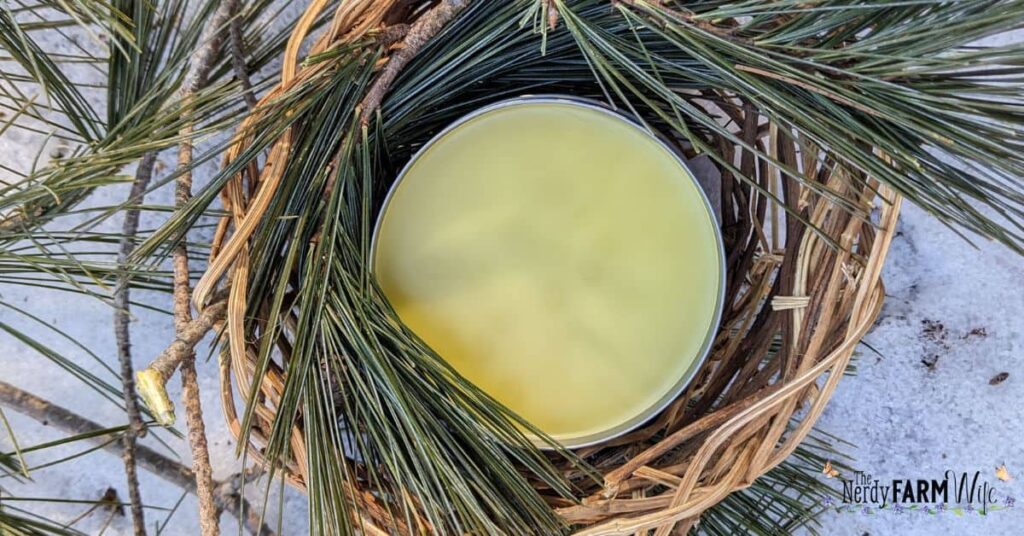
Yield: One full sized batch partly filled both the 2 ounce glass jar and the 4 ounce tin shown in the photos. (The jar and tin were purchased online from Specialty Bottle website.) A batch of salve this size will also usually neatly fill a small 4 ounce jelly jar.
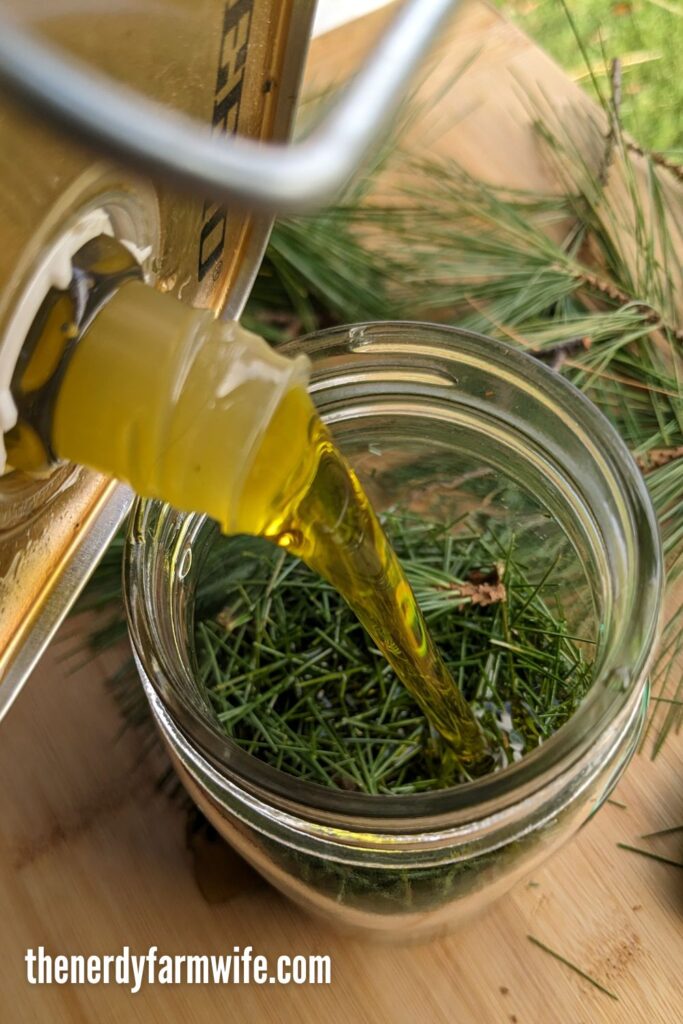
Step 1: Make the Infused Oil
In this step, we make the pine needle infused oil. If you have leftover infused oil, it can be used to make lip balms, soap, body butter, and more!
Ideally, you’ll use pine needles that have been freshly collected, then spread out on a paper towel or screen to air dry for a day or two.
Here are two ways to infuse your oil:
Slow Method (4-6 weeks):
- Fill a jar about halfway with freshly dried pine needles
- Cover with your chosen oil, leaving a little headspace for expansion
- Cap and store in a dark cabinet for 4 to 6 weeks
- Shake every few days when you remember
- Strain and store until ready to use
Quick Method (2-3 hours):
- Fill a jar about halfway with freshly dried pine needles
- Cover with oil until the jar is almost full.
- Do not put a lid on the jar.
- Place the uncovered jar in a saucepan containing a few inches of water
- Heat the saucepan over low heat for about 2-3 hours
- Don’t let the water get too hot or boil
- Strain and use in your recipe
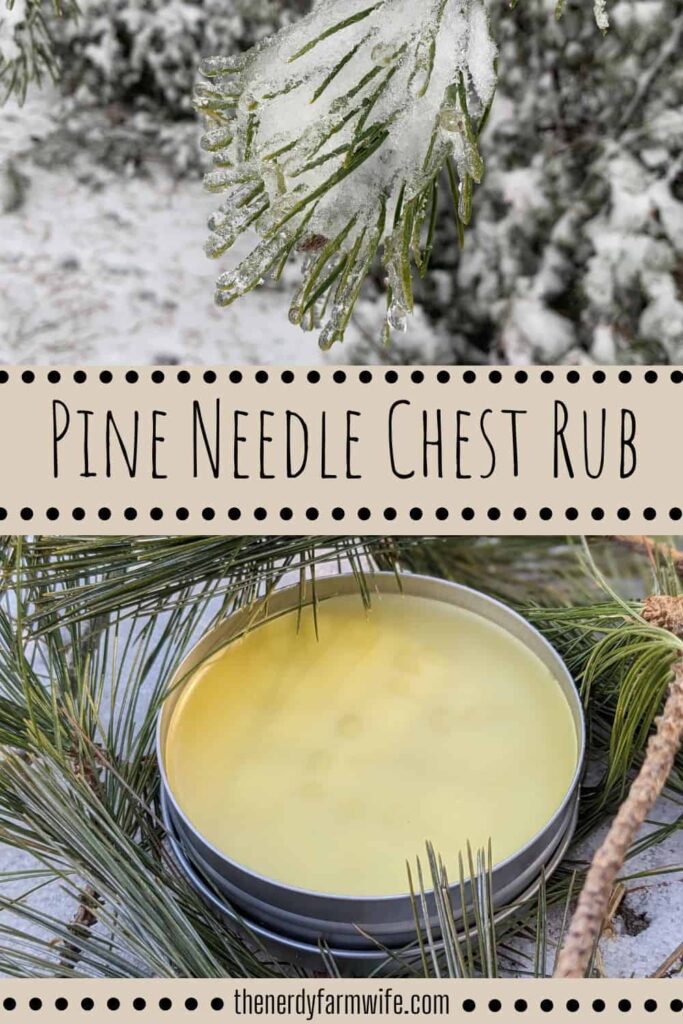
Step 2: Make the Chest Rub
- Combine the infused oil and beeswax in a heatproof container
- Create a double boiler by placing the container down into a pan with several inches of water
- Heat over medium-low until the beeswax completely melts
- Remove from heat, stir, and let cool for a few minutes
- Add the essential oils
- Pour into storage tins or jars
- Let cool completely before capping
If your salve turns out too soft for your taste, melt it down and add more wax. If it’s too firm, melt it down and add more oil.
How to Use
Rub a small amount on chest and throat area as needed. The warming action of pine combined with the therapeutic benefits of the essential oils helps open airways and ease congestion.
Storage & Shelf Life
Store your finished salve in a cool dark place. The shelf life is about 1 year, or as long as the oil smells fresh.
I hope this traditional pine needle chest rub salve is helpful for you and your family! :)

Could you give amounts of single essential oils to use: I don’t usually buy blended essential oils as they are expensive and I have a lot of single ones. I feel it is a waste to use a blended oil when I have the single ones…..
Thank you for this recipe!
Hi Carol! Yes, you could use option 3 (which is 62 drops eucalyptus essential oil plus 30 drops peppermint essential oil)
but instead of using the peppermint, just use all eucalyptus. (or a total of 92 drops eucalyptus as the sole essential oil in the chest rub)
You’re generally safe using a 3 to 5% dilution rate for a short term use product like a chest rub, which is about 80 to 135 drops of essential oil in total for this size recipe.