Foraging & Using Pine Needles
Here’s how to identify pine trees, plus some uses for pine needles, including infused oil and salve, pine needle tea, and a sore throat elixir.
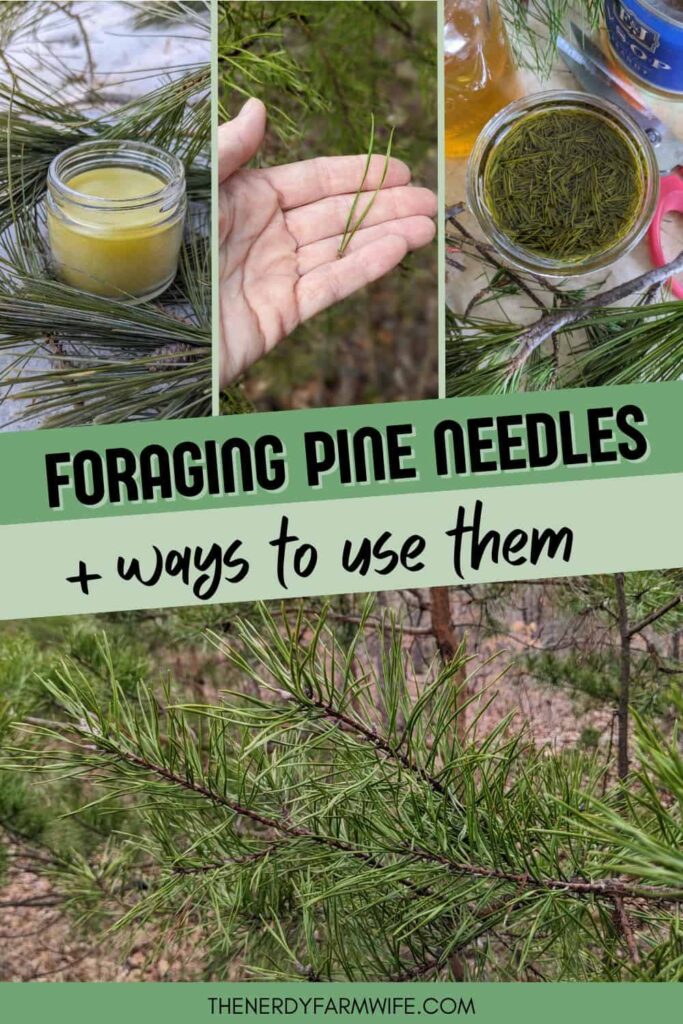
Pines (Pinus spp.) are evergreen, resinous trees that are found pretty much everywhere; there are almost 50 species growing in North America alone!
Native North Americans used decoctions from pine species to treat breathing disorders, rheumatism, and kidney disorders. Pine is also a traditional herbal remedy known to be warming, anti-inflammatory, and rich in antioxidants and vitamin C.
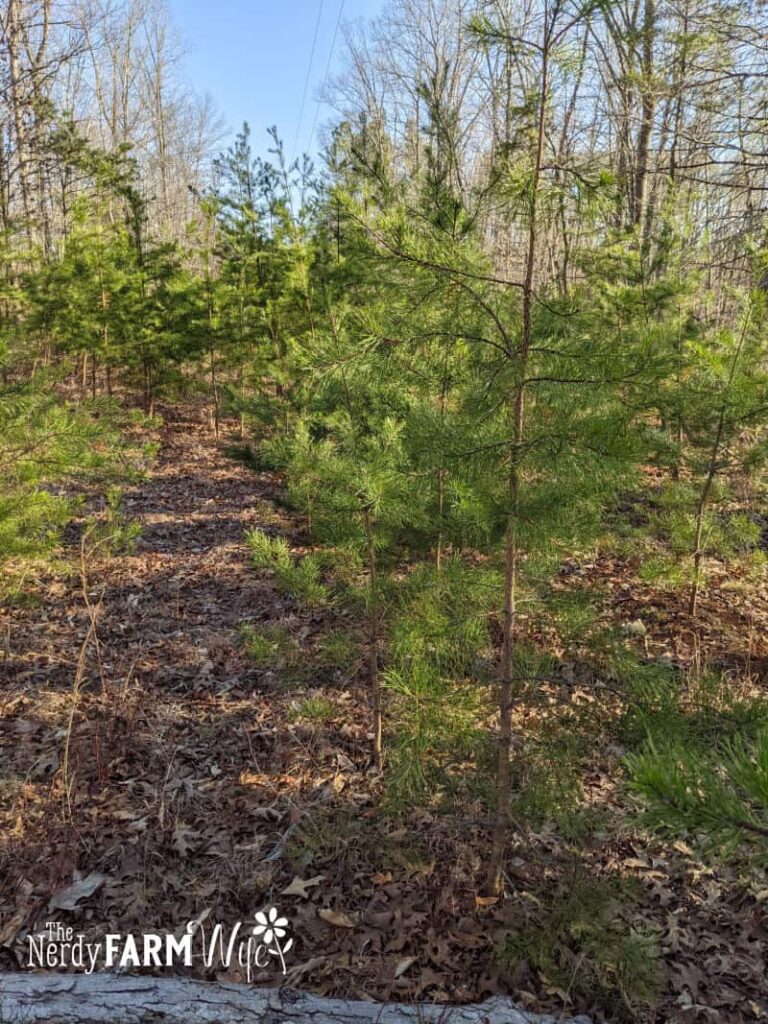
The photos in this article feature the most common pines in the area I live in: Virginia pine, loblolly, and Eastern white pine, because that’s what I have available for me to forage and photograph, but here are some resources to help you find out more about the pines in your own area:
- Leafy Place has an article describing 69 Types of Pine Trees
- Wikipedia has a list of pines by region
Also check with your state’s local extension agency and their related websites, which often have helpful plant information and downloads.
You can also use a phone app like PictureThis, but I’ve found those to be hit or miss when it comes to correctly naming a specific type of pine. It’s a good starting place, but don’t rely solely on an app.
If the evergreen tree you’re identifying turns out to have “Pinus” in its Latin name and needle clusters as described below, then you should indeed have a true pine!
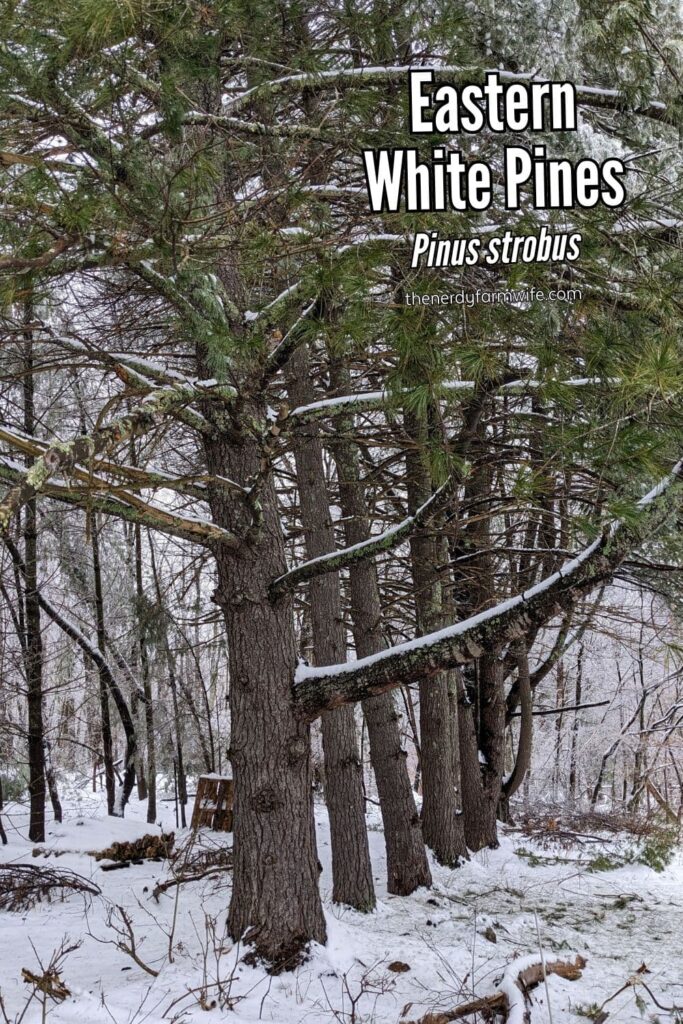
The Identifying Characteristics of Pine
Here’s some information to help you know that you’re foraging from an actual pine tree.
The great thing about these wonderful trees is that the needles are available year ’round. Pine is always in season!

Needles
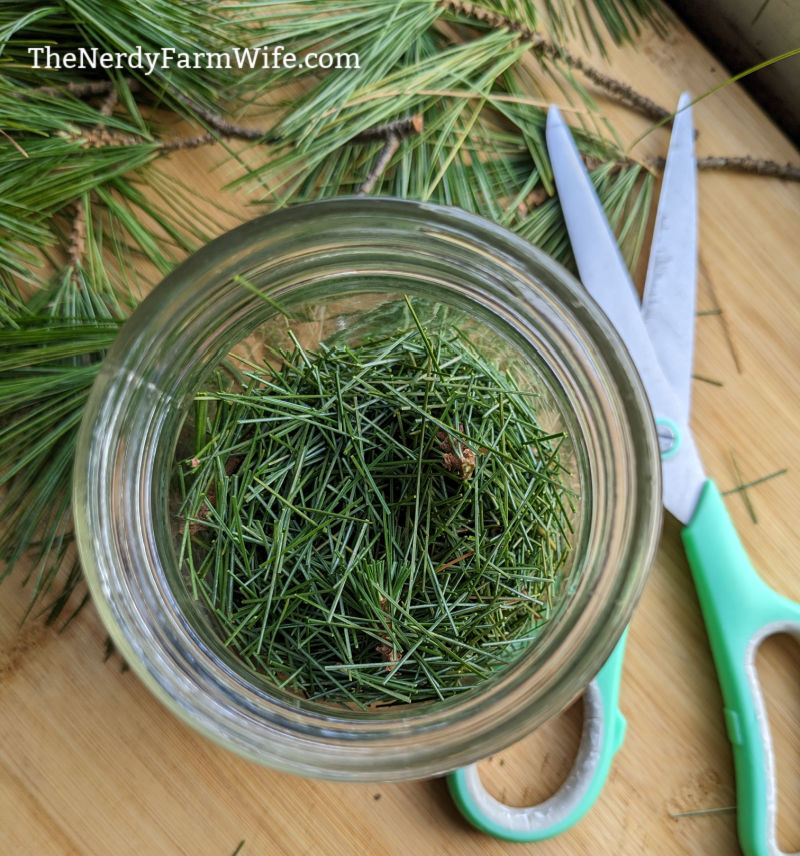
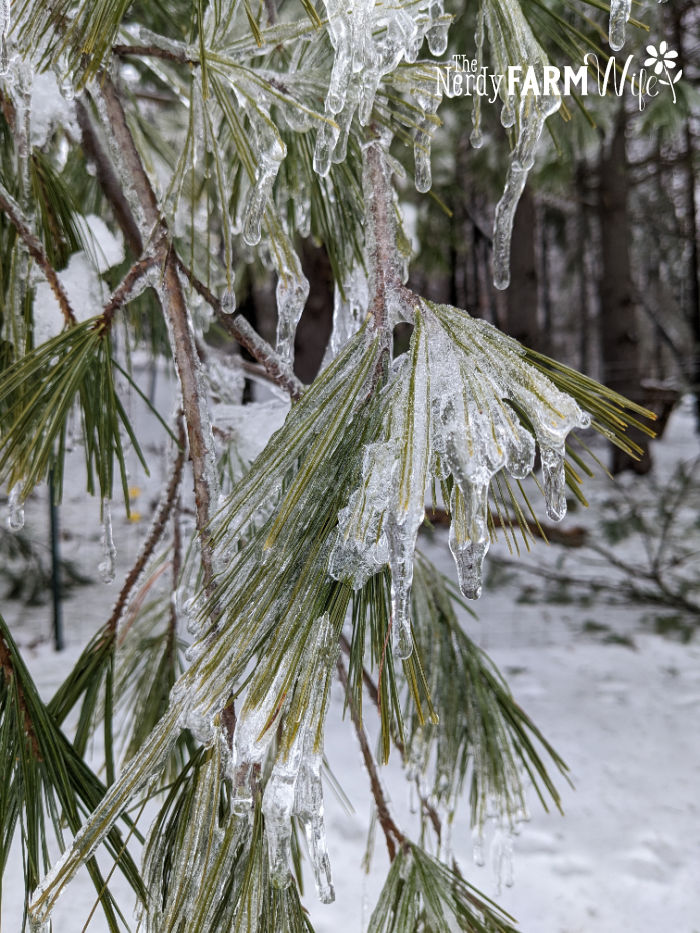
Pine trees don’t have traditional leaves like oaks and maples do. Instead they have needles which grow in little bundles or clusters called fascicles; the base of each bundle has a little bark-like sheath.
If you inspect a bundle, you’ll find that the needles are usually growing in groups of 2, 3, or 5, depending on the type of pine tree you’re looking at.
Using the needle count is a key identifier when you’re researching what type of pine you have.
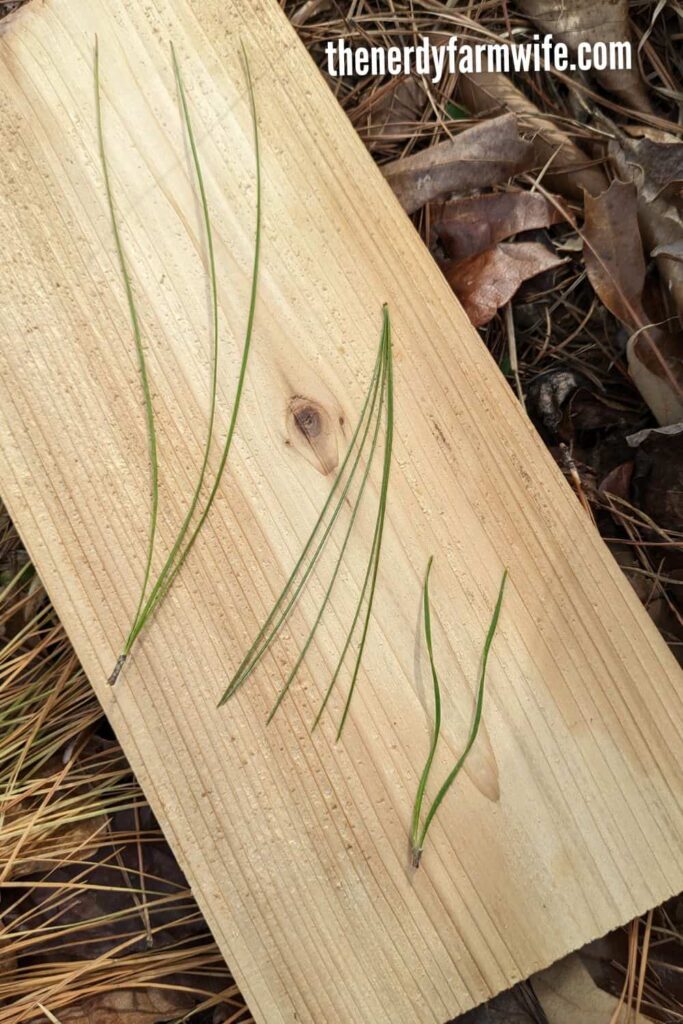
For some examples: White pines have needles that grow in bundles of 5. In the area I live in, we have Eastern White pine (Pinus strobus). There are 8 other species of white pines that grow on the West Coast. Loblolly pines have long needles, about 5 to 10 inches long, which grow in bundles of three.
Shortleaf pines and Virginia pines look similar, only shortleaf pine’s needles are 3 to 5 inches long and arranged in bundles of twos (or threes), while Virginia pine’s needles are 1 1/2 to 3 inches long, arranged in bundles of twos that have a little twist to them.
Bark
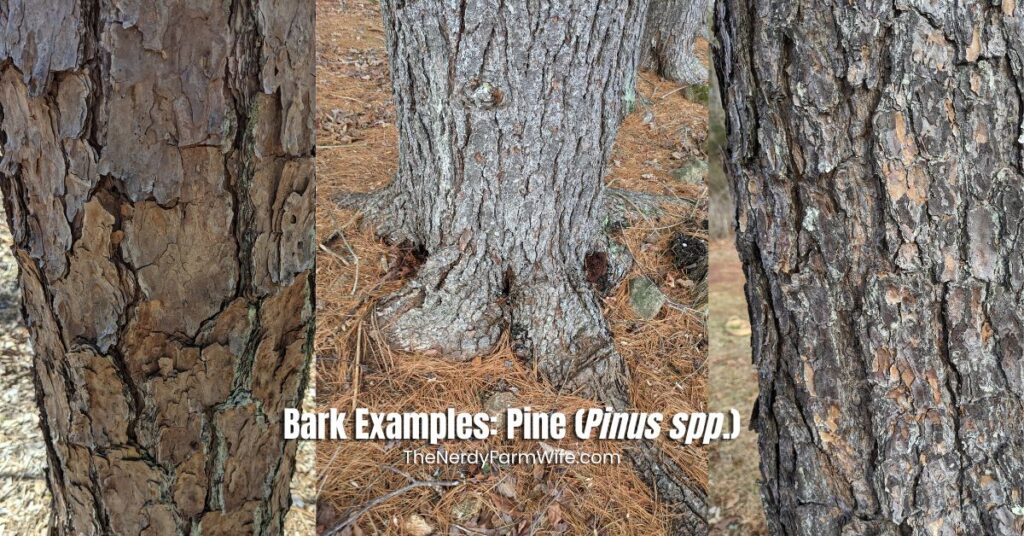
The bark of pine trees is very rough, blocky-ish, and scaly looking.
It’s pretty easy to identify pines just because their needles will still be on the trees even in winter, but as you take walks through the woods, also observe the bark of pine trees you pass and you’ll quickly learn to differentiate the bark of your local pines from other trees.
Cones
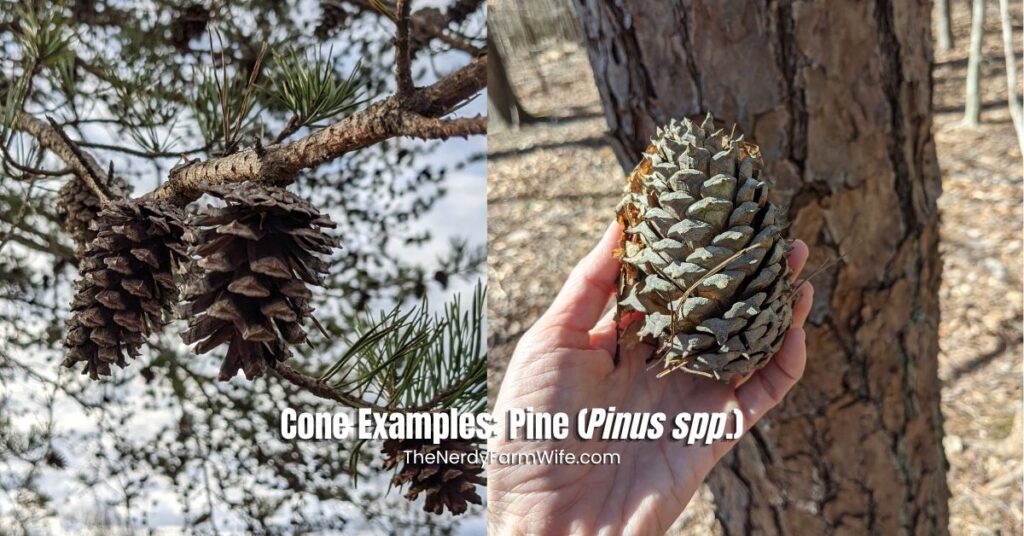
Pine trees grow pine cones! They come in various sizes and shapes, which will help you hone in on what varieties of pine you have growing around you.
For example, loblolly pines have oval cones, about 4 to 6 inches long, and the prickles feel sharp on your hands when you pick them up.
Shortleaf pine cones are small, only about 1 1/2 to 2 1/2 inches long, and they don’t feel so prickly.
Resin
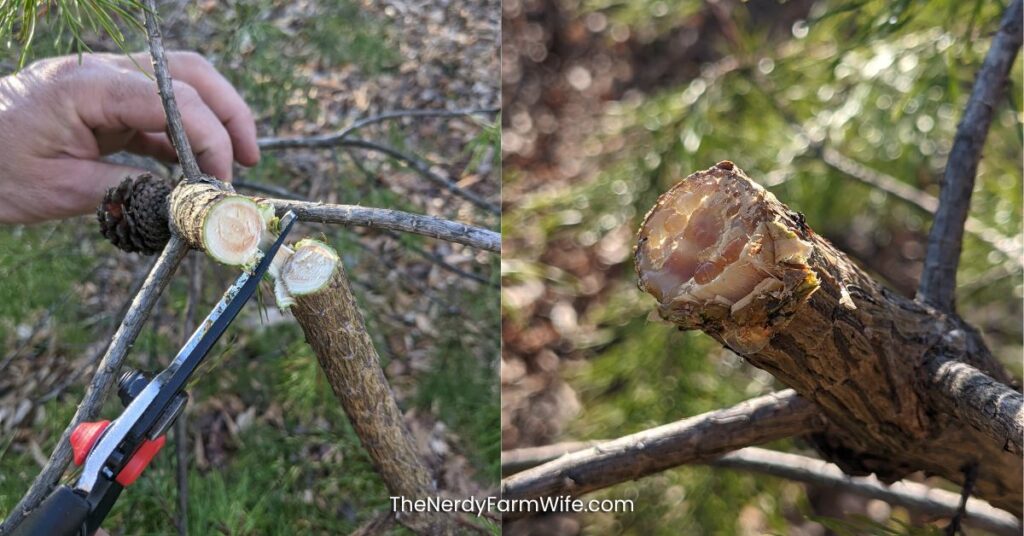
Pine trees produce a substance called resin, which is stored in resin ducts within the tree. When a tree is damaged, the resin flows out and makes a thick, sticky, protective barrier that seals off the wounded spot.
Other plants produce resin, but pine trees are one of the top producers of resin.
Cautions
If you’re pregnant, especially in the first trimester, check with your healthcare provider before using pine needles internally.
Herbalists don’t agree on this at all – some feel that the terpenes in pine, or certain pines, are potentially problematic during pregnancy, while others don’t. (I personally believe it’s better to play it safe when it comes to babies; it’s easy enough for the average modern person to live without eating pine needles for 9 months!)
This second caution is obvious, but it must be said; if you’re allergic to pine nuts or pine pollen, then you should avoid using pine needles as well.
An Important Note About Yew
Yew (Taxus baccata) is an evergreen tree with short stubby needles (that don’t grow in clusters or bunches like pines do) and develops red fruit, instead of cones.
It’s also highly toxic, so even though they don’t look exactly alike, you still don’t want to accidentally confuse yew with a pine tree.
The Woodland Trust has some ID information for yew that will be helpful to read over.
How to Dry Pine Needles
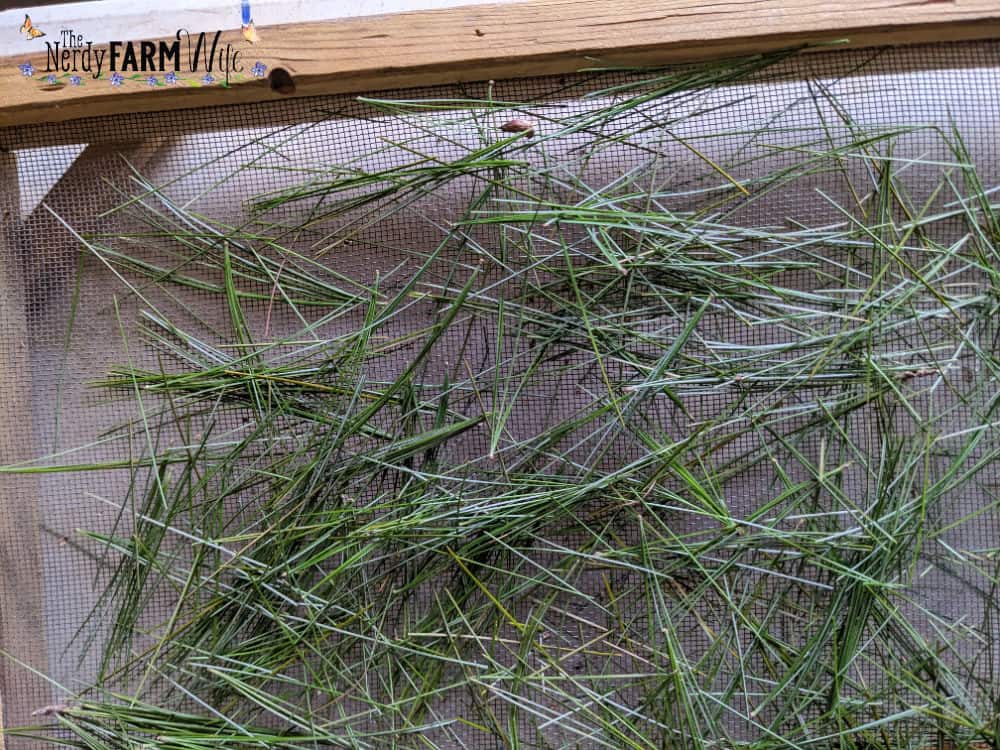
Pine needles already have a low water content, so are a breeze to dry.
Simple spread them out in a single layer over a paper towel or screen and let them air dry for one or more days.
However, I don’t recommend you dry a bunch at one time, because pine needles are already available year ’round! I only dry pine needles if I’m infusing them into oil, so that way I’m not wasting plant material for no reason.
If you only have occasional access to pine trees and must dry and store pine needles, keep them in a brown paper bag, in a cool dark place.
As long as the dried needles are still green and fragrant when broken in bits, they are good to use. If they fade to brown and/or lose their scent, then it’s time to return them outside to compost, and collect a fresh batch!
Ways to Use Pine Needles
Almost two decades ago, I went to my first nature/survival-style class and learned that pine needles are edible and contain vitamin C, and if you’re ever in a survival situation, to try nibbling on pine needles!
I found that oddly comforting knowledge over the years, even though the needles aren’t that tasty straight from the tree and I now know how to forage a lot more things. However, that information will always stand out as the first AHA! moment where it hit me that I could find food and medicine in the wild!
Pine is also used in traditional herbalism – it’s a warming herb, used internally for things like sore throats and respiratory congestion, and can be used externally for aches and pains. Salves and balms made with pine needle infused oil can also be used as a chest rub to help loosen congestion.
Here are some ways I like to use pine:
(Plus, I have more pine recipes and projects to share in the future, as I get them typed up!) :)
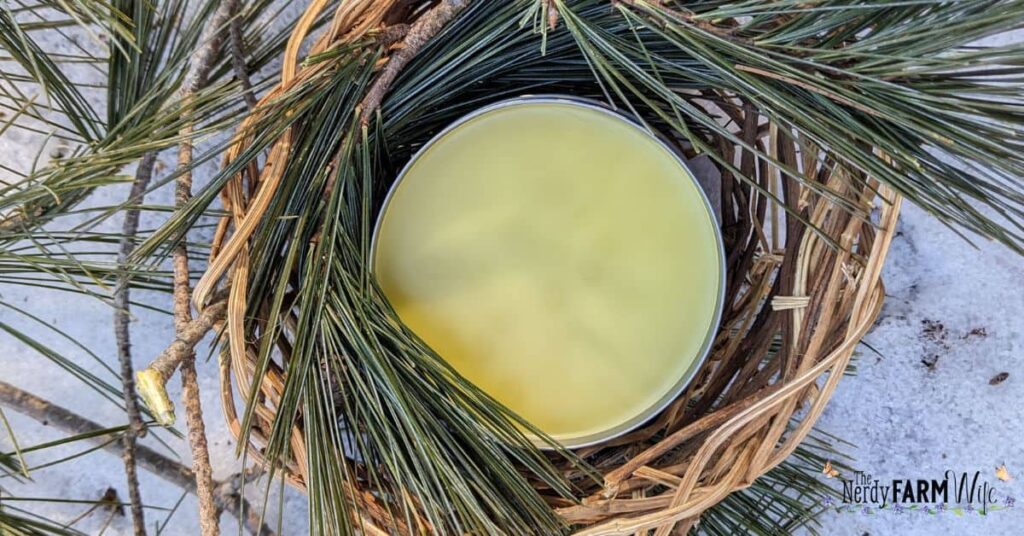
Infused Pine Needle Oil & Salves
Pine needles can be infused into oil just like any other herb, then turned into salves, lotions, lip balms, and more!
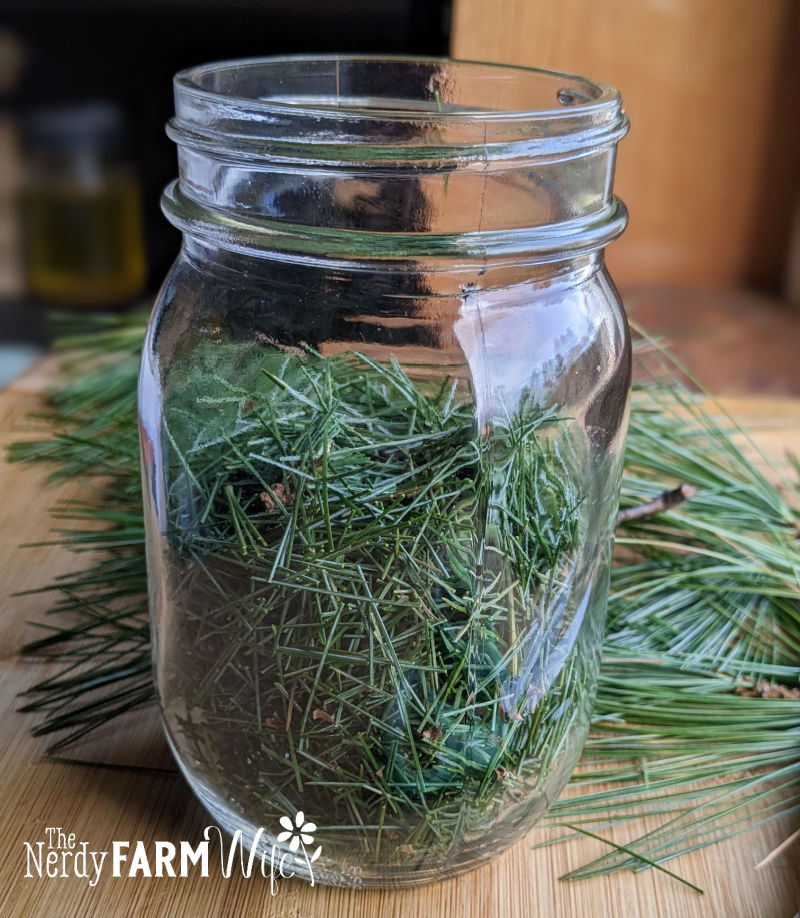
To infuse the oil, fill a jar about halfway with freshly dried pine needles. Cover with oil of your choice until the jar is almost filled. Olive oil or sunflower oil are classic choices; rice bran, sweet almond, or jojoba oil are also nice and a little quicker to absorb into your skin. Cover with a lid and tuck away in a cabinet for about 4 to 6 weeks. Strain and use in salves, etc. Shelf life of infused oil is about one year, or as long as the oil smells fresh.
For much more in depth information about making infused oils, check out my article:
How to Make Herb Infused Oils (+FAQS & Tips)
Here’s a recipe on my site in which you can use your lovely pine needle infused oil!
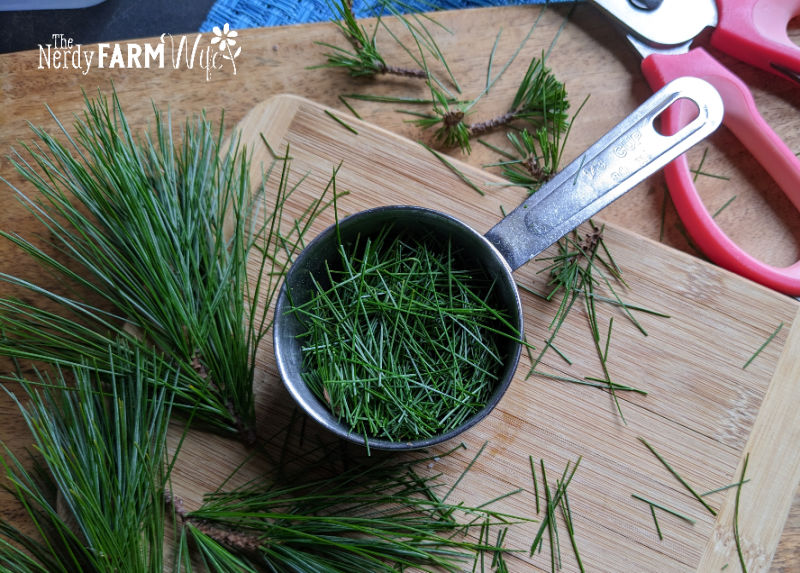
Pine Needle Tea Recipe
You’ll need about 1/8 to 1/4 cup chopped pine needles and 1 cup of water. You can gather and use fresh pine needles any time of year, though the taste may vary a bit by the season.
For a milder tasting tea:
Place the pine needles in a heat proof cup or container. Bring the cup of water to a simmer and remove from heat. Pour the hot water over the pine needles and cover with a saucer. Let steep for 5 to 15 minutes, or until the desired strength/flavor is reached.
For a stronger, more medicinal tea:
Place the pine needles in a saucepan, bring to a simmer, then simmer on low for about 15 to 20 minutes. This will make a strong-tasing tea that’s used herbally for congestion, sore throats, and to loosen stuck mucus. Simmer or steep for half the amount of time, for a milder-tasting tea.
Try adding a pinch of rose hips along with the pine needles and/or add a squeeze of fresh lemon juice for an even higher helping of natural vitamin C.
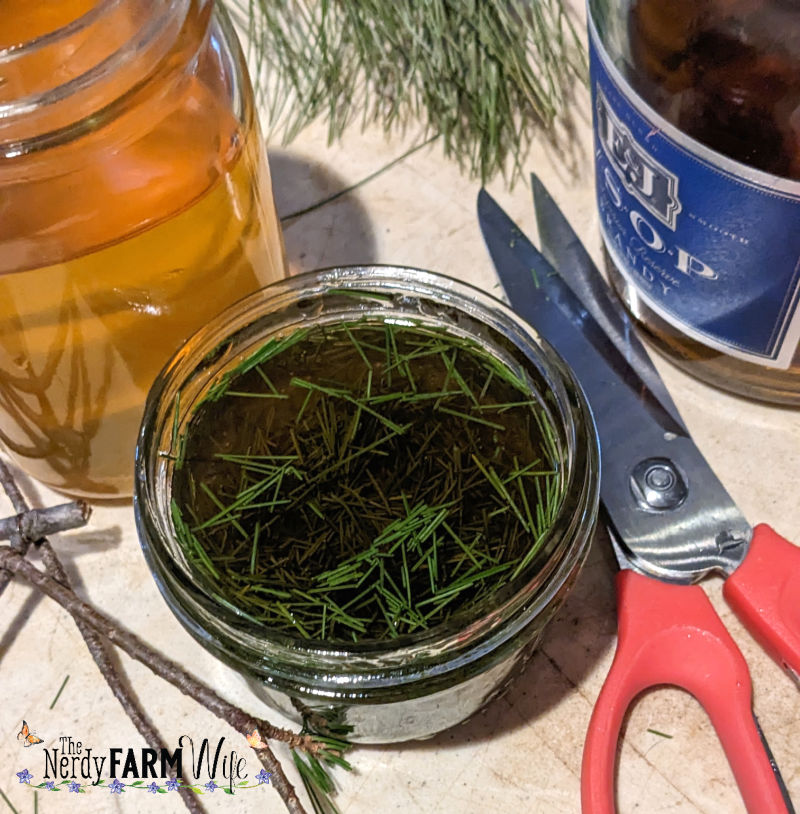
Pine, Honey & Brandy Elixir
This is a tasty way to sooth a sore throat or cough!
You’ll need:
- Fresh Pine Needles
- Honey
- Brandy
- A clean jar with a lid
and that’s it!
Find the full instructions for this remedy on my site:
References & Further Reading
Durzan, Don J. Arginine, scurvy and Cartier’s “tree of life”. Journal of Ethnobiology and Ethnomedicine. 2009 Feb 2;5:5.
Koutsaviti, Aikaterini, et al. Antioxidant Potential of Pine Needles: A Systematic Study on the Essential Oils and Extracts of 46 Species of the Genus Pinus. Foods. 2021 Jan 12;10(1):142.
Lopez-Alvarez, Oscar, et al. Resin tapping: A review of the main factors modulating pine resin yield. Industrial Crops and Products; Volume 202, 15 October 2023, 117105.
USDA Forest Service. National Seed Laboratory. Genetic Conservation – 5 Needle Pines.