
How to Forage Pine Resin
Pine resin is a natural ingredient that can be foraged for herbal first aid and home remedies almost any time of the year. (Though I have the best luck finding it after winter storms!)
In this guide, you’ll learn how to identify, forage, and collect pine resin responsibly. I’ll also share links to my tutorials on making pine resin infused oil, salve, and soap.
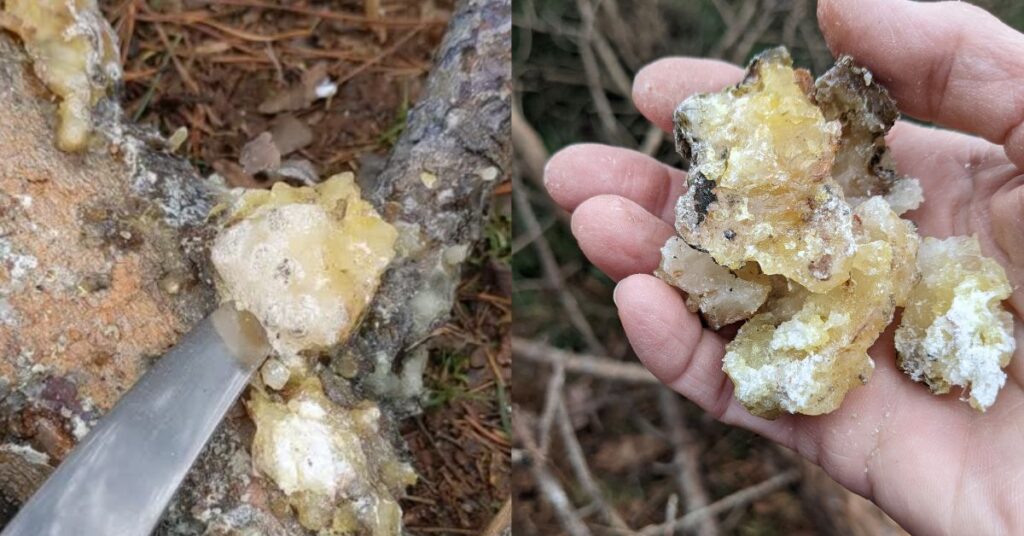
Pine resin is the tree’s natural healing agent; it’s basically a self-made bandaid. When a pine tree is injured by insects, storms or other damaging elements, it releases resin to seal and protect the wounded areas.
For pine trees, the resin acts as a wound protection; while for us humans, pine resin is useful as an antimicrobial, drawing agent, sore muscle aid, and more!
Pine resin is rich in terpenes, compounds which contribute to its antimicrobial, warming, and respiratory supportive qualities. It’s most often used topically – on your skin – and is soluble in oil and high proof alcohol (not water), so keep that in mind when thinking of ways to best use it.
Some benefits of pine resin include:
- warming and circulation boosting
- a natural drawing agent for thorns, splinters, and boils
- antimicrobial and antifungal
- helpful for easing sore muscles and stiff joints
- soothing to cracked, chapped, or rough skin
- useful in soaps for troubled skin
- also used in chest rubs for respiratory wellness
Pine resin has a fresh piney scent that smells pleasant to most people, dependent upon the type of tree you harvest it from. Some species of trees produce more resin than others.
What’s the difference between resin and rosin?
Sometimes people use the words “resin” and “rosin” interchangeably, but they’re technically not the same.
Rosin is what’s left behind after resin is processed to make turpentine. Also called colophony, it’s used by violinists and other stringed instrument players to add grip to their bows.
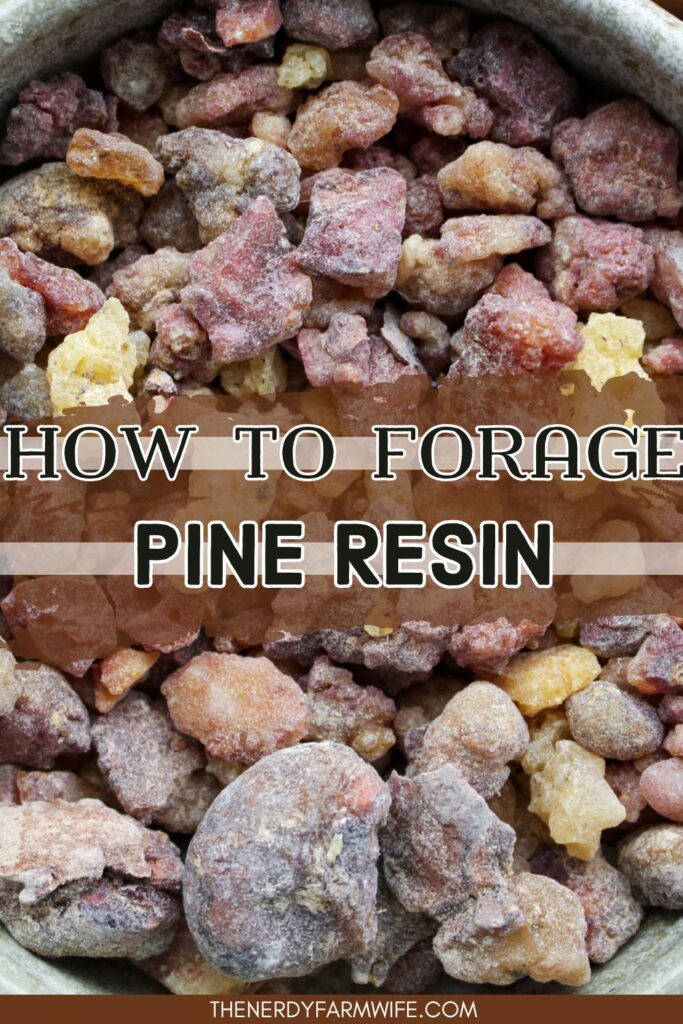
Resin (raw pine resin) is what you want for herbal preparations. Whole resin contains the full spectrum of beneficial plant compounds, so double check that information when buying it online.
Pines You Can Collect Resin From
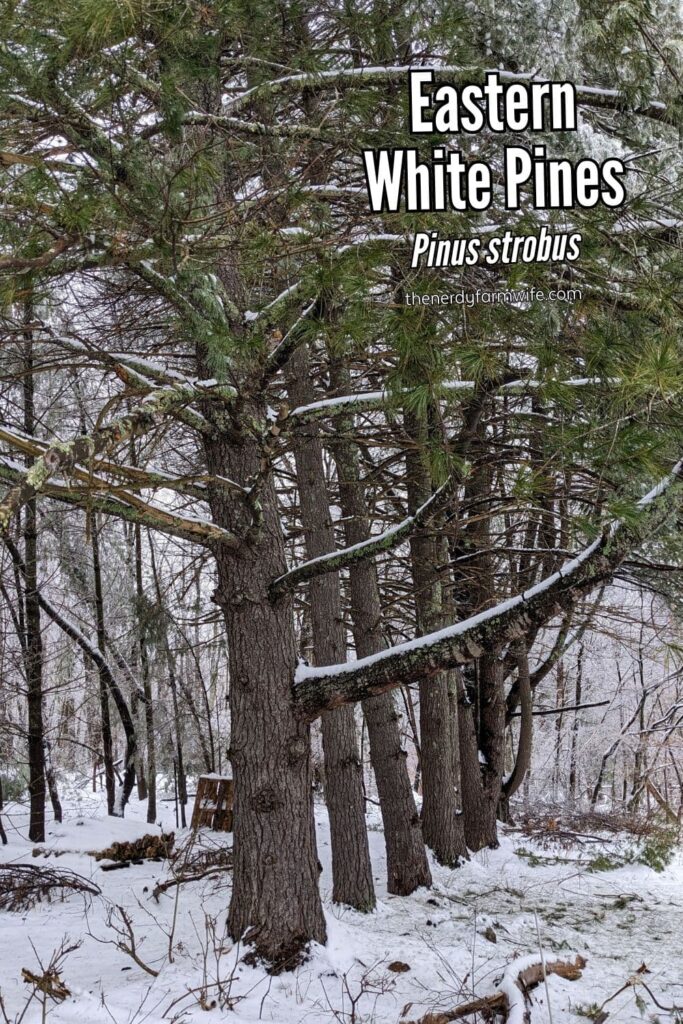
You can forage resin from any pine species (Pinus spp). In the area I live in, the most common trees are eastern white pine (Pinus strobis), Virginia pine (Pinus virginiana), and loblolly pine (Pinus taeda), so that’s what we use. Other good resin sources include pinyon (Pinus edulis) and ponderosa (Pinus ponderosa).
To learn more about identifying pine trees in general, visit my article:
All foragers should be aware of and familiar with the appearance of Yew (Taxus spp). Green Deane has an excellent article about Yew, over at Eat the Weeds. Yew is toxic and should not be used for making herbal preparations.
Other useful resources include the Arbor Day Foundation’s interactive “What Tree Is This?” feature on their site. Also check your state’s free online educational resources . We found the Virginia Department of Forestry’s Common Native Trees of Virginia Guide (which you can freely download on their site) really helpful when starting to learn our state’s trees.
How to Sustainably Harvest Pine Resin
It’s key to harvest pine resin in a way that doesn’t further damage any live trees. Resin is essentially the tree’s bandage, so removing it carelessly can expose the tree to disease and pests.
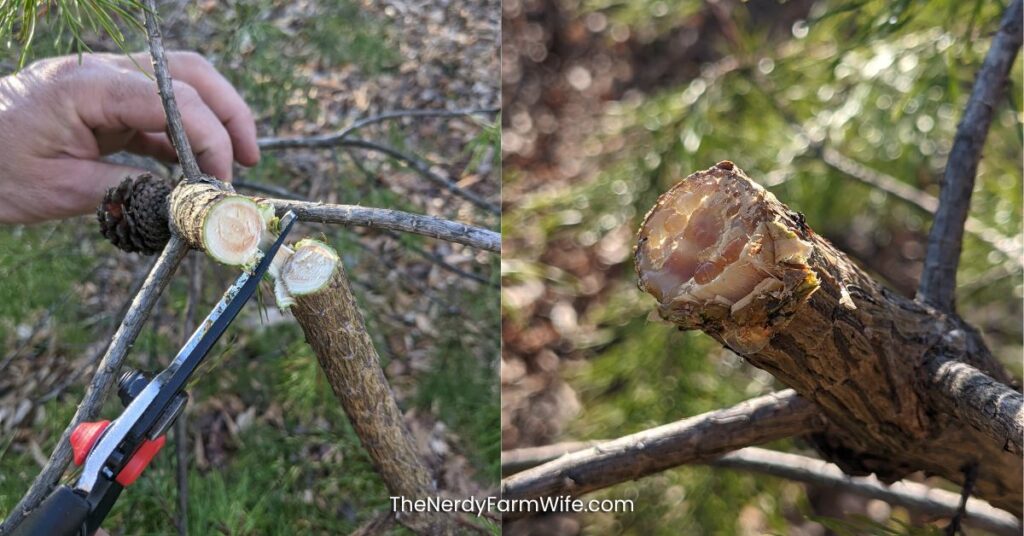
The easiest way to gather resin is to look for storm fallen pine trees. Winter storms often knock down branches or even entire trees, making them ideal to check. Resin might already be present around older wounds, or you might see it seeping out when you cut branches during after-storm cleanup.
If you MUST gather from a live tree, don’t scrape or pry resin off of an active wound. Instead, look to see where resin has naturally dripped further down the trunk and hardened, or check for chunks that have fallen to the ground.
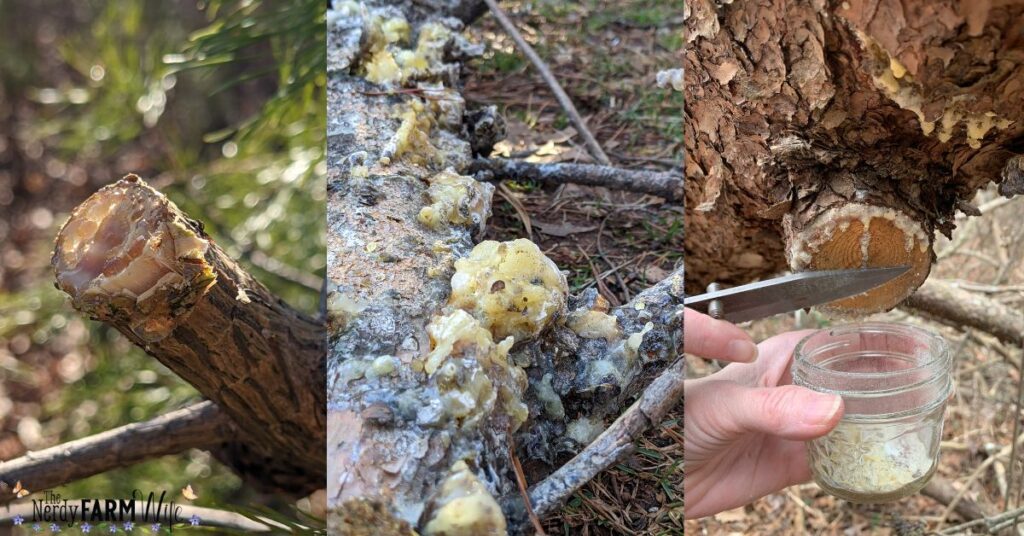
An old butter knife is perfect for popping off cold chunks, or scraping the softer bits from a fallen tree. Resin sticks to everything and is difficult, (if not impossible!), to clean off of most surfaces, so collect it in a piece of parchment paper or a container dedicated to resin.
Don’t worry if the resin has bits of bark or needles stuck to it, it’s easy to strain out later, during the oil infusing process.
How to Easily Clean Pine Resin Off of Your Hands
Pine resin is super sticky and doesn’t wash off well with soap and water. Instead, try rubbing a small amount of coconut or olive oil all over your hands, concentrating on any sticky spots. Rub it in well, then wash your hands with soap and water.
If any stickiness remains, repeat the process. One or two rounds of this treatment usually does the trick!
This process works well for cleaning your collecting tools, such as your trusty butter knife, and countertops too.
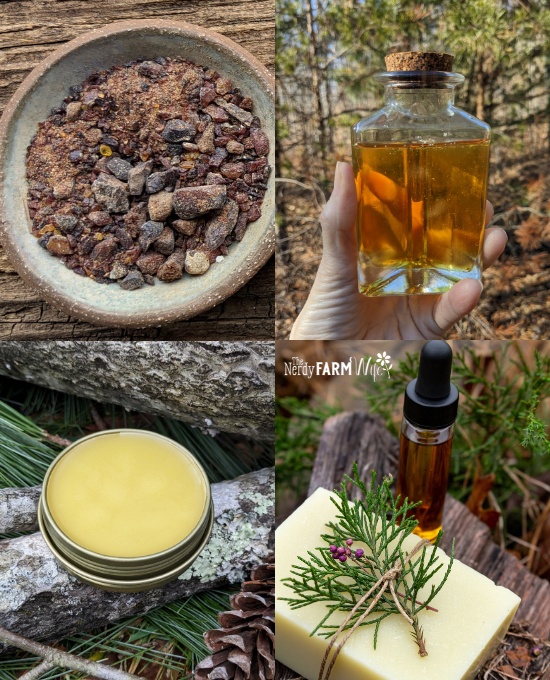
Uses for Pine Resin: Oil, Salve, Soap
Traditionally, pine resin has been used as a drawing agent, antimicrobial wound dressing, and warming muscle rub. Herbalists also value it for respiratory support when used topically or aromatically, thanks to its volatile terpene content.
Once you’ve foraged pine resin, these related tutorials will walk you through turning it into useful herbal creations.
- Foraging Pine Resin – (You’re here!)
- Pine Resin Infused Oil – Learn how to transform sticky resin into an easy to use oil.
- Pine Resin Salve Recipe – Make a simple, traditional herbal salve recipe.
- Pine Resin Soap – Use pine resin infused oil in cold process soap.
References & Further Reading
De la Foret, Rosalee & Emily Han. Wild Remedies – How to Forage Healing Foods and Craft Your Own Herbal Medicine. 2020. Hay House.
Lopez-Alvarez, Oscar, et al. Resin tapping: A review of the main factors modulating pine resin yield. Industrial Crops and Products; Volume 202, 15 October 2023, 117105.
Park JY, et al. Abietic acid isolated from pine resin (Resina Pini) enhances angiogenesis in HUVECs and accelerates cutaneous wound healing in mice. J Ethnopharmacol. 2017 May 5;203:279-287. doi: 10.1016/j.jep.2017.03.055. Epub 2017 Apr 4. PMID: 28389357.
Rose, Kiva. The Forest in Winter; Mountain Rose Herbs Blog. Retrieved December, 2025.
Trapp S, Croteau R. DEFENSIVE RESIN BIOSYNTHESIS IN CONIFERS. Annu Rev Plant Physiol Plant Mol Biol. 2001 Jun;52:689-724. doi: 10.1146/annurev.arplant.52.1.689. PMID: 11337413.
Wood, Matthew. (2009). The Earthwise Herbal: A Complete Guide to New World Medicinal Plants. Berkeley, CA: North Atlantic Books.