Pine Resin Salve Recipe
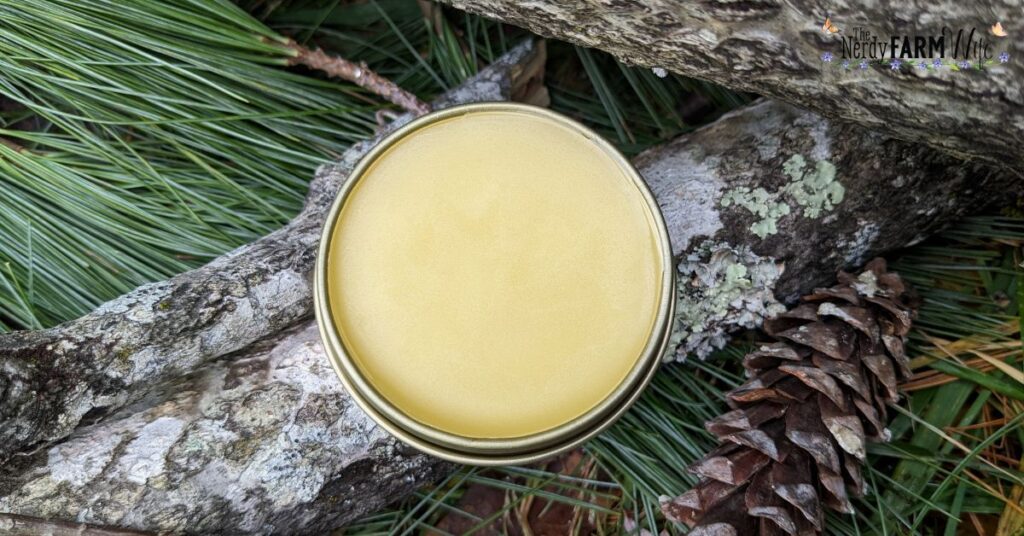
Pine resin salve is a simple but powerful remedy to keep stocked in your home apothecary.
It can be used for general first aid purposes, such as scratches, scrapes and chapped skin, but is especially valued for its “drawing action” – resin’s ability to stimulate circulation and immune response at the skin’s surface, helping the body to naturally expel splinters and boils, while discouraging infection.
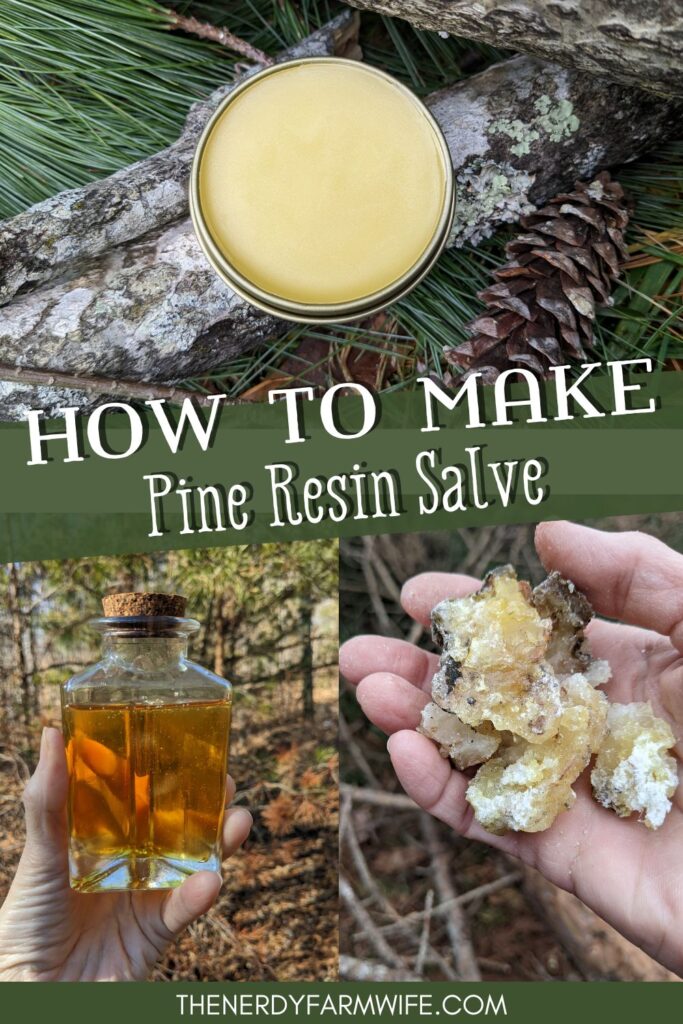
To make this recipe, you’ll first need to forage or buy some pine resin, then make pine resin infused oil.
These related related tutorials and articles should help:
- Foraging Pine Resin – Learn where and how to collect pine resin.
- Pine Resin Infused Oil – Prepare the infused oil used in this recipe.
- Pine Resin Salve Recipe – (You’re here!)
- Pine Resin Soap – A way to use pine infused oil in handmade soaps.
Can’t easily forage from pine trees where you live? Try looking on Etsy for sustainably foraged pine resin.
Pine Resin Salve Recipe
Here’s how you make the most basic form of pine resin salve. If you’d like, it can be further dressed up with essential oils and other ingredients to make a variety of salve types, such as pain salves and chest rubs. (Will post some of those variations in the future.)
Ingredients for the basic salve:
- 1.55 oz (44 g) pine resin infused oil
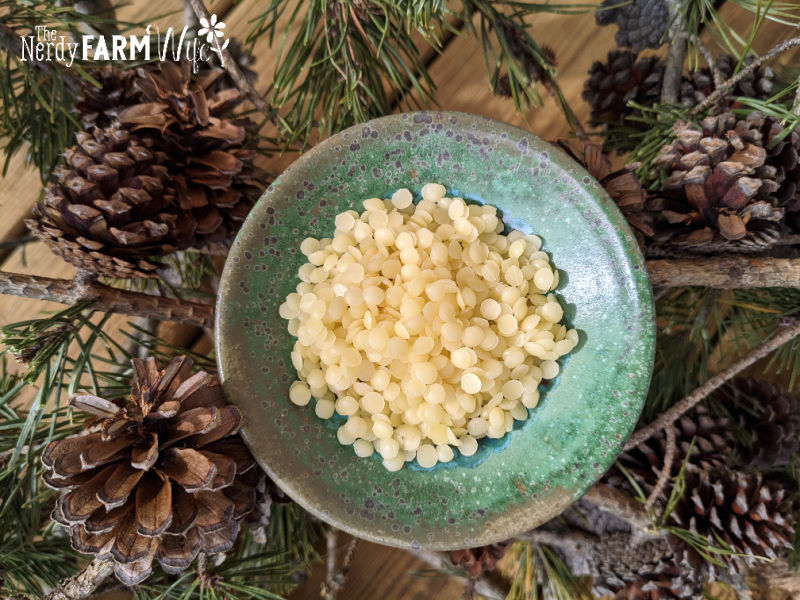
- 0.25 oz (7 g) grated beeswax or pastilles
- half-pint canning jar, or other heatproof melting container
Directions to make the salve:
- Weigh the resin infused oil into the heatproof jar.
- Weigh the beeswax and add it to the jar.
- Place the jar down into a small saucepan containing several inches of water, to form a double boiler of sorts. (This is a safer method than using direct heat to melt beeswax.)
- Heat over a medium-low burner, keeping close watch until the wax melts.
- Remove the saucepan from the burner.
- Pour into a two ounce tin or glass jar.
- Label and store your salve out of direct heat and light.
- Shelf life is about one year, or for as long as the product still smells good.
To use:
As a general first aid salve, gently dab or rub it over minor scrapes, dry patches of skin, or chapped skin/lips.
For splinters or boils, apply a small amount, then cover with a bandaid and leave it on overnight. Remove and wash the next day. If needed, repeat the treatment.
Always do a small patch test of this salve before applying to larger areas, since some people may be sensitive to pine resin.
References & Further Reading
De la Foret, Rosalee & Emily Han. Wild Remedies – How to Forage Healing Foods and Craft Your Own Herbal Medicine. 2020. Hay House.
Park JY, et al. Abietic acid isolated from pine resin (Resina Pini) enhances angiogenesis in HUVECs and accelerates cutaneous wound healing in mice. J Ethnopharmacol. 2017 May 5;203:279-287. doi: 10.1016/j.jep.2017.03.055. Epub 2017 Apr 4. PMID: 28389357.
Rose, Kiva. The Forest in Winter; Mountain Rose Herbs Blog. Retrieved December, 2025.
Wood, Matthew. (2009). The Earthwise Herbal: A Complete Guide to New World Medicinal Plants. Berkeley, CA: North Atlantic Books.