
Yellow Dock Salve Recipe (Curly Dock)
This summer, I’ve been testing out a yellow dock salve recipe for a foraged remedies book that I’ve been working on for about 3+ years now. (Hopefully next year, or the spring after, that book will finally be finished and ready to put out into the world!)
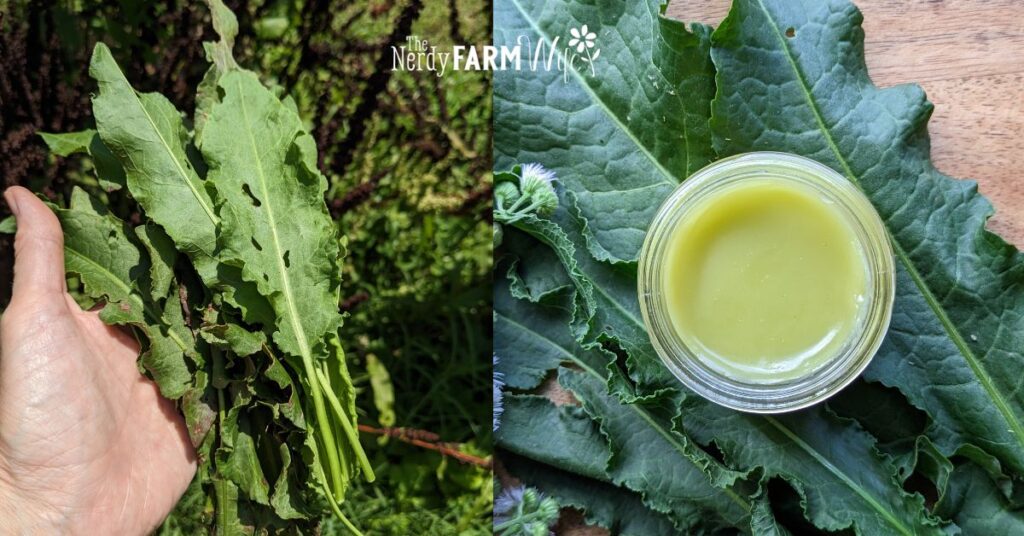
The leaves from yellow dock (Rumex crispus), also called curly dock, is a classic folk remedy for stinging nettle stings, and it can also work for other sting-y, itchy skin conditions. (If you’re out in the field, just chew or mash a leaf to make a “spit poultice” and apply to the affected area.)
Last winter, I found an interesting reference to yellow dock salve in a wonderful book by herbalist Darcy Williamson – Medicinal Plants of the Northwest. She mentions that yellow dock salve is useful for “eczema, hives, itchy skin, scabies, and ringworm.”
She referred to using the root, but I wanted to test out the leaves for my book project, because they’re easier for most people to collect.
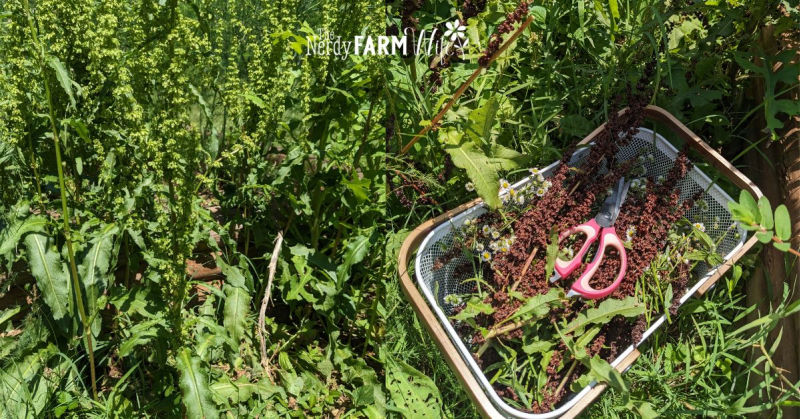
I’ve been testing out a basic yellow dock leaf salve this year and found that it’s excellent for soothing and healing up scratched sores – like the kind that someone gets when they’ve scratched their bug bites too much in spite of their best intentions.
It’s also very soothing for general scrapes and minor scratches. I think it might pair well with comfrey for that purpose, so that’s another variation I plan to test out.
Another way I’ve found it helpful is for relieving regular bug bites or itchy spots, before they get out of hand. I dab on some witch hazel tincture, or a vinegar/witch hazel remedy for itchy skin, let that air dry a minute or two, then dab on some yellow dock salve. For my family members who are bad about scratching at bug bites in their sleep, I then cover with a band-aid.
This simple salve has become one of my go-to favorites already!
Here’s the basic recipe and I’ll keep experimenting with variations that I’ll share in the future if they test out well. :)
Yellow Dock Salve Recipe (also called Curly Dock Salve)
This salve is just made with one of my standard salve making formulas.
Summary of the steps needed to make this salve:
- Gather yellow dock/curly dock (Rumex crispus) leaves and air dry them for a few days.
- Infuse the dried leaves into oil.
- Combine the infused oil with beeswax to make a salve.
- That’s it!
I haven’t written up a full ID/foraging guide for yellow dock yet, but it’s on my to-do list.
Until then…. try this video from Dina Falconi for some ID tips: Meet Yellow Dock; and this video from April of She of the Woods: Meeting Yellow Dock in the Wild!
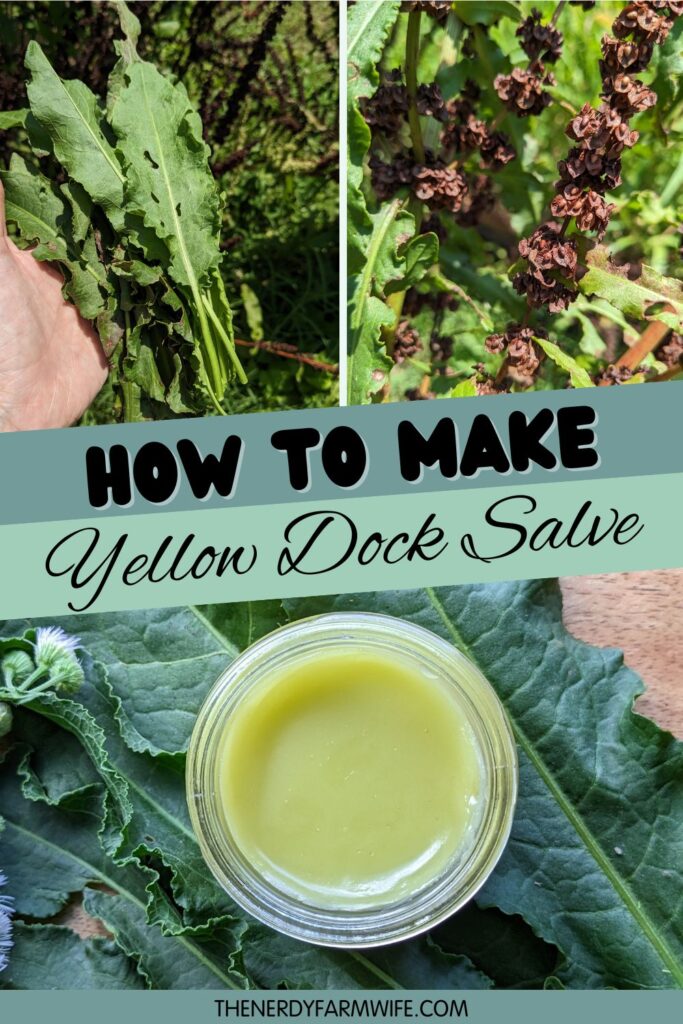
To make the infused oil:
Fill a half-pint or pint canning jar about halfway with dried, crumbled yellow dock leaves.
Optionally, you can stir in a small splash of high proof vodka, to help extra a bit more color and compounds from the plant.
Fill the jar with the oil or combination of oils of your choice, such as: rice bran, sunflower, avocado, olive, sweet almond, apricot kernel, etc.
Next, place the uncovered jar down into a saucepan that contains a few inches of water and indirectly heat the jar of herbs/oil over a low burner for several hours (3 to 4+ hours).
You can also infuse using the slow method (by capping and infusing at room temperature for several weeks). Please see my article: How to Make Herb Infused Oils (+FAQS & Tips) – for full directions if you’ve never infused oils before.
To make the yellow dock leaf salve:
All you need to make this simple salve is infused oil and beeswax. If you want a softer, looser salve, use a bit less beeswax. For a firmer salve, add more beeswax.
Use a basic kitchen scale from your local big box store to weigh the ingredients.
- 4 ounces (113 grams) yellow dock leaf infused oil
- 0.65 ounces (18 grams) of beeswax
Combine the oil and beeswax in a heatproof canning jar or a pyrex measuring cup. Set the jar down into a saucepan containing several inches of water, then place the pan over low heat until the beeswax melts. Stir, then pour into tins or small jars. Cover with lids when cool. Fills three or four 2-ounce jars or tins. Shelf life of salves is 9 to 12+ months, or as long as it smells good, and not like aging or rancid oil.