DIY Solid Dish Soap Bar Recipe (Cold Process)
Learn how to make your own bars of solid dish soap!
In this guide I’ll share a cold process dish soap recipe that you can personalize with various add-ins, plus tips on making and using homemade dish soap bars.
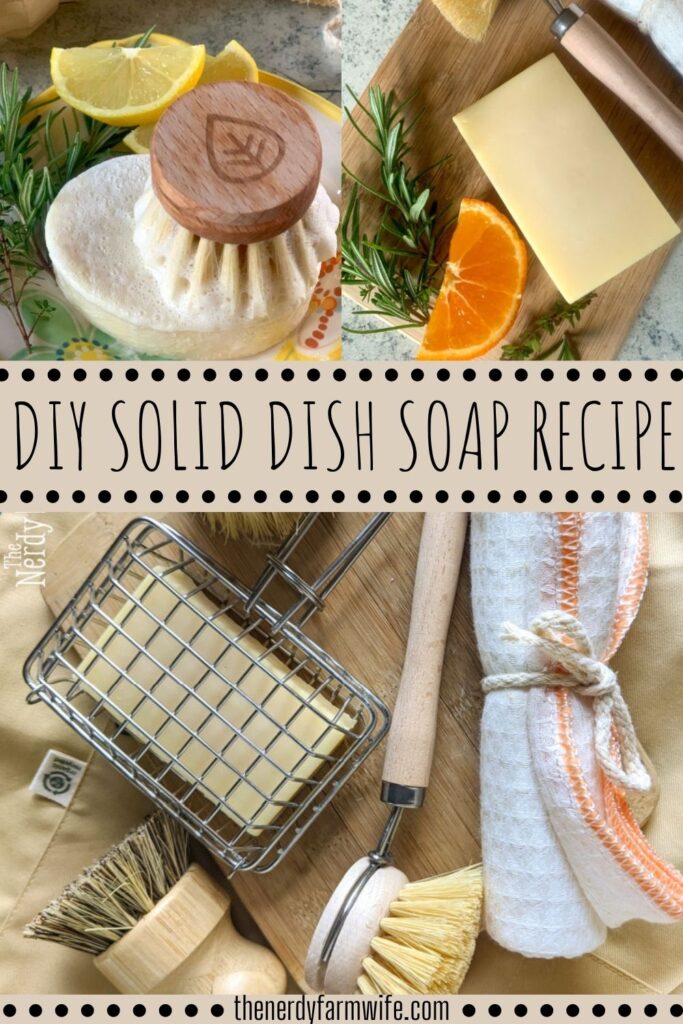
Solid dish soap is a popular zero-waste solution for washing your dishes. It’s eco-friendly, since there’s no packaging waste.
First though – what exactly is solid dish soap?
Solid dish soap is simply a bar of ultra cleansing soap, that’s used for handwashing dishes. (It’s not to be used in an electric dishwasher though!)
If this sounds a lot like bars of solid laundry soap – you’re exactly right! It’s the same premise, only used on dishes, instead of laundry.
Related article: Coconut Laundry Soap & Stain Stick {+ laundry detergent recipe}
The information in this article is sourced from my DIY Specialty Soaps eBook (which is included when you purchase my Handmade Natural Soaps eBook Collection.)
While you can find solid dish soap bars made from detergents, this recipe is made using the from-scratch cold process soapmaking method.
Tips for Using Solid Dish Soap Bars
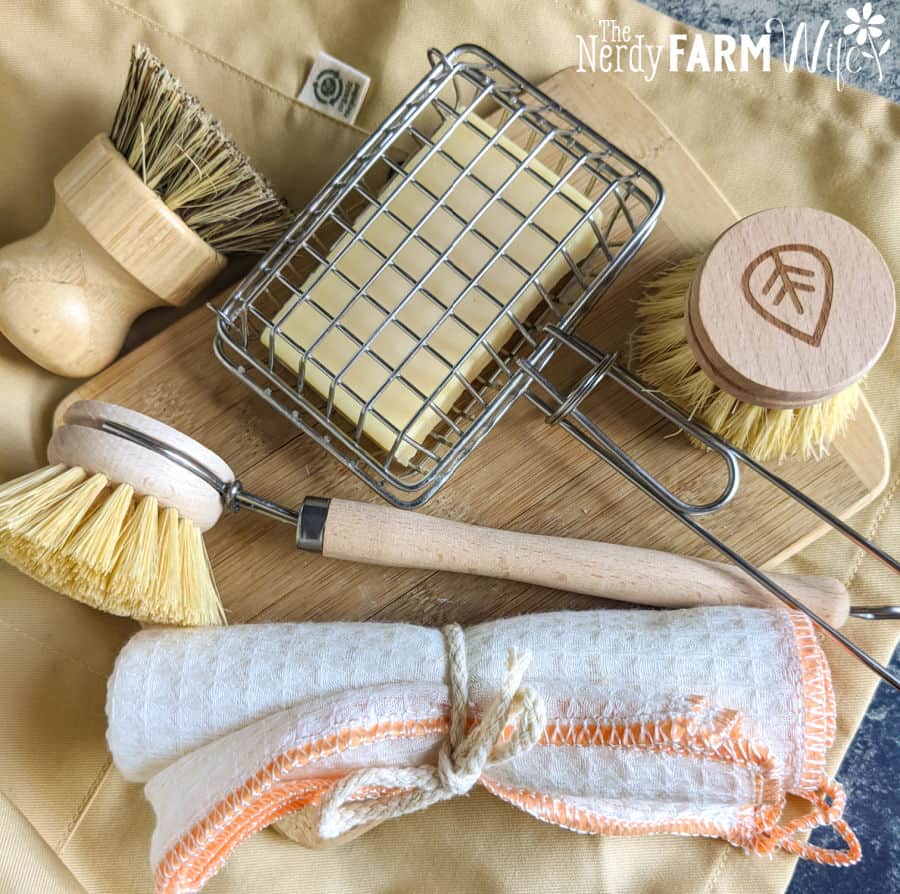
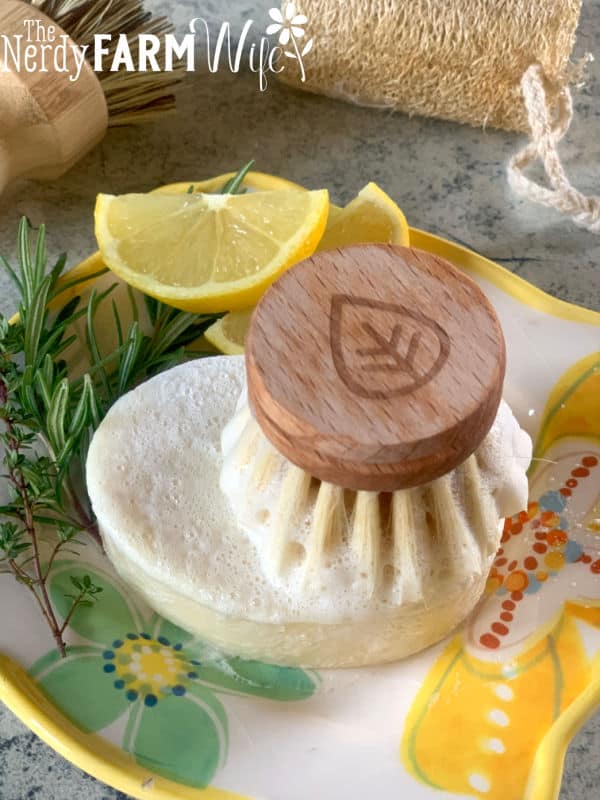
To use solid dish soap most effectively, look for natural plant-based kitchen brushes and scrubbers made from bamboo, sisal, and loofah. (I bought the ones shown in the photos from Etsy!)
You can also find old fashioned soap shakers – which are wire type single bar baskets with a handle – at SoapShakers.com.
Solid Dish Soap Basics
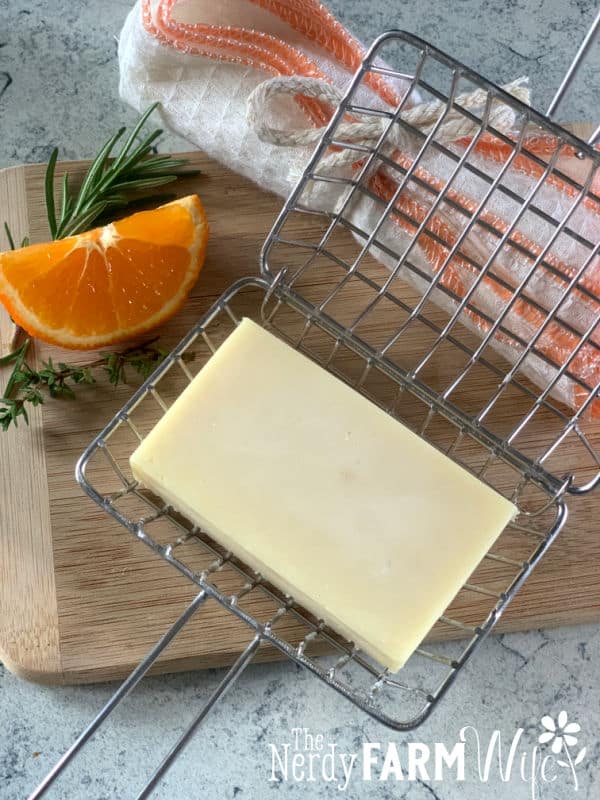
I add fresh lemon or orange juice as a natural source of citric acid, which can prevent soap scum and act as a natural degreaser.
Zest from a lemon or orange gives the soap a soft natural color and orange and/or lemon essential oils contribute a clean fresh smell and an added degreasing boost. If you don’t have fresh orange or lemon zest, you can use around 1 teaspoon dried orange or lemon peel powder for every 14 to 16 ounces of oil in your recipe.
Be sure to use folded types of lemon or orange essential oils, since they’re specially processed to be stronger and stick around in soap longer than regular citrus essential oils. You’ll see them labeled with names such as 10X Lemon, or 10 Fold Orange.
In the following recipe, you’ll notice I added aloe vera gel – which contributes to a better lathering experience.
Dish soap can be very drying to your hands, so it’s recommended to wear reusable dishwashing gloves while using this soap to wash dishes.
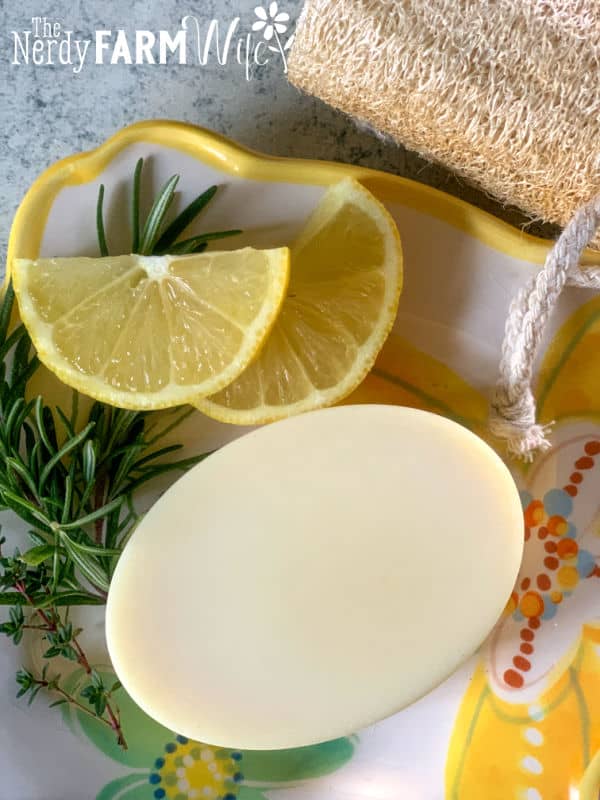
Lemon & Aloe Solid Dish Soap Recipe
This soap features aloe vera gel for a gentle added boost to lather. It’s brightly scented with folded lemon essential oil and naturally colored with lemon zest.
If you don’t have fresh lemon zest, try using 1 teaspoon dried lemon peel powder instead. Lemon juice provides a natural form of citric acid, which helps act as a degreaser and film reducer.
Oils & Butters:
- 14 oz (397 g) coconut oil (100%)
Lye Solution:
- 5.32 oz (151 g) distilled water
- 2.56 oz (73 g) sodium hydroxide (lye) (0% superfat)
- Zest of one fresh lemon
- 1 tbsp aloe vera liquid or gel
- 1 tbsp fresh lemon juice
At Light Trace, Add:
18 grams folded lemon essential oil
Directions:
If you’ve never made soap before, stop here and read my Soapmaking 101 article.
I also have a free soapmaking checklist you can grab while you’re there – it will be super helpful, especially when making your first batches of soap.
Always wear gloves and goggles, and weigh out ingredients using an accurate scale. (Don’t use measuring cups to make soap.)
Here is a List of Equipment Needed to Make Soap at Home.
This is a summary of how to make solid dish soap, but be sure to check out the soapmaking 101 article mentioned above for more details.:
- Place the water in a heavy duty plastic or heatproof container.
- Put on your gloves and goggles.
- Sprinkle the lye into the water and stir well. Avoid breathing in the temporary strong fumes.
- Next, stir in the lemon zest.
- Set the mixture aside to cool for 30 to 40 minutes, or until around 100 to 110°F (38 to 43°C).
- While the lye cools, warm the coconut oil to around 90 to 100°F (32 to 38°C).
- Add the lemon juice and aloe to the cooled lye solution and stir well.
- As soon as you mix in the lemon juice and aloe, pour the lye solution into the warm coconut oil and stir by hand briefly.
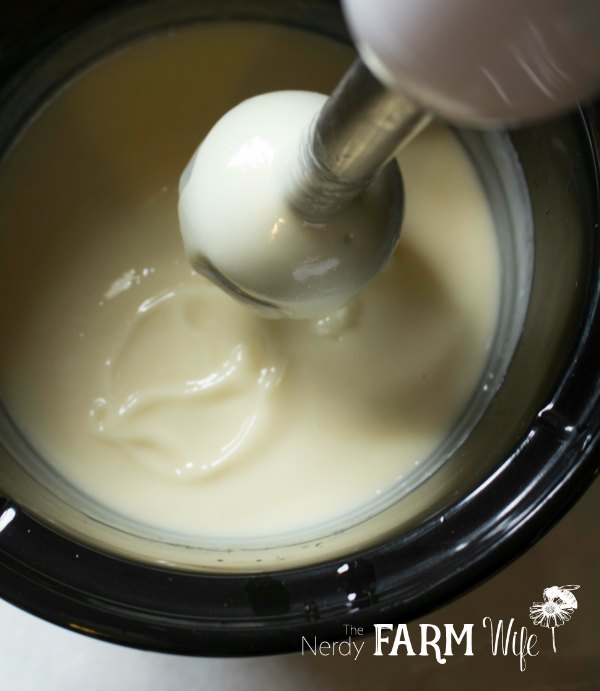
- Use the immersion blender sparingly, to bring the soap to trace, alternating with hand stirring. (Don’t continually run the immersion blender.)
- Once trace is reached, pour the soap into individual molds (my personal preference) or a loaf mold. If using a loaf mold, check in 2 to 3 hours and if firm enough, slice into bars, while wearing your gloves. Set the bars on sheets of wax paper.
- If using individual molds, you can leave them in for a day, then pop them out of the molds.
Notes & Tips:
Add the lemon zest immediately after dissolving the lye into the distilled water. Adding it while the lye solution is still hot will help it dissolve more completely and gives an even color tone to the finished soap.
The lemon juice and aloe vera can be stirred in after the lye solution has cooled. Depending on your aloe vera gel, it may slightly thicken the lye solution. It’s okay if that happens; just stir it really well and blend into the oils as normal.