Henbit Salve Recipe (for aches & pains)
Here’s a easy henbit salve recipe that I created for my sore knee – it can be used for other aches and pains too!

I have a finicky knee from years of unknowingly hyperextending it, plus doing knee lunges incorrectly. Every so often, it flares up as an aching stabby pain.
Henbit (Lamium amplexicaule) is traditionally made as a tea to help rheumatism, inflammation, and to help break fevers.
So last spring, when the pain flared up, I decided to make and drink henbit tea specifically for my knee and was delighted to note that it did indeed help the pain disappear, for a couple of hours at least. It also warmed me up!
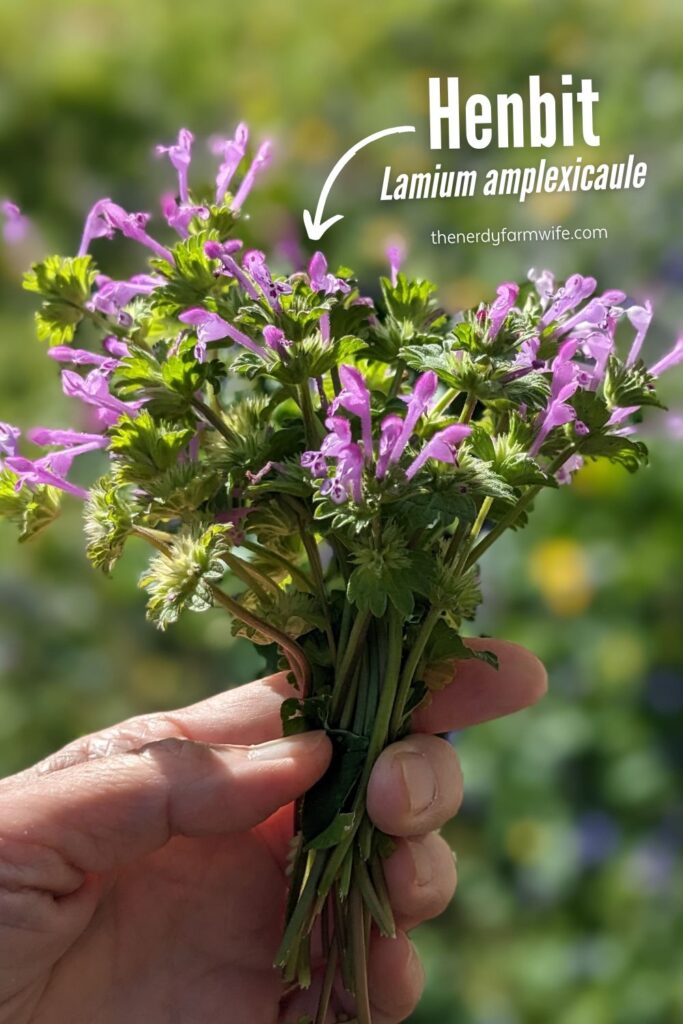
You don’t usually see henbit turned into salve, but its more famous cousin, purple dead nettle (Lamium purpureum) is wonderful in pain salves, and they share overlapping compounds, so I decided to try making henbit salve to see how it would work.
I’ve been using this salve for about nine months now and love the results, so thought I’d share the recipe with you here! :)

You’ll need to do the following things to make henbit salve:
1. Forage some henbit from your yard, and then dry it. I have a foraging article in the works for this site, but until then, you can check out ID tips in this Henbit vs Purple Dead Nettle post I wrote over at Unruly Gardening.
2. Infuse the henbit into oil, along with any other herbs you’d like to add. (See below, for suggestions.)
3. Melt the oil together with some beeswax and a pinch of ginger*. I also recommend adding some essential oils for extra “oomph”. (Directions below.)
That’s it!
*My “secret” addition to henbit salve is a generous pinch of ground ginger. (The same ground ginger found in your spice cabinet.)
Ginger increases circulation to the applied area and adds warmth, which is what makes my particular knee pain feel better.

Make the Henbit Infused Oil
When making your infusion, you have lots of oil choices. Popular ones include olive and sunflower, though they can feel a bit heavy on your skin, and be slow to absorb.
Rice bran or sweet almond oil absorb a little faster, and make nice feeling salves. You could also add a splash of an extra-light oil that soaks in fast, like fractionated coconut oil or jojoba oil, to lighten the whole salve up.
First, you’ll need to fill a small (8-ounce) jar with chopped, freshly dried henbit – flowers, stems, and leaves.
Then you’ll cover with oil and infuse the slow way, or the fast way.
See my article How to Make Herbs Infused Oils (FAQS & Tips) if you need detailed directions.
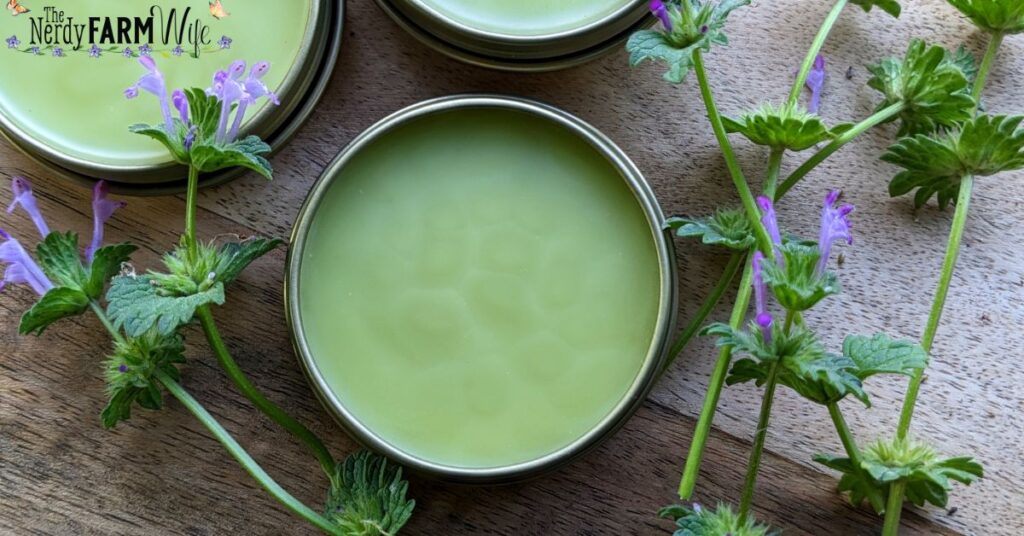
OPTIONAL TIP: For a richer, green-colored oil and salve, add a splash of 100 proof or higher vodka to the dried henbit leaves, stir them to evenly dampen, then add the oil for infusing. The alcohol will extract colors and components from the dried herbs, that the oil alone cannot.
Instead of just using henbit, you may also want to combine it with other herbs that are good for aches and pains, such as goldenrod, dandelion flowers, arnica, or comfrey.
Make the Henbit Salve
Once your oil is finished infusing, it will be strained, then combined in a heatproof container with beeswax. If you’re vegan, try using half as much candelilla wax instead of the beeswax.
If your salve turns out too hard, just melt it down again and add more oil. If it turns out too soft, melt it down again and add an extra pinch of wax.
Salves are very forgiving!
Henbit Salve Recipe
You’ll need an inexpensive kitchen scale to weigh the ingredients.
- 4 ounces (114 grams) henbit infused oil
- a pinch of ground ginger (about 1/4 teaspoon)
- 0.65 ounces (18 grams) beeswax (or half as much candelilla wax for vegan version)
- 24 drops cypress essential oil + 24 drops juniper essential oil (or you can use all 48 drops as cypress instead)
- Add the infused oil, ground ginger, and beeswax to a heat proof container, like a canning jar or empty tin can.
- Stir to mix together.
- Set the container down into a pot of water placed over a medium-low burner.
- Heat until the wax is melted.
- Remove from heat and stir well, then stir in the cypress and juniper essential oils.
- Pour into tins or small canning jars.
- Let harden until solid, place a lid on top, and label.
Shelf life is around one year, or as long as it still smells good. (Salves won’t mold, but the oils within will eventually turn rancid. When that happens, discard and make a new batch!)