Stinging Nettle Tincture + Uses
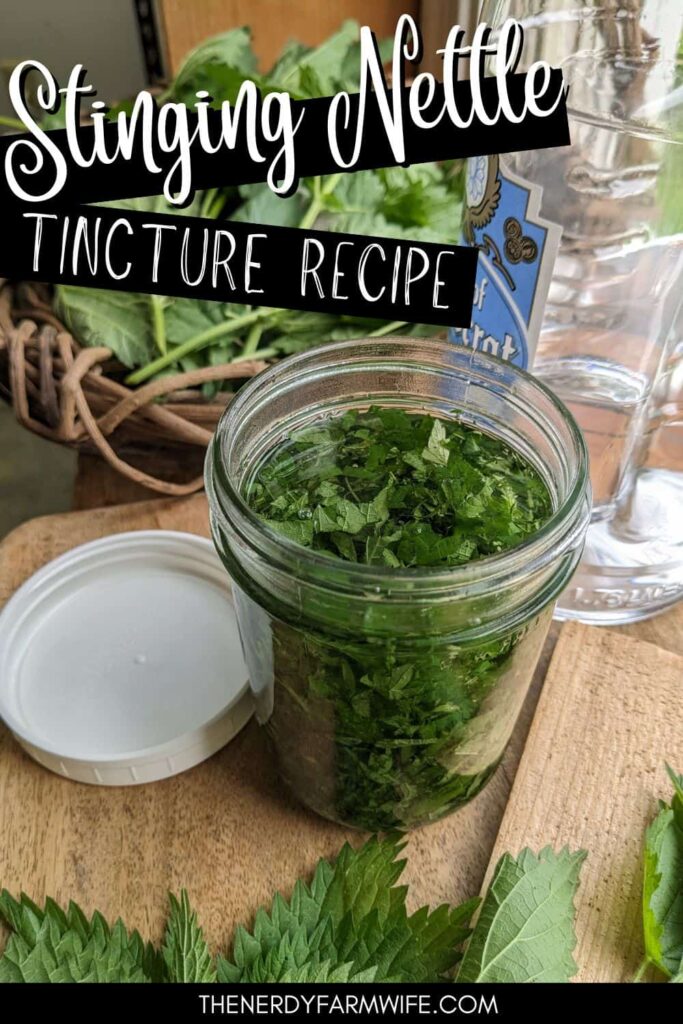
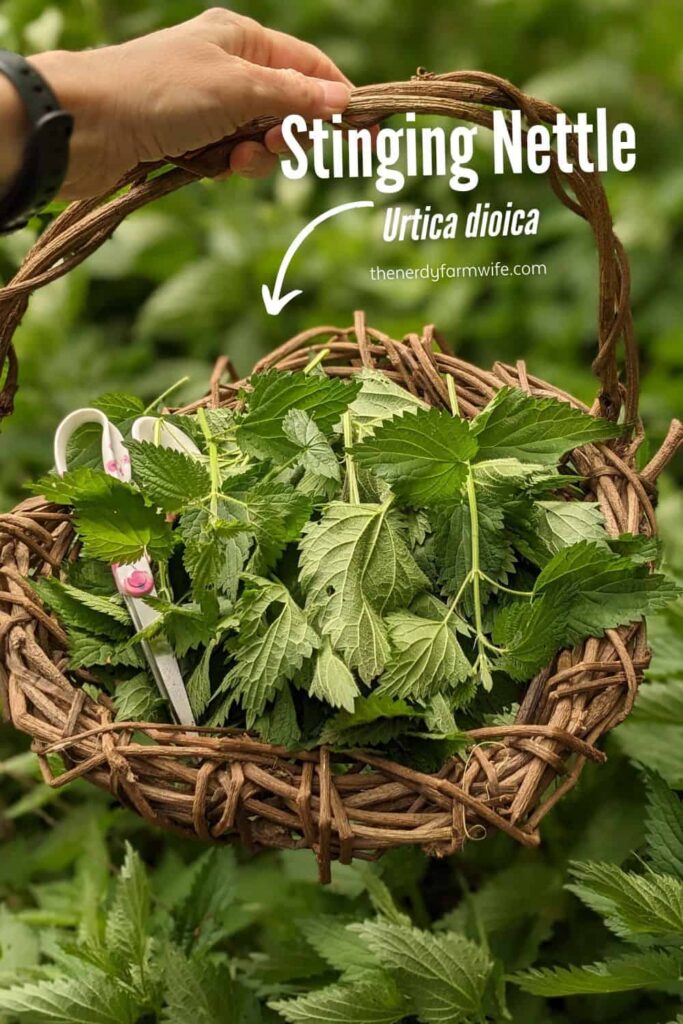
Here’s how to turn stinging nettle (Urtica dioica) leaves into a tincture that may be useful for allergies and inflammation.
You can also tincture different parts of nettle, for different effect. For example, the root can be tinctured for prostate problems, while nettle seed tincture may be helpful for kidney problems.
Today though, we’re focusing on the leaves!
You can use dried or fresh nettle leaves – some herbalists feel that fresh plants are best whenever possible (and I mostly lean towards this camp), while others feel the dried plants are better. Try both ways and see what you think!
If you’re using dried nettles, use 80 proof (40%) or 100 proof (50%) vodka/brandy/alcohol, since dried herbs have lost all of their water mass, and the water amount in 80 or 100 proof alcohol will help rehydrate them.
If you’re using fresh nettle leaves, use 100 proof (50%) or 151 proof (75%) vodka/alcohol, since the fresh plant will already contain some water within.
Don’t have any nettle growing nearby? You can buy dried nettle leaves from places such as Mountain Rose Herbs, Frontier Co-op, or Starwest Botanicals.
Two Methods
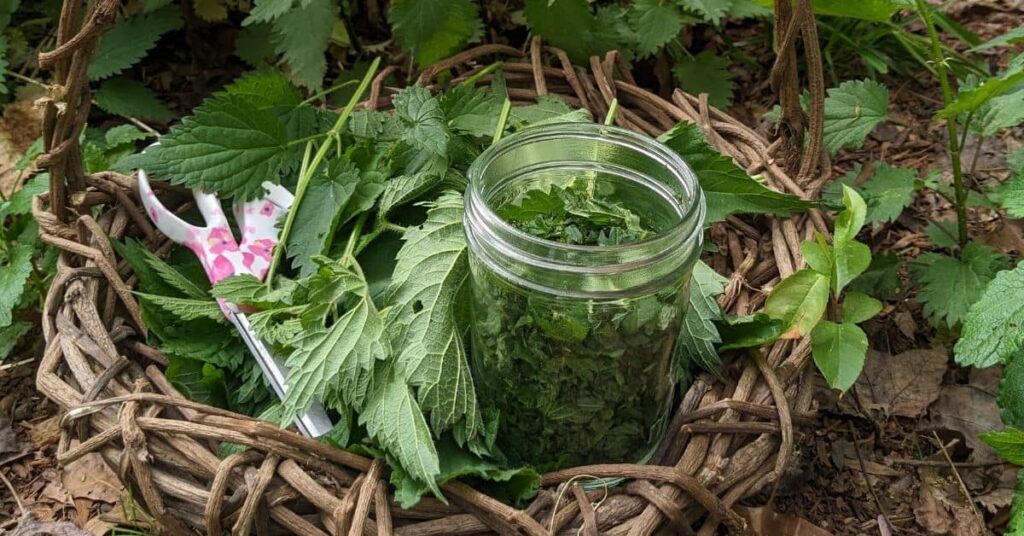
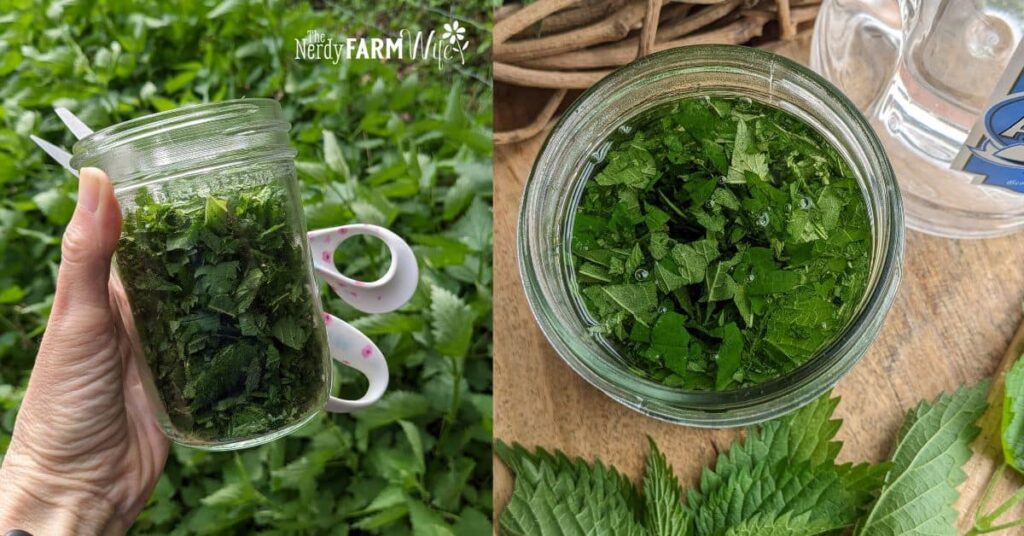
I make tinctures using the folk method which means I fill a jar roughly halfway with dried nettle, or three-fourths of the way with chopped fresh nettle leaves, then add vodka to fill. Stir, then top off with a little more vodka if needed.
Put a lid on the jar, shake, and tuck away in a cabinet. Shake the jar every couple of days, or as often as you remember to.
After 4 to 6 weeks, pull the jar out of the cabinet, strain, and you have made your own stinging nettle tincture!
If you want something a little more standardized and replicatable, try these formulas:
Fresh Nettle –> 1:2 75% alcohol – which means you’d use 100 grams (weight) fresh chopped herb to 200 ml (volume) of 151 proof (75%) alcohol
or
Dried Nettle –> 1:5 50% alcohol – which translates to 100 grams (weight) dried nettle leaves and 500 ml (volume) of 100 proof (50%) alcohol

How to Use
Nettle is one of those food/tonic herbs, that’s generally safe for most people to experiment with, but any person can become allergic to any substance at any point in their life, so avoid using nettle tincture if you’re allergic to nettles. Also take caution if you’re on a diuretic (nettle is also one) or have diabetes (nettle may lower blood sugar.)
For my family, I low-dose most tinctures. We start out with just 3 or 4 drops at a time, mixed with a spoonful of honey, dropped into a drink, or taken straight under the tongue. If we need more, we take more. However, we have light frames and tend to need the smallest amount of medicine/herbs to see results.
There’s a rather high possibility that you may need more than we use. Most herbalists recommend a dropper or two at a time, taken 1 to 3 times per day, but everyone is individual in their needs.
Useful conversion info to know: 1 dropperful of tincture = about 1 ml = about 30 drops
We take nettle in the mornings or afternoons, rather than right before bed, because it can have some diuretic (makes you pee) properties.
For allergies, the tincture may be useful if you’re having an active itchy nose, sneezing, or other allergy symptoms. We also combine our homemade tincture with a product from Nature’s Sunshine that we use instead of over the counter antihistamines – it’s called Seasonal Allergy (was formerly called ALJ).
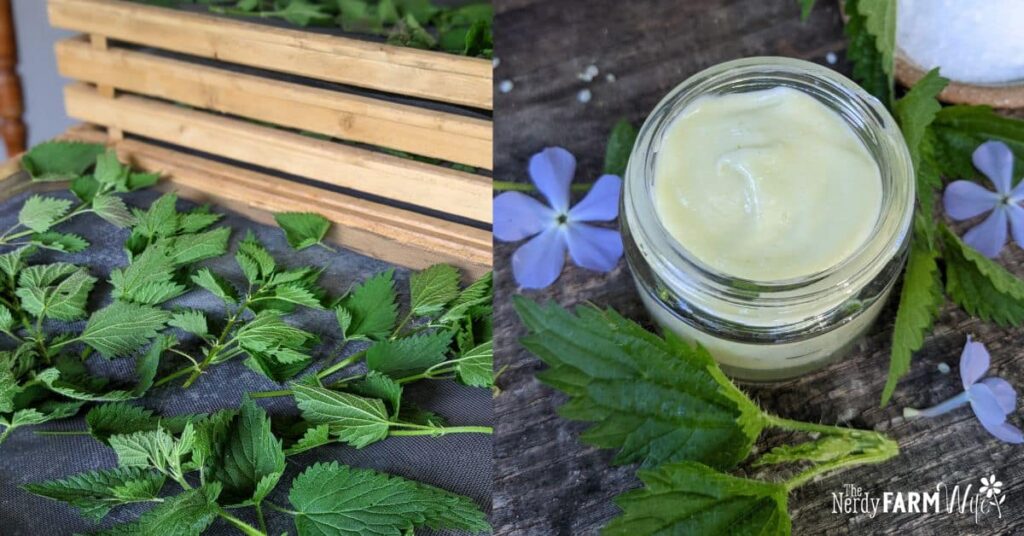
For inflammation or arthritis pain, try coupling a dose of the tincture with a salve or cream made from stinging nettle – that way you’re getting internal and external benefits!
Here’s my recipe for Stinging Nettle Magnesium Lotion – which may be useful for those with sore muscles, restless legs, leg cramps, or arthritis!
References & Further Reading
Cech, Richo. Making Plant Medicine. Williams, OR: Horizon Herbs, 2000. Print.
Namazi, N, et al. The effect of hydro alcoholic Nettle (Urtica dioica) extracts on insulin sensitivity and some inflammatory indicators in patients with type 2 diabetes: a randomized double-blind control trial. Pakistan Journal of Biological Sciences; 2011 Aug 1;14(15):775-9.
Rayburn, Keith, et al. Stinging Nettle Cream for Osteoarthritis. Alternative Therapies in Health & Medicine. 2009 Jul-Aug;15(4):60-1.