
How to Grow Alpine Strawberries
Learn how to grow, harvest, and store delicious alpine strawberries, and fill your garden with these small but tasty everbearing treasures!
These fragile, fragrant heirloom berries will provide wild-flavored strawberries all summer long, and they’re prolific little things- in our garden, they happily keep on producing right up to the first frost!
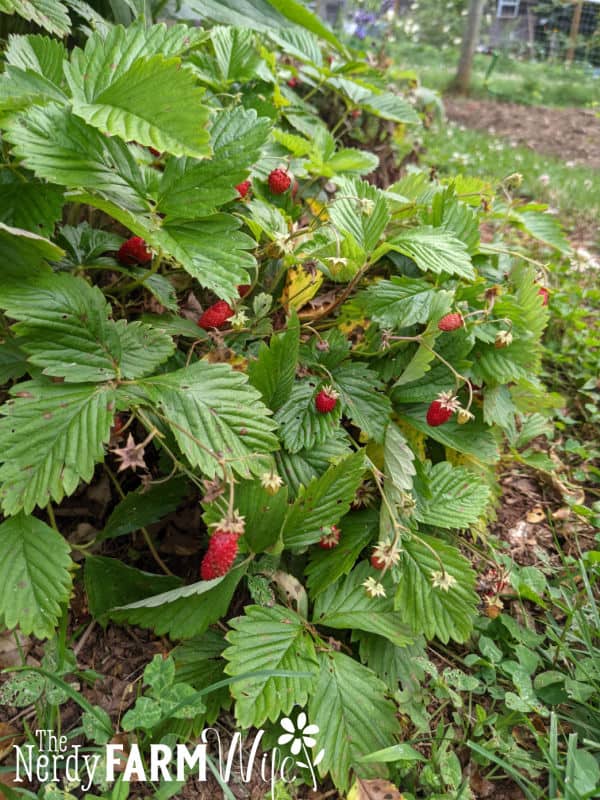
Alpine Strawberries differ from the typical garden strawberry in a handful of ways. They’re short, dense little plants, that tend to grow in ‘mounds’ as time passes. These mounds like to bush out to be little 1-foot rounds. If these mounds are dug up in the spring or fall, you’ll find they’re actually a cluster of plants!
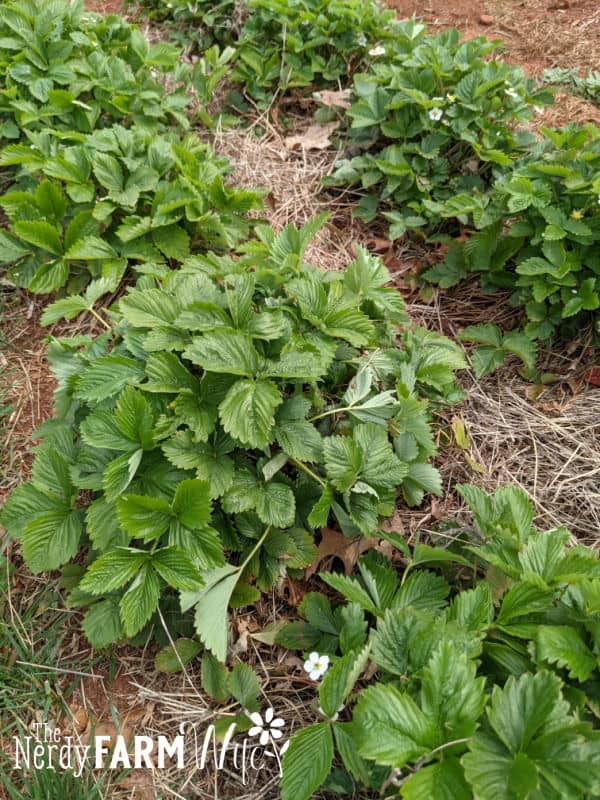
All the alpine strawberry varieties I’ve grown so far haven’t bothered sending out runners, instead staying fairly self-contained. I think I’ve seen maybe two plants set out a single runner each in all the time I’ve been growing them. They make for good border or edging plants, and can be grown both planted directly in the ground or in pots.
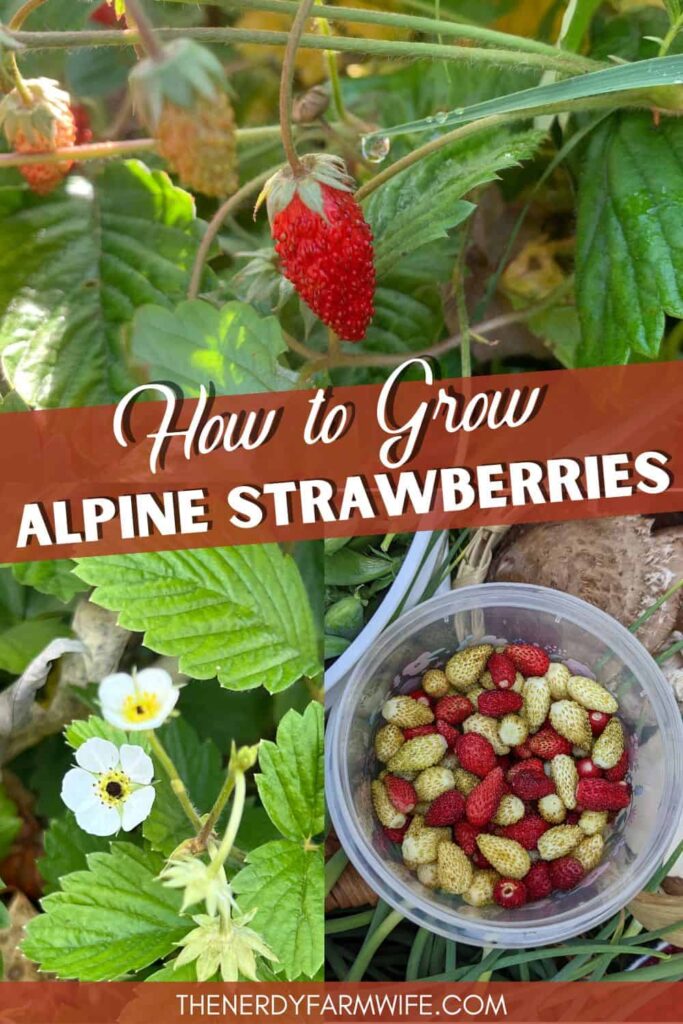
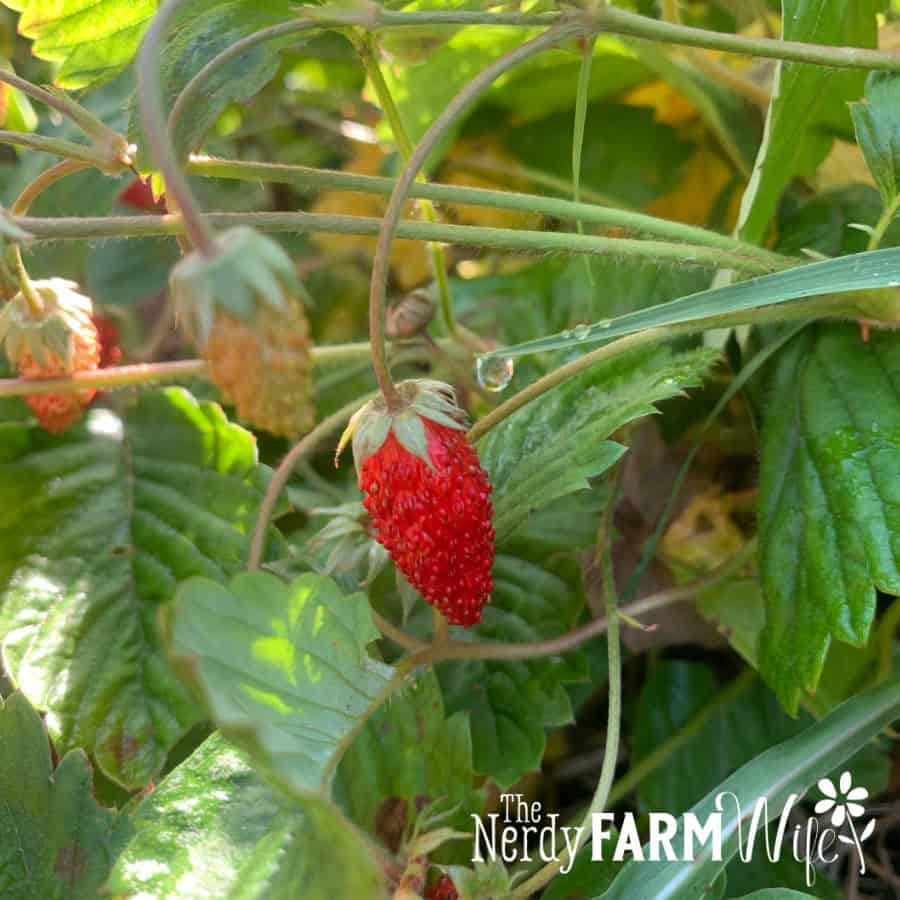
The fruits are bright red, seedy, and have an intense strawberry flavor with just a hint of something ‘wilder’ to them.
They’re also tiny! The fruits each only weigh about 2-3 grams. The skin is very fragile, and rough handling while picking will quickly end up resulting in smashed fruit. Luckily, the smashed-up fruits are still just as delicious as the whole ones!
How to Grow
While you can sometimes find alpine strawberry plants available for purchase, seeds are more widely available and easier to find and obtain than the live plant.
- Start alpine strawberry seeds inside 8-10 weeks before your estimated final frost date.
- Seeds are very easy to start: scatter the tiny seeds over the surface of a container full of pre-moistened potting soil. Seeds can be left uncovered or lightly dusted over with a scant scattering of more potting soil. I’ve had good results with both.
- Seeds should germinate in 8-21 days. Keep the seeds evenly moist (but not waterlogged!) and under a source of light, like a window or a growlight.
- Pot up seedlings as needed as they grow. When seedlings are 4-6 inches tall, they are ready to harden off and transplant outdoors.
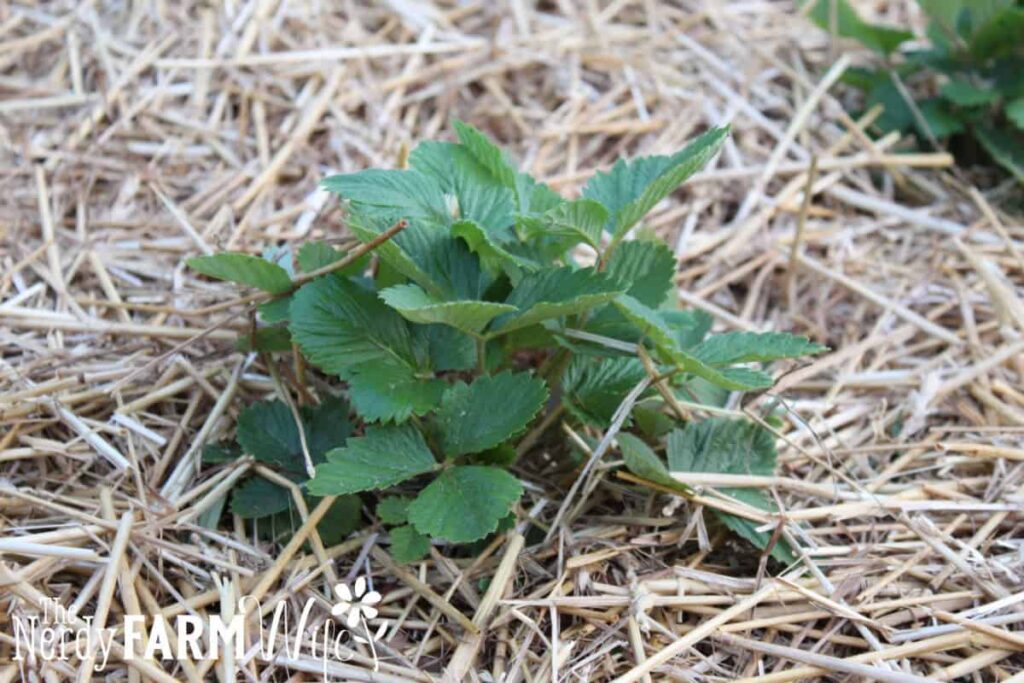
- When moving to the garden, alpine strawberry plants should ideally be spaced 8-12 inches apart from one another. Airflow between plants is important to lessen risk of rot/mold and reduce hiding places for slugs. Mulch is optional, but often helpful; we mulch ours with straw.

Preferred Growing Conditions:
- Soil: Can tolerate a wide range of soil, but prefer it rich and well-draining. Mix a few inches of good compost into the soil before planting to make your alpine strawberries very happy!
- Sun: Full sun. Alpine strawberries can live in partial shade, but fruit production will be heavily impacted. However! If you live very far down south where summers are extremely hot, then some partial/dappled shade in the middle of the day, when the heat is at its height, may be required for the plant’s survival.
- Cold-hardiness: Alpine strawberries are perennial. In colder zones, they might need to be covered to survive winter, while in others, they can make it without assistance. In our growing zone (which is zone 7), alpine strawberries overwinter without help.
Dividing Alpine Strawberries
You will want to divide your alpine strawberries about every 3-4 years or so. This lets you remove any old dead plants, encourage better airflow, and reinvigorate your alpine strawberry patch.
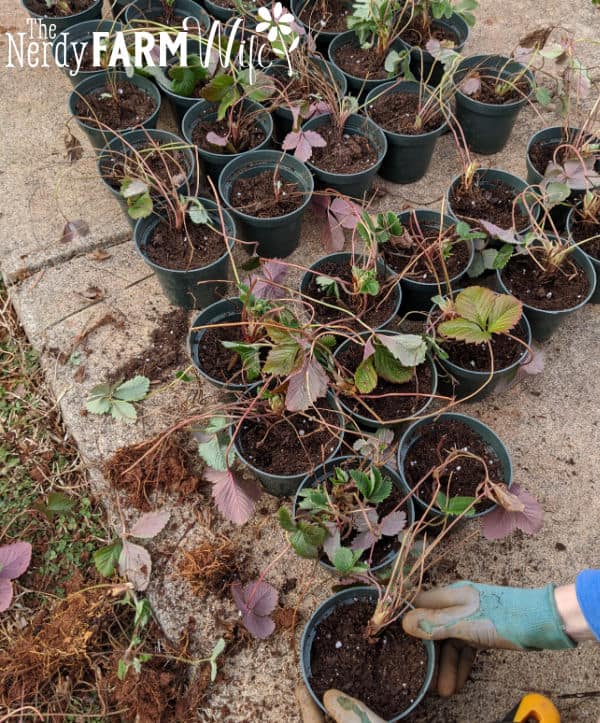
They’ll likely be getting quite dense at this stage, and the center strawberry plant- the one you started with- may be dead, the mound itself formed of all its many, many offspring. You might be surprised as to just how many plants there are in there!
Slugs and Strawberries
Moist and dense mounds of greenery may attract slugs. They really, really like strawberries, and just because alpine strawberries are smaller, that doesn’t make them any less of a target!
Keeping the strawberries divided should help a lot, by reducing places for the slugs to live and hide in. They like getting in to the middle of undivided plants, where things stay shady and moist.

Ducks are also considered a fairly effective slug-banisher- if you don’t mind that you’re also going to end up sacrificing plenty of strawberries to the ducks in addition to the slugs they’re eating!
Sprinkling diatomaceous earth around the plants may also a good method to try.
Harvesting
A ripe alpine strawberry is bright red (or may be white or yellow, depending on the variety), and easily detaches from the plant. It practically falls into your hand as you pick! The berry will cleanly detach from the green stem and leafy top when ripe.
Ripe berries are also sweetly fragrant. You can smell this best by collecting a small handful of fresh berries in your hand at once. It’s such a lovely scent!
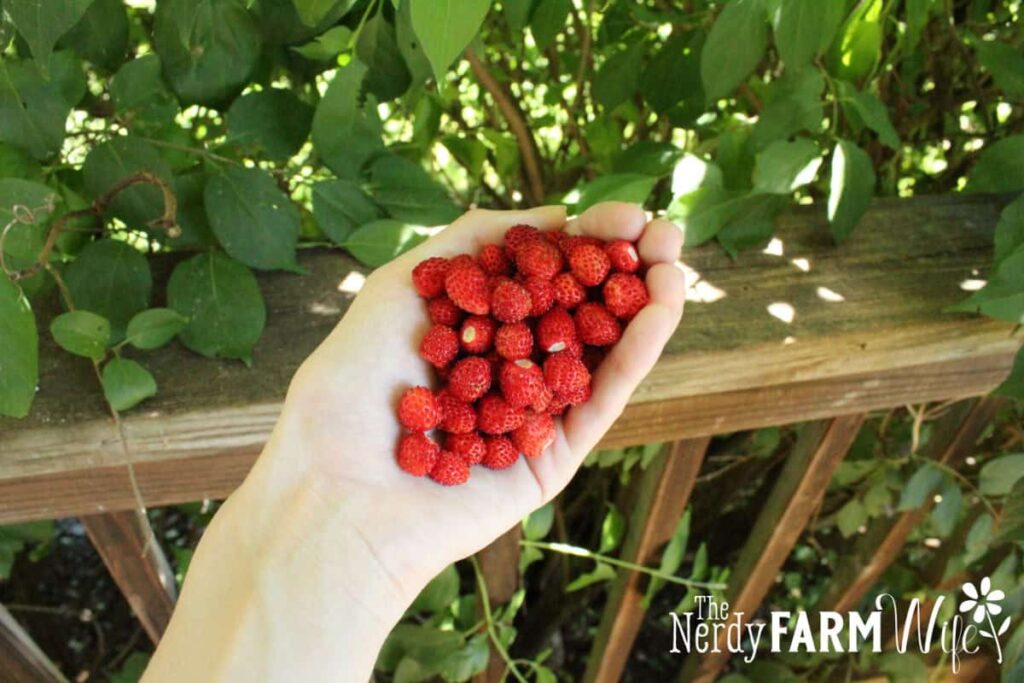
If you have to force the alpine strawberry off the plant, or it comes off with part of the stem or green top attached, it’s not ripe yet, and probably won’t have a very satisfying taste or texture!
As for the overripe berries, they tend to mold on the plant before you end up picking them, but if by some chance you come across an overripe one, your tongue will tell you- if it tastes like an overripe strawberry, or has an unpleasant or bitter taste/texture, just spit it out. You missed that one, but better luck next time!
How They Taste
The berries, when properly ripe, taste like tiny strawberries, but condensed and intensified. They have the slightest hint of a flavor that’s uniquely their own- something with a bit of wildness to it- and they’re just overall deliciously sweet and incredibly flavorful. They’re not dry, but they don’t drip with juice, either.

There’s also the possibility of an interesting touch of a tropical taste- specifically when it comes to varieties in colors other than red! In the varieties I’ve grown so far, I’ve found that both White Soul and Yellow Wonder had this intriguing bonus flavor note.
Texturally, they do have a lot of seeds. Some people don’t like that, others don’t consider it a problem.
Using Alpine Strawberries
Eating them fresh is the first, and easiest way! Simply pick off the plant and put them directly in your mouth. They make a great out-in-the-garden snack!
If the berries aren’t dirty, try not to wash them: They like to absorb water, and tend to start shredding when rinsed.
As for other ways to use your alpine strawberries: you can add them to pancakes and muffins, put them in smoothies and ice cream, make a strawberry sauce… You can try all kinds of things!
I’ve personally made ice cream and a ice cream sauce out of them, and additionally tried out mixing whole (frozen, to keep shape) alpine strawberries into muffins. Another time, I tried dropping the (whole and frozen) fruits into pancakes. They all turned out delicious- particularly the ice cream!
Just remember their fragility and size: you’re not going to get perfect slices if you try cutting them up, like if you were trying to treat them like a store-bought strawberry. They seem to work best if smashed up, or used whole.

Of course, alpine strawberries are too fragile to wait too long after picking to eat: for best texture and taste, I personally recommend eating within 10-20 minutes of picking. Some say 30 minutes to an hour is fine, but the taste and texture just seem like they’ve lost something at that point, at least when it comes to my tastebuds.
As for keeping alpine strawberries in an edible form for longer than just a few scant minutes? For that, we turn to a reliable old friend: the freezer!
How to Store
If you want to store any of your harvest, you’ll have to freeze it- and you’ll want to do so as soon as humanly possible after freezing, so as to have the best possible taste and texture.
Alpine strawberries spoil so quickly that if you leave them out overnight, you’ll wake up to find a sludgy, molded mess where your pretty cup of berries once were. They don’t keep in the refrigerator, either, unfortunately- they’re simply not made to last fresh.
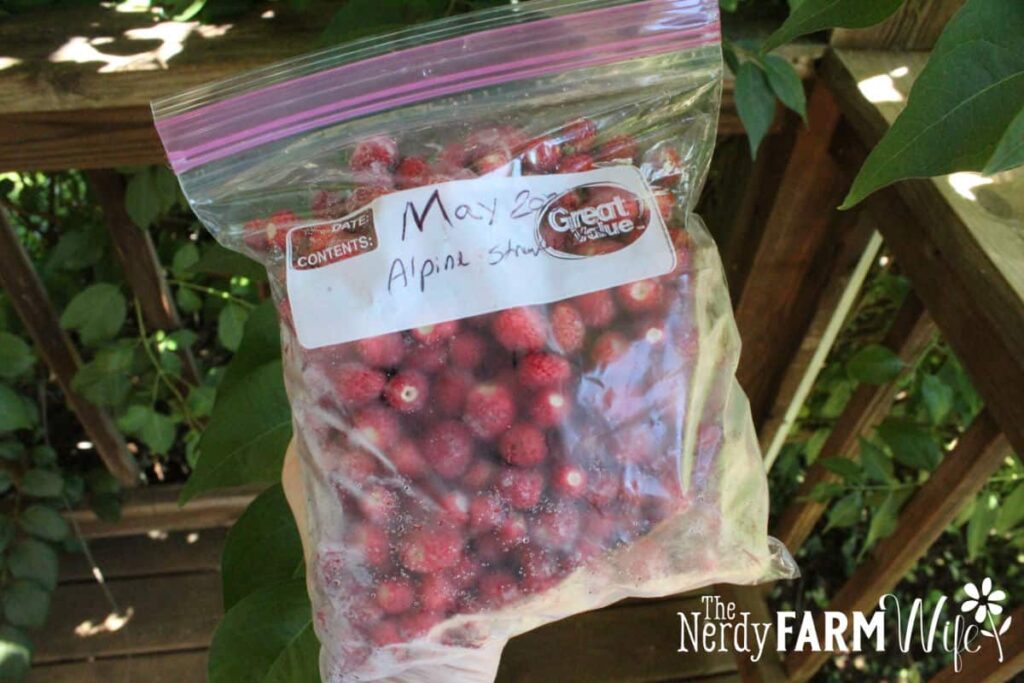
It’s super easy! Just pop the strawberries into a freezer-safe bag or container, and lay it flat in your freezer until frozen completely. Use the berries from this bag as you desire, adding them to muffins, ice cream, smoothies, or making strawberry sauce or what-have-you with them as you will.
Alpine strawberries really do freeze beautifully! Expect your berries to be good for 6 months to 1 year after freezing, or as long as they still taste good and have good color. If they taste like freezer, then they’ve been in there too long and it’s time to toss them out.
It’s worth noting that, when frozen, the seeds tend to start falling off the fruit, sometimes able to be knocked loose with the rub of a finger, or even just by tumbling against other frozen alpine strawberries. If you don’t like the texture of the seeds on alpine strawberries, you could potentially use this to your advantage to remove some of them.

I do NOT recommend thawing the alpine strawberries before using in baking specifically- they’re already very soft when frozen, and they’ll get even softer when thawed.
If you need to smash them to a pulp for something (like making ice cream), then thawing them can make them easier to smash, but if you’re, say, making pancakes or muffins, I recommend mixing or dropping them into the batter completely frozen so they keep their shape, and don’t run so much of a risk of getting crushed as easily as the fresh fruits do just from being stirred in.